Trump’s 50% Tariff on India Isn’t Policy. It’s Punishment
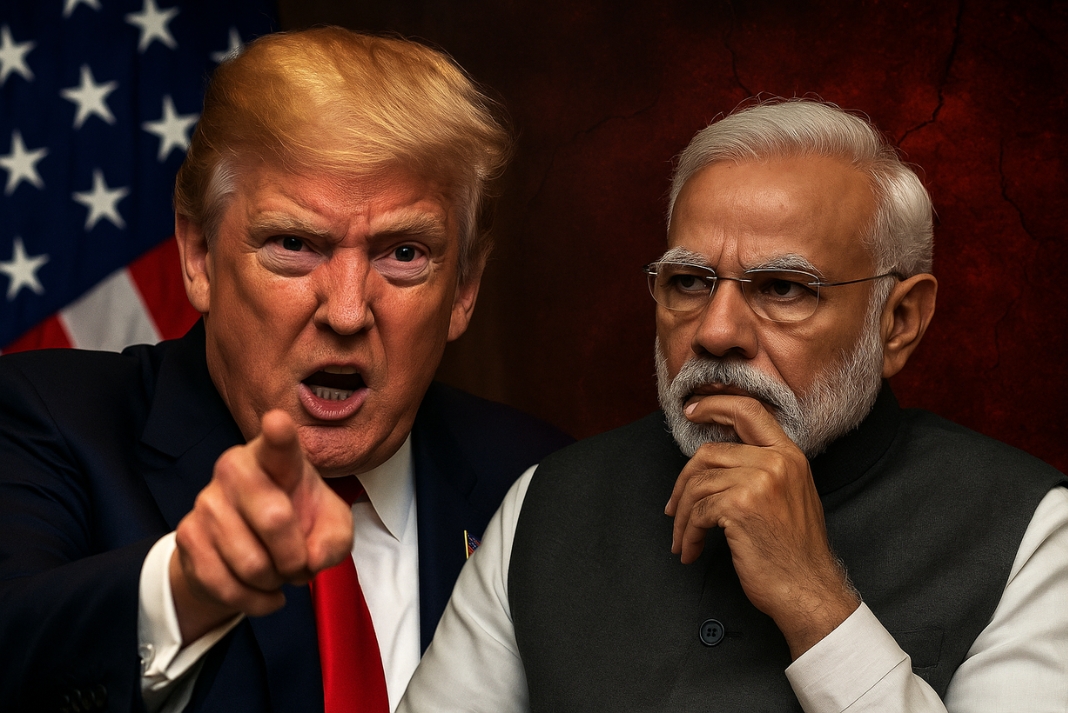
Let’s call it what it is: economic bullying disguised as foreign policy.
Donald Trump’s decision to slap a 50% tariff on Indian goods—doubling the previous rate—isn’t about trade. It’s a power play. It’s political blackmail. And it’s an insult not just to India’s economy, but to its dignity.
Let’s set the record straight. Multiple countries are buying oil from Russia. China, Turkey, even NATO allies like South Korea. But India is being hit with the harshest tariff of them all. Why?
Because Trump knows New Delhi won’t fight back.
And why won’t we? That’s where Gautam Adani enters the story.
Adani: The Billionaire Shadow Over India’s Silence
A U.S. court has issued an arrest warrant for Gautam Adani, a man widely known to be close to Prime Minister Modi. This is no minor subplot—it could explain the total, unnatural silence from the Indian government.
Adani has just stepped down as Executive Chairman of Adani Ports. Coincidence? No. It’s damage control.
And here’s the theory no one wants to say out loud: Trump’s tariffs are a loaded gun. They aren’t just about oil—they’re about leverage. Personal leverage.
By hitting India hard, Trump might be sending a message: “Cooperate with us—or Adani’s case gets worse, and your economy gets punished.”
If true, this isn’t diplomacy. This is economic extortion.
Where is Prime Minister Narendra Modi in all of this?
This is the same man who once held Trump’s hand at the “Namaste Trump” rally and appealed to Indian-Americans to vote for him. But now, when India is being openly targeted, Modi has gone radio silent. Not a word from him, nor from the External Affairs Minister, or the Commerce Ministry.
When Trump calls India the “Tariff King” and then turns around and slaps us with a 50% penalty, Modi says nothing.
Why is Modi Silent?
Because now, any retaliation could provoke more pressure on Adani. And that, in turn, might hurt Modi politically. But this silence has a cost—and it’s being paid by Indian exporters, manufacturers, and everyday citizens.
And let’s not pretend this is about Ukraine or Russia or oil.
If it were, China would’ve been hit harder. Turkey wouldn’t be sitting at 15%. The double standard is obvious. The U.S. has weaponized tariffs to punish India—possibly to apply pressure in the Adani case, possibly to test the Modi government’s spine, or possibly just because Trump can.
Either way, the message is loud and clear: “Fall in line, or we’ll break your economy.”
This is Trump using economic policy as a cudgel to force political compliance. A move that reeks of colonial arrogance in a 21st-century suit.
And what’s worse? We’re helping him get away with it.
Instead of standing tall, the Indian government is curled up in a crouch, hoping the storm will pass. It won’t. Inaction isn’t diplomacy—it’s complicity.
What Needs to Happen Now
Enough with Modi’s performative foreign trips and photo-op diplomacy. India needs to pivot decisively and independently. First step: seal the Free Trade Agreement with the EU—immediately.
Shift our trade focus. Signal to the world that India isn’t a soft target, it’s a sovereign economic force. And yes, if that means trade tensions with the U.S., so be it. The alternative—getting trampled on while pretending it’s geopolitics—is worse.
Second, raise tariffs on select U.S. goods. Match pressure with pressure. This isn’t about being aggressive—it’s about restoring parity.
Separate national interest from personal networks – If Adani’s legal troubles are influencing foreign policy silence, then we’re no longer functioning as a sovereign state.
India’s market is massive. Our population is 1.4 billion. That’s leverage. Start using it. U.S. corporations doing business in India don’t want a trade war either. The only one who does is a man with a campaign to run and an ego to feed.
Final Word
Let’s stop pretending Donald Trump is a “friend.” Friends don’t blackmail each other. Friends don’t single you out while protecting others. And friends definitely don’t punish you for making sovereign decisions in your national interest.
Trump isn’t punishing India because of Russia. He’s punishing India because he can. And because he thinks we won’t push back.
This is a test—not of our economy, but of our government’s spine.
Will we let our foreign policy be dictated by Trump’s moods and Adani’s legal exposure?
Or will we finally act like a nation that knows its worth?
This tariff hike is a test of India’s self-respect. Will we stand up—or will we keep kneeling and calling it diplomacy?