India–US Trade Ties Shatter as 25% Tariff Hits, Rupee Dips, Stock Market Braces for Blow
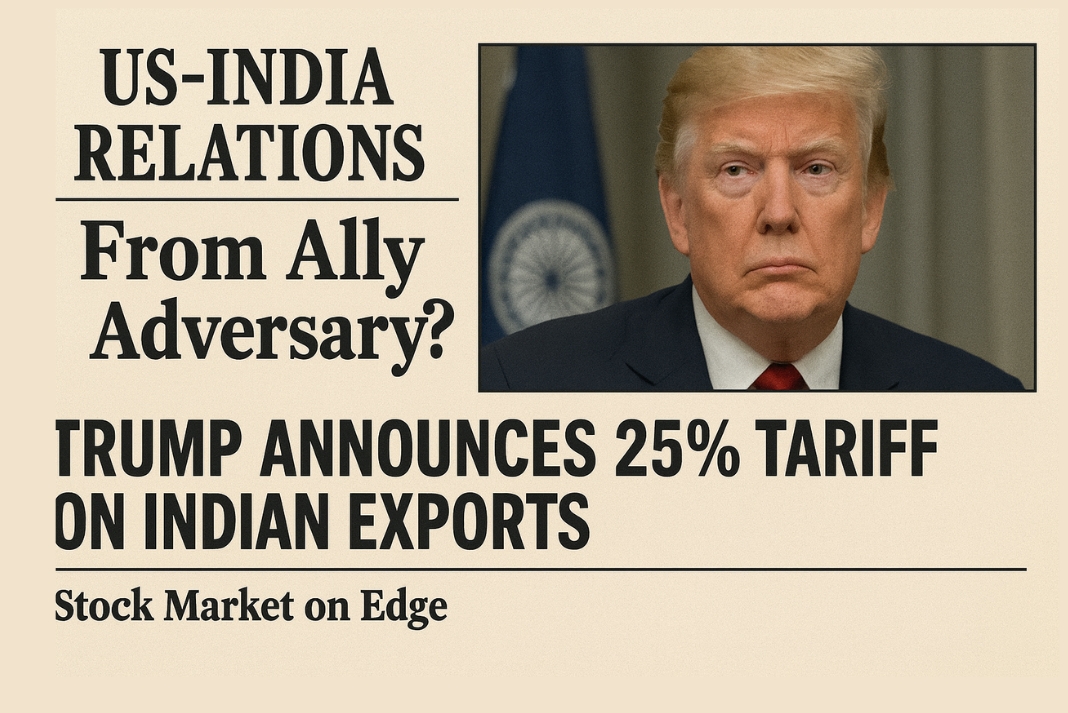
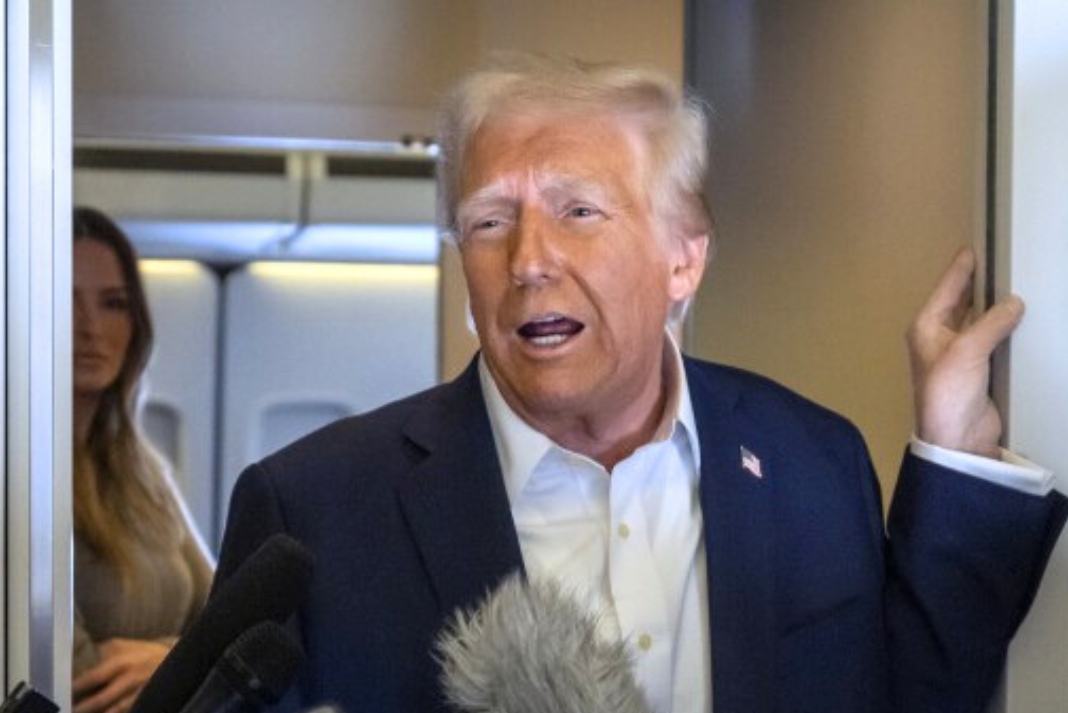
In a shocking overnight escalation, the post that US President Donald Trump made on Truth Social has completely upended more than a decade of trade diplomacy between the United States and India. The imposition of a blanket tax of 25% on all Indian exports to the United States, which went into effect on August 1, has caused widespread panic in India’s financial sector and sparked fears of a domino effect across a variety of industries, ranging from agriculture to technology.
From a Supporter to an Opponent?
In his post, Trump stated, “India is our friend, but we’ve been treated unfairly for far too long to be fair.” He criticised India’s continued energy and defence relations with Russia and accused India of maintaining “the highest tariffs in the world.” He also accused India of maintaining low tariffs. The turnaround in strategy comes just a few weeks before a sixth round of trade discussions that had been planned for a long time but are now practically dead.
The current situation is not merely a setback for a nation that has consistently maintained a trade surplus of ₹3.83–3.9 lakh crore with the United States; rather, it is a strategic earthquake. In the short term, the ramifications are vast and immediate.
The Stock Market Is Shocking
There was a significant drop in pre-market indicators for futures on the Bombay Stock Exchange. When the markets open on Thursday, analysts anticipate a carnage, particularly for industries that are most dependent on exposure to the United States:
Companies such as TCS and Infosys, which are already bleeding from layoffs and limited hiring due to automation, are now facing renewed headwinds in the information technology and software services industry. A shiver has been sent throughout the industry following Microsoft’s unexpected decision to cease support for Nayara Energy, an Indian refiner linked to Russia. Microsoft abruptly halted services to Nayara Energy in response to EU sanctions due to its Russian connections, leading to a legal dispute in India that was ultimately resolved when services were reinstated.
In the realm of petroleum, India’s profitable backdoor oil trade, which involves purchasing crude oil from Russia, processing it, and then selling it to Europe, is currently under scrutiny. With the pullback by Microsoft being perceived as only the beginning, it is possible that worldwide penalties may follow.
Automotive, Mining, and Electronics: Items that were previously exempt from tariffs are now subject to a 25% price increase. Executives from major exporters are concerned that a drop in demand in the United States could result in production cuts and job losses.
In a downward spiral, the rupee
In a span of just forty-eight hours, the Indian Rupee experienced a decline of about one rupee, going from ₹86.44 to ₹87.48 in relation to the Dollar. As a result of the devaluation, costs will increase across the board, from the importation of energy to the remittance of money from students. The majority of foreign trade is settled in USD.
With a Quiet Transition to Beijing
New Delhi is quietly recalibrating during the time that Washington is fuming. It has been confirmed by sources that Prime Minister Modi will be present at the Shanghai Cooperation Organisation (SCO) summit that will take place in Beijing later this month. This will represent a symbolic shift away from Washington and towards BRICS and a multipolar partnership.
This detour is not a trivial one. For a long time, India had been resistant to China’s attempts to negotiate alternative currencies and trade settlements. But today, with relations between the United States and India rapidly deteriorating, Modi’s visit to Beijing might mark a pivot of historic proportions.
Domestic Investment Attempts to Fill the Void in the Market
In a last-ditch effort to stabilize the markets, Life Insurance Corporation (LIC) has increased its stake in State Bank of India (SBI) to 9.49 per cent by investing ₹5,000 crore in SBI’s ₹25,000 crore qualified institutional placement (QIP)—a testament to robust market sentiment and bank fundamentals. When compared to the ₹42,000 crore that was expelled by foreign investors in the month of July alone, this amount is a mere drop in the ocean.
The Forgotten Frontlines: Agriculture, Pharmaceuticals, and the Dairy Industry
The United States of America had exerted a significant deal of effort to get access to India’s dairy and agricultural markets. Despite the fact that India remained steadfast, emphasising the necessity to save millions of farmers, the cost may now be quite high.
There is a possibility of an overstock of dairy products, grains, and edible oils, which are currently experiencing pressure inside the country. Indian pharmaceutical companies, which are heavily reliant on permits and exports from the United States Food and Drug Administration (FDA), are bracing themselves for regulatory delays or retaliatory measures.
A Warning Is Issued by Rahul Gandhi
Rahul Gandhi, the leader of the Congress party, made a small indication in Parliament that the actual issue could not be trade at all, but rather geopolitics. As a result of his connection between the tariff shock and the recent ceasefire negotiations between the United States and Pakistan, he suggested that India’s refusal to fully align itself with the geopolitical aims of the United States.
There is a High Tariff Reality in India
The World Trade Organisation (WTO) reports that India has an average tariff of 17%, which is significantly higher than the United States’ tariff of 3.3%. Despite the fact that India accounts for only 3.8% of US imports, Trump’s narrative is now centred on “correcting the imbalance.” This is a significant distance behind China that accounts for 24.7% and Mexico that accounts for 13.6%.
With a broader perspective
This is not merely an increase in tariffs. It’s a trade war that’s being masked as diplomacy. There has been a rebalancing of global alliances. This serves as a reminder that in the realm of geopolitics, no relationship is everlasting, and no excess is ever guaranteed.The question that will be watched by the entire world as markets open tomorrow is: •
- Will the Sensex go below 70,000?
- Will the rupee be able to surpass 90?
- Is India going to retaliate with a tariff that is similar to ours?
- Or will it gracefully withdraw from the orbit of the United States?
One thing is certain: India’s position in the global trade arena has recently undergone a decisive shift.
(Disclaimer: Insights and projections on stock markets and assets reflect expert opinions and are subject to change based on market conditions.)