US Marines Arrive in Gulf Waters: Why 2,300 American Troops Will Become Donald Trump’s Nightmare
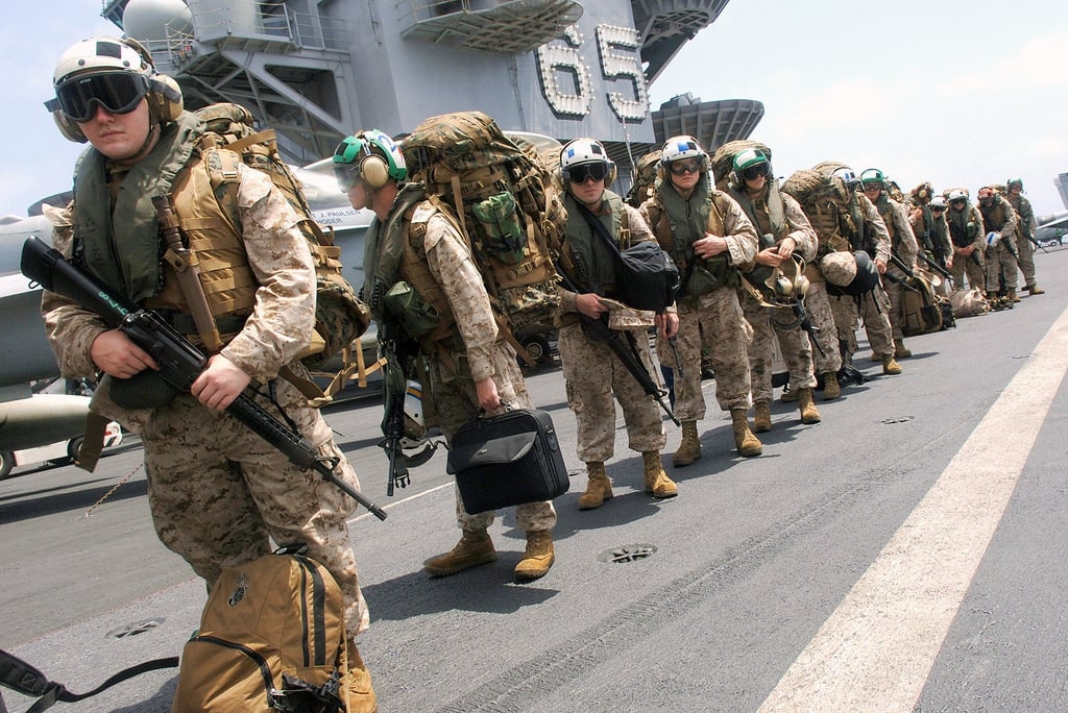
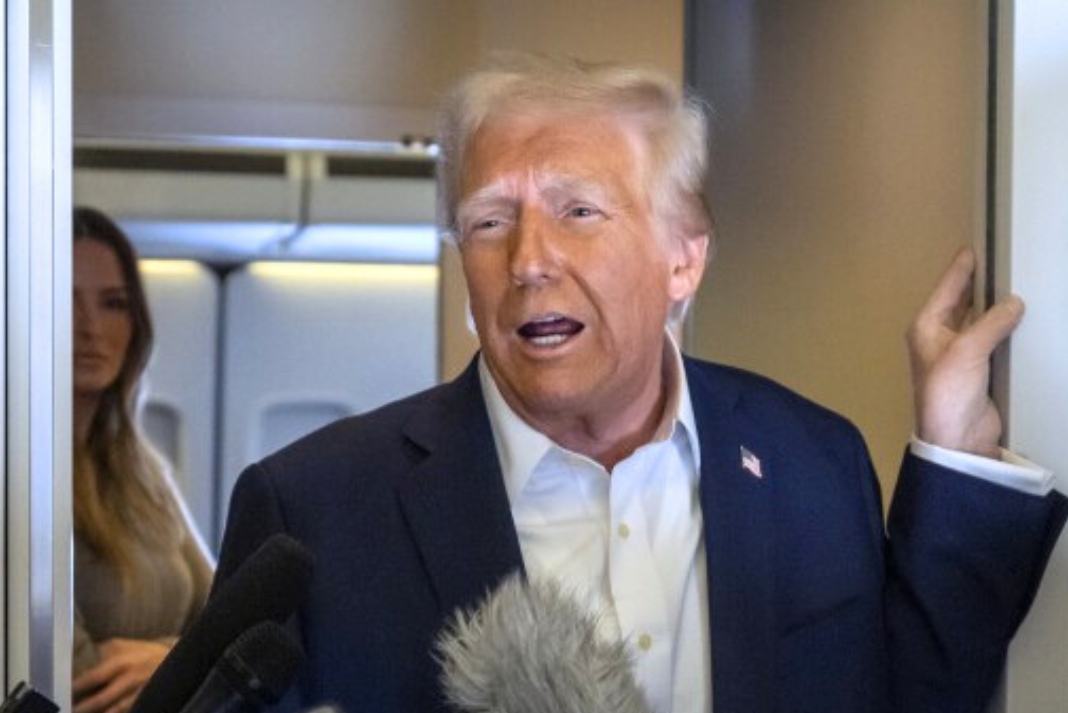
What does he say? What does he intend to do? Nobody knows. I am talking about President Donald Trump, a man with no desire to uplift the lives of the American people, just fulfilling his own pockets. His latest decision to send 2,300 US ground forces to the Middle East will soon become a nightmare for him.
With a war against Iran now in its fourth week, one has to ask: why is Donald Trump still not understanding the situation? Why is he still pushing for war? A war with no reason, no clear objective, and no exit strategy. It appears to be a conflict driven by the desires of two men, Donald Trump and Benjamin Netanyahu, who are recklessly ruining the world’s economic order.
The Blood Price: US Soldiers Killed and Wounded
Let us start with the cost already paid by American families. In this current war, which began on February 28, 2026, 13 US service members have already been killed. Seven were killed in Iranian drone and missile strikes, including six Army Reservists from Iowa who died at Shuaiba port in Kuwait and one soldier at Prince Sultan Air Base in Saudi Arabia. Six more died not in combat but in a KC-135 refueling aircraft crash in Iraq on March 12, yet another casualty of this unnecessary deployment.
Hundreds more have been wounded. The Pentagon confirmed 140 injured as of March 9, with eight severely wounded. By March 24, that number had risen to approximately 232 injured American service members.
And what for? What are these American sons and daughters dying for? The American public already criticized the Biden administration for 13 deaths in Kabul. Think what will happen to Donald Trump if, when, thousands of American soldiers die in combat with Iran. He is sending US Marines to get slaughtered on foreign soil for a war that serves no American interest.
The Other Blood Price: Iran’s Civilian Toll
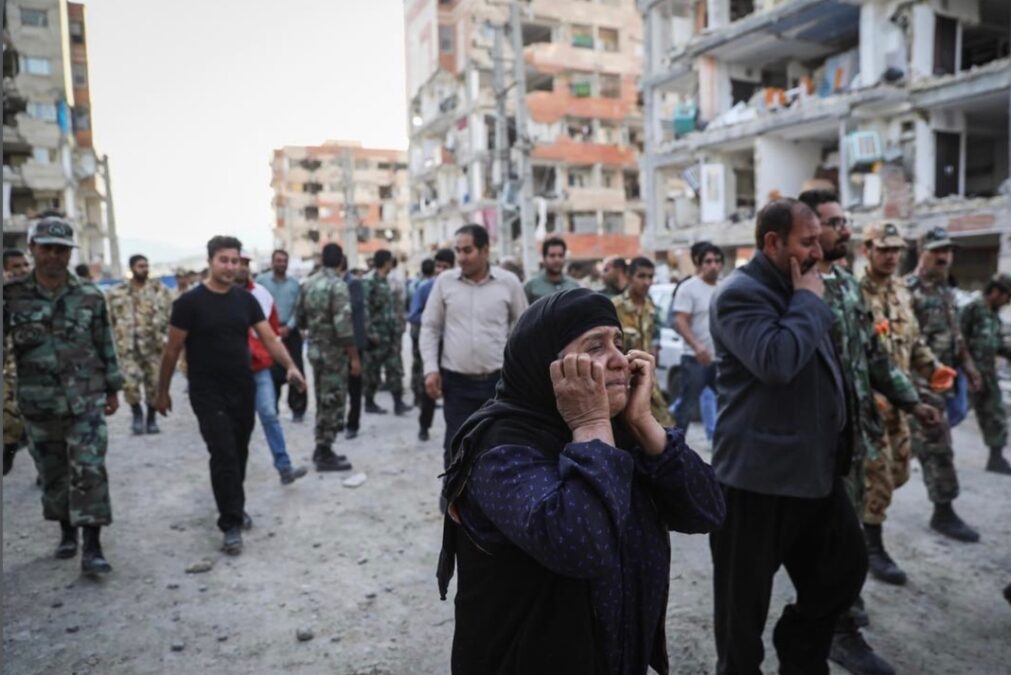
The US and Israel have killed nearly 2,000 people in Iran in less than one month. As of March 27, 2026, the death toll in Iran has reached at least 1,937, with nearly 25,000 injured.
These are not combatants in some distant battlefield. These are ordinary people, families, children, women, emergency workers trying to save lives. The numbers tell the story:
240 women killed
212 children under 18 killed
More than 4,000 women injured
Over 1,600 minors injured
Six rescue workers killed while carrying out operations
49 emergency centers hit, six completely destroyed
35 ambulances destroyed or damaged
More than 85,000 civilian sites damaged, including 64,583 residential units, 19,690 commercial properties, 282 medical centers, and 600 schools
The Iranian Red Crescent remains the only organization providing relief across the country, operating under constant bombardment. Jan Egeland, head of the Norwegian Refugee Council, warned this week: “My NRC colleagues in Iran are working under extremely difficult and dangerous conditions. Each night they lie awake, listening to the explosions and fearing for their lives, and each morning they return to work.”
Across the Middle East, more than 2,700 people have been killed by US, Israeli, and Iranian attacks, more than half of them in Iran. “Civilians are paying the highest price for this war,” Egeland said. “It must end.”
The Strait of Hormuz: The World Held Hostage
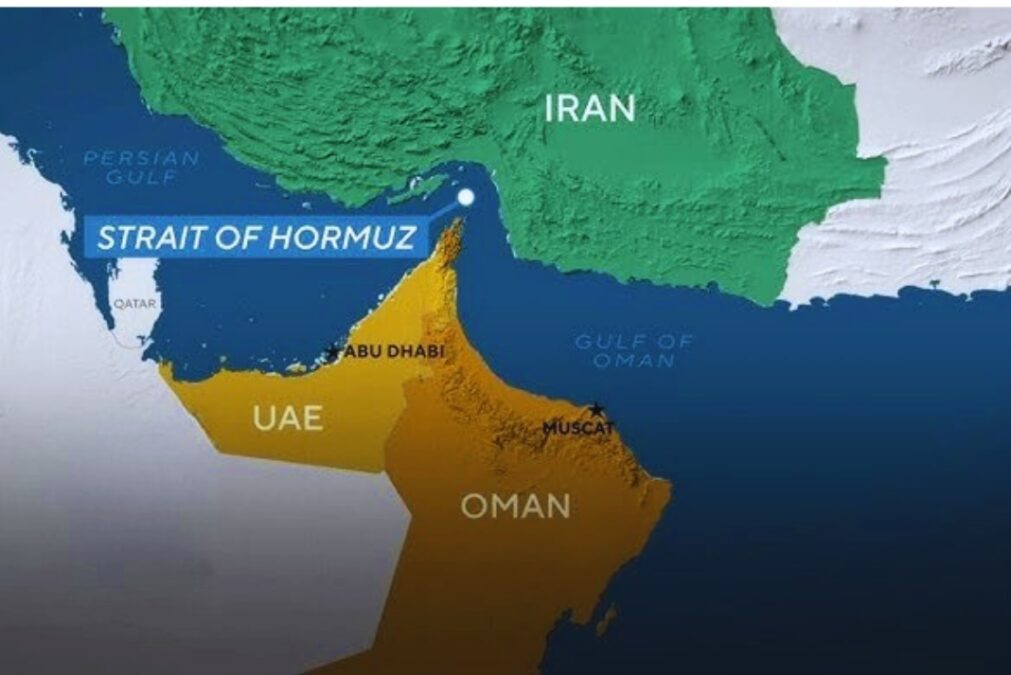
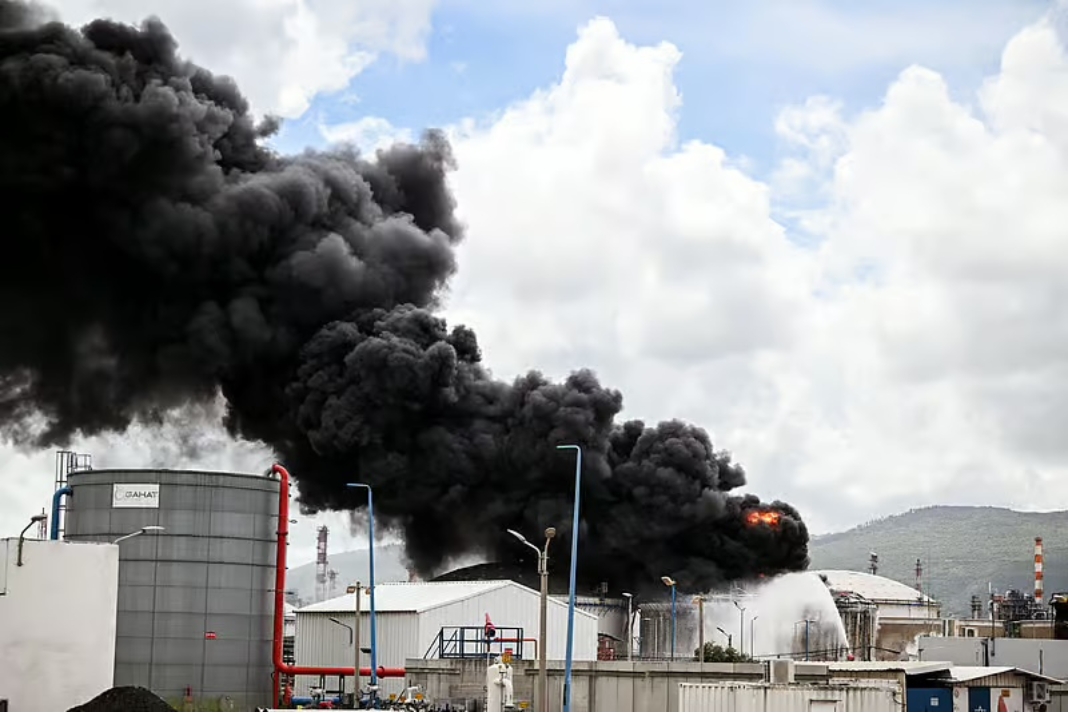
The Strait of Hormuz, through which 20 percent of the world’s oil once flowed, is now effectively closed. Iran’s chief commander of the Islamic Revolutionary Guard Corps Navy, Rear Admiral Alireza Tangsiri, declared that any vessel transiting through the Strait of Hormuz will face harsh measures and that passage now requires full coordination with Iran’s maritime authorities.
The Iranian Revolutionary Guards have made it clear: the strait is closed. Container ship SELEN was recently ordered to retreat after it failed to comply with legal protocols and lacked the necessary permit.
This is not a minor disruption. This is a chokehold on the global economy. Oil prices have already climbed 27 percent, with Brent crude now trading at $109 per barrel. And the worst is yet to come. The Macquarie Group warns that if this conflict drags into June, oil could hit $200 per barrel, a price that would trigger a global recession.
Goldman Sachs now places the probability of US recession at 30 to 40 percent, warning that inflation could spike to 5 percent while GDP growth is slashed by more than one percentage point. The 90 percent of the world’s ordinary people still struggling since the pandemic will face yet another economic trauma. And as always, the poorest will suffer most.
More Troops on the Way: Pentagon’s Quiet Escalation
The Pentagon has declined to comment on media reports that it is considering sending up to 10,000 additional troops to the Middle East. If confirmed, it would mark a significant boost to the US military presence in the region amid growing speculation that Washington may be preparing a ground operation in Iran.
According to BBC international editor Jeremy Bowen, the US already has two Marine expeditionary units on their way, carrying 2,200 Marines each, plus attack aircraft and helicopters. One is nearly there; the other is coming from California. There are also about 3,000 paratroopers from the 82nd Airborne on the way. They are lightly armed, their job essentially to go and hold something until heavier equipment can arrive.
Now, with reports of 10,000 more troops being considered, the scale of American commitment is quietly expanding. But as Bowen notes, this does not mean the US is tooling up for a full invasion of Iran. When the US invaded Iraq in 2003, the number was 160,000 troops, and Iraq is a quarter of the size of Iran. Instead, American planners may be looking at seizing islands near the entrance to the Gulf, potentially as a base for controlling who goes in and who goes out.
A Major Miscalculation: Iran Still Stands
There has been a miscalculation without question. If you talk to anybody who has a sober analysis of this war, including military people who do not want to be quoted, they will tell you there was an overestimation by the White House and Central Command as to how quickly Iran was going to crumble.
The White House thought that with shock and overwhelming military superiority, the regime would collapse or capitulate. It has done neither. Every day that Iran survives, despite losing so many key people, despite losing so much weaponry, despite so many hits, it is still standing. And that is making it very defiant.
As one military commander would say, it is not about how many sites you hit, how many missiles you destroy, or how many commanders you assassinate. It is about the net effect that you achieve. And the net effect so far is that Iran remains unbowed while the region burns.
Jeremy Bowen put it plainly: while the Americans appear to be making things up as they go along, with President Trump oscillating wildly in what he says, the Iranians appear to have a plan. They will know the Americans are thinking about seizing islands because it is no secret. And they will have a plan to make it as painful as possible for the Americans if they do that, launching drones from hundreds of kilometers away to make life difficult for US forces at the very least.
Trump’s Deadline Game: Another 10 Days
President Trump has announced he will postpone plans to start destroying Iranian energy plants by another 10 days, after claiming talks with Tehran were going very well. His self-imposed deadline, which he has already delayed once, is now April 6, 2026.
Iran has not publicly reacted to President Trump’s decision, but Tehran earlier said it was waiting for Washington to respond to its conditions for a ceasefire. After the US sent Iran a 15-point proposal to end the war, Iran outlined five of its own proposals and insists it has a natural and legal right to sovereignty over the Strait of Hormuz.
There is a major gap between what each country is willing to accept, according to BBC security correspondent Frank Gardner. Messages and proposals are being passed both ways from Washington to Tehran and back again, but the Iranian demands are unacceptable to the Americans and indeed to the Gulf States, and America’s demands are unacceptable to Iran, which is feeling very defiant.
There is a good reason why President Trump has paused for another 10 days his threat to attack Iran’s energy plants. Iran made it very clear that if that happened, it was going to hit back at power plants on the other side of the Gulf, targeting desalination plants that provide drinking water, hospitals, schools, and everything else. Gulf States have already taken a lot of hits from Iran, but this could be so much worse if those power plants were hit. Messages have been sent from the Gulf States to the United States: please think really carefully before you do this, because we are going to get hit in return.
The Gulf’s Impossible Choice
Caught in the crossfire, America’s Gulf allies face a stark choice: join the fight against Iran or risk both American wrath and Iranian retaliation. It is a no-win situation.
Iran has already struck energy infrastructure in Saudi Arabia, the UAE, Qatar, Bahrain, and Kuwait. Iranian missiles struck the Ras Laffan Industrial City in Qatar, the country’s main energy hub and the world’s largest liquefied natural gas center. Saudi oil exports have collapsed from 710,000 barrels per day in February to just 435,000 in March, a 40 percent drop.
The Gulf countries are stuck. If they support Donald Trump’s ambition to win this war, they become direct targets of Iranian retaliation. If they refuse to support American troops on the ground, they risk losing billions in security deals and US investment.
According to internal sources, Doha, Dubai, and Riyadh are all in deep tension. Saudi Arabia recently expelled Iran’s military attaché and four embassy staff, while the UAE has closed Iranian-linked hospitals and schools. Yet both nations know their infrastructure is dangerously vulnerable, power plants, desalination facilities, residential towers, all within easy reach of Iranian missiles and drones.
“Both countries have infrastructure which is very vulnerable to Iranian attack,” said Simon Henderson of the Washington Institute. “Getting more involved in the war will only worsen their predicament.”
The UAE’s Foreign Minister made clear his country’s frustration, declaring they would not be “blackmailed by terrorists.” But what can they do? Spend billions in America while Trump sits in the White House until the midterm elections? They cannot take a chance to make him unhappy. They are confused what to do and how.
Frank Gardner, reporting from Qatar, noted that Gulf Arab states look at where they were a month ago. Their ships carrying oil and gas were able to pass freely through the Strait of Hormuz without being threatened by Iran. There were no drones and missiles flying across the Gulf at them. Life was sweet. Somehow it has all gone very wrong.
Europe Says No
This time, America stands alone. European countries have already denied participation in this unwanted war. When President Trump asked allies to join military operations against Iran, he was rebuked by some of America’s closest partners.
Germany’s Chancellor Friedrich Merz told lawmakers: “To this day, there is no convincing plan for how this operation could succeed. Washington did not consult us. We would have advised against pursuing this course of action.”
Germany’s Defense Minister Boris Pistorius was even more direct: “This is not our war, we have not started it.”
France’s President Emmanuel Macron said flatly: “We are not party to the conflict.”
British Prime Minister Keir Starmer, despite Trump’s scornful comment that he was “no Winston Churchill,” has refused to join direct military action. A YouGov poll shows 49 percent of Britons oppose the attacks, with only 28 percent supporting them.
Spain’s Deputy Prime Minister brushed off Trump’s threats: “We are certainly not going to be anybody’s vassals, we won’t tolerate any threats.” A Spanish poll shows 68 percent oppose the war.
In Germany, 58 percent oppose the war. Criticism has even come from the far-right Alternative for Germany, a party that has courted the Trump administration. Its co-leader Tino Chrupalla said: “Donald Trump started out as a peace president, he will end up as a war president.”
Canada, France, Germany, Netherlands, all NATO nations, are not in favor. A European official, speaking on condition of anonymity, said American war aims are not defined or clear, and are probably different from Israel’s aims, notably on regime change.
A Real Estate Developer vs. A Nation Fighting for Its Home
Is Donald Trump sending US Marines to get slaughtered? The evidence suggests exactly that.
Iran knows its home better than anyone else. It is not Iran, any country knows its home far better than outsiders. We have seen this in the Ukraine-Russia war. Despite being a global military power, Russia has been unable to achieve a decisive victory against a much smaller nation that shares its border. Vladimir Putin comes from a military background and understands war tactics, yet even he found that conquering Ukraine was not easy. Ukraine still stands. In the first two months of 2026 alone, at least 352 civilians were killed and 1,523 injured in Ukraine, more than 30 percent higher than in February 2025. Russia is launching more than 5,000 drone strikes each month, along with frequent missile attacks. Yet Ukraine remains unbowed.
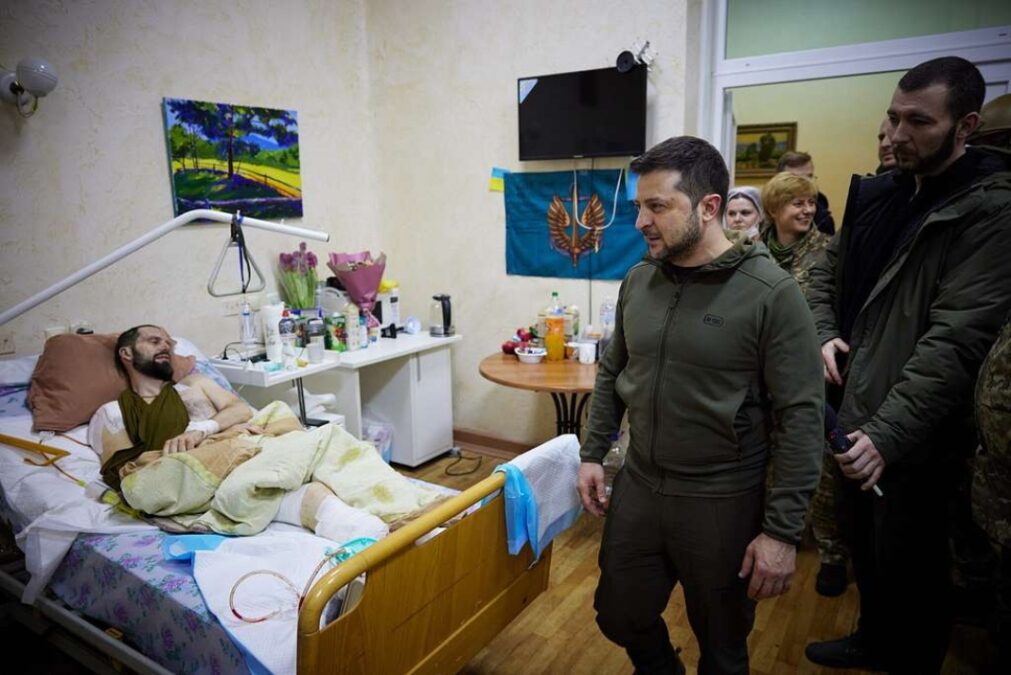
So think about what will happen to Donald Trump. A man with no expertise in war, no military background. He is simply a real estate developer who accidentally became President of America, probably propelled by his money power and an extensive PR machine.
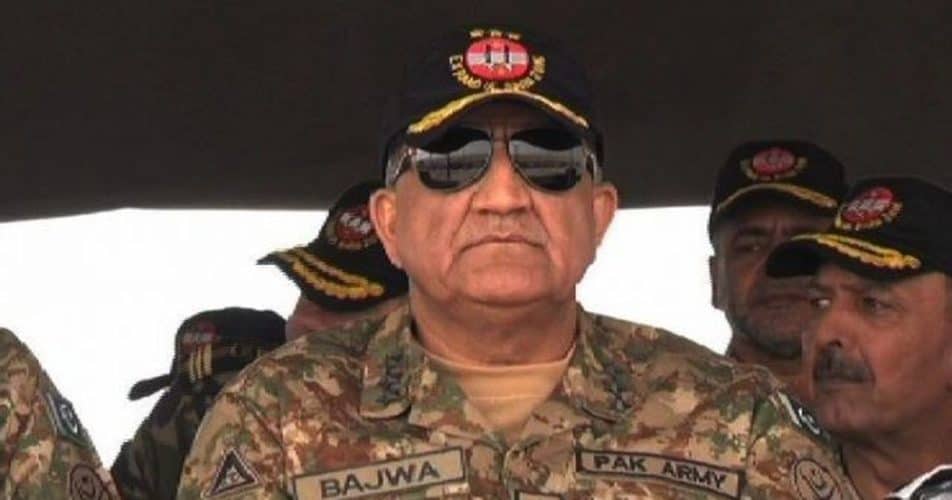
On the other side, Iran is fighting for a simple, powerful reason: to defend its country. Senior Islamic Revolutionary Guard Corps commander Ali Akbar Ahmadian has bluntly observed that while shooting down F-35 fighter jets is difficult, killing American soldiers once they set foot on Iranian soil is far easier. For two decades, Iran has trained specifically to counter ground operations. Long-range strikes may showcase America’s technological prowess, but direct combat on Iranian soil could prove suicidal for US forces.
The amphibious assault ship USS Tripoli, carrying more than 2,000 Marines, is now entering Gulf waters, part of the United States Central Command’s area of responsibility. The deployment includes approximately 2,200 to 2,500 Marines from the 31st Marine Expeditionary Unit, supported by F-35B stealth fighter jets and MV-22 Osprey aircraft. The 844-foot warship was recently docked at the remote island of Diego Garcia in the Indian Ocean. Another vessel, the Japan-based amphibious transport dock USS San Diego, is likely not far behind.
Reports suggest the US may attempt to seize Iran’s Kharg Island, its vital oil export hub, in a bid to quickly secure control of the Strait of Hormuz. Located about 15 miles off Iran’s coast, Kharg Island handles nearly 90 percent of the country’s oil exports. While controlling it would give the US significant leverage over Iran’s economy, it also carries a high risk of Iranian retaliation. Experts caution that it would not be easy for US forces, including Marines, Army airborne troops, and special operations units, to maintain control of the island.
One major challenge is geography. Iran’s nearly 1,000-mile coastline provides multiple launch points for anti-ship missiles, while its terrain makes it easier to conceal mobile weapons systems. Kharg Island’s proximity to the mainland would place US forces within range of Iranian multiple launch rocket systems and potentially even conventional artillery firing rocket-assisted projectiles. Reports indicate Iran has established layered defenses on Kharg Island and has recently deployed additional shoulder-fired surface-to-air missile systems, known as MANPADS. Iran is also laying defensive traps, including anti-personnel and anti-armor mines, across the island and along its shoreline.
Additionally, Iran is believed to possess first-person-view drones capable of identifying and targeting individual systems and US personnel in real time. Reports suggest Russia may be sharing intelligence, including satellite imagery, with Iran, which could significantly enhance the effectiveness of such strikes.
The Ceasefire That Was Not Peace
After five days of ceasefire, it does not matter that Donald Trump again extended the time. Iran is not fool, they are watching him closely. Everyone knows why he declared a small-time ceasefire. The reasons are simple: he did not offer any peace to the Iranian people. Rather, Donald Trump himself wanted time. He is buying time for himself, not to end this war, but just to be in war and win anyhow.
The US fleet is sailing from South Korea at 18 to 25 knots, a journey of 13,000 kilometers. The USS Boxer departed March 18, the USS Tripoli on March 19. This is not a withdrawal, this is a reinforcement. The Pentagon is also considering sending up to 10,000 ground troops, including infantry and armored vehicles, to join the approximately 5,000 Marines and thousands of paratroopers from the 82nd Airborne Division already deployed.
Iran has rejected America’s 15-point peace plan and laid out its own conditions: an end to assassinations, compensation for damages, measures to ensure war does not recur, and, crucially, recognition of its right over the Strait of Hormuz. The next critical window is April 6, Trump’s new “deadline” for the strait to reopen. No one expects compliance.
After Gaza, The World Knows
After mass killings in Gaza, the entire world has understood the disaster that can be created by Israel. Their cruelty will be remembered for hundreds of years, they killed newborn babies, women, journalists, doctors, and what not. More than 72,000 Palestinians have been killed in Gaza since October 2023. Now the same playbook is being applied to Iran.
While the world’s attention has shifted to Iran, Gaza continues to face a slow death. Between six and ten patients lose their lives daily in Gaza while waiting to travel for treatment, and the actual number may be higher. Israel continues to occupy nearly half of Gaza’s territory, and the Rafah crossing remains largely closed, with only about 100 people permitted to travel daily, most of them sick and wounded in dire need of treatment abroad. The volume of aid entering Gaza is much less than required, with about 600 trucks supposed to enter daily while the actual number does not exceed between 150 and 200 trucks, most of which are food aid.
The Cultural Destruction: Iran’s Heritage Under Attack

Beyond the human toll, Iran’s cultural heritage is being systematically destroyed. At least 56 historical and cultural heritage sites in Iran have been severely damaged by US and Israeli military strikes. The worst damage occurred at Golestan Palace (Rose Garden Palace) in Tehran, a UNESCO World Heritage site. The Mirror Hall, whose restoration was completed just one week before the attack, now lies in fragments. Officials estimate the damage will take at least 15 years to repair.
Golestan Palace’s fate is just one fragment of a larger picture. The Imam Square in Isfahan, an architectural masterpiece from the 17th century, has also been damaged. As one Iranian social media user commented: “They destroyed things older than Israel and America combined.”
I Am Seriously Confused
I am seriously confused. In such a big, and supposedly oldest democratic nation like the USA, why is nobody in the White House directly talking to this man to explain that war is not a solution to win another election?
Now, he has sent ground troops. For what? Getting slaughtered. I can imagine what Iran would do to US troops if they tried to enter their territory.
America is not like some nations with no value for human lives. Thirteen US soldiers have already died. Hundreds are injured. The American public is already criticizing this administration. Think what will happen to Donald Trump if, when, thousands of American soldiers die in combat with Iran.
He is not just risking a military defeat. He is risking his political future. The midterm elections are coming on November 3, 2026. The American people will not forgive a leader who sends their children to die in a war that serves no purpose other than to satisfy the ego of a president and the ambitions of a foreign ally.
This is not just a bad idea. This is a nightmare in the making. And the nightmare has only just begun.