‘Ukraine Does Not Plan to Surrender’: Kyiv’s Defiant Vow Echoes at UN as Civilian Deaths Spike 114%
Massive Russian missile and drone attack kills eight in Kyiv hours before debate; Moscow insists annexed territories are a ‘closed issue’ as global fallout spreads from Black Sea to European airspace.
United Nations – The General Assembly convened on Tuesday to address the deteriorating humanitarian situation in Ukraine’s temporarily occupied territories, with speakers painting a grim picture of civilian suffering and urgent calls for accountability as the conflict enters its fifth year.
“Every part of Ukraine has been a target,” declared General Assembly President Annalena Baerbock of Germany, warning that “there is no safe space left” in the country. The human toll has reached alarming levels, with civilian casualties in the first half of 2026 surging 114 percent compared to the same period in 2024.
Behind each statistic, Baerbock emphasized, lies a human story. She recounted the death of 20-year-old Oleksandra, killed in June while repairing a roof damaged in an earlier attack. Her family had relocated from the frontline Dnipro region seeking safety, only for the violence to follow them.
Ukrainian Deputy Minister Vows Defiance After Deadly Strikes
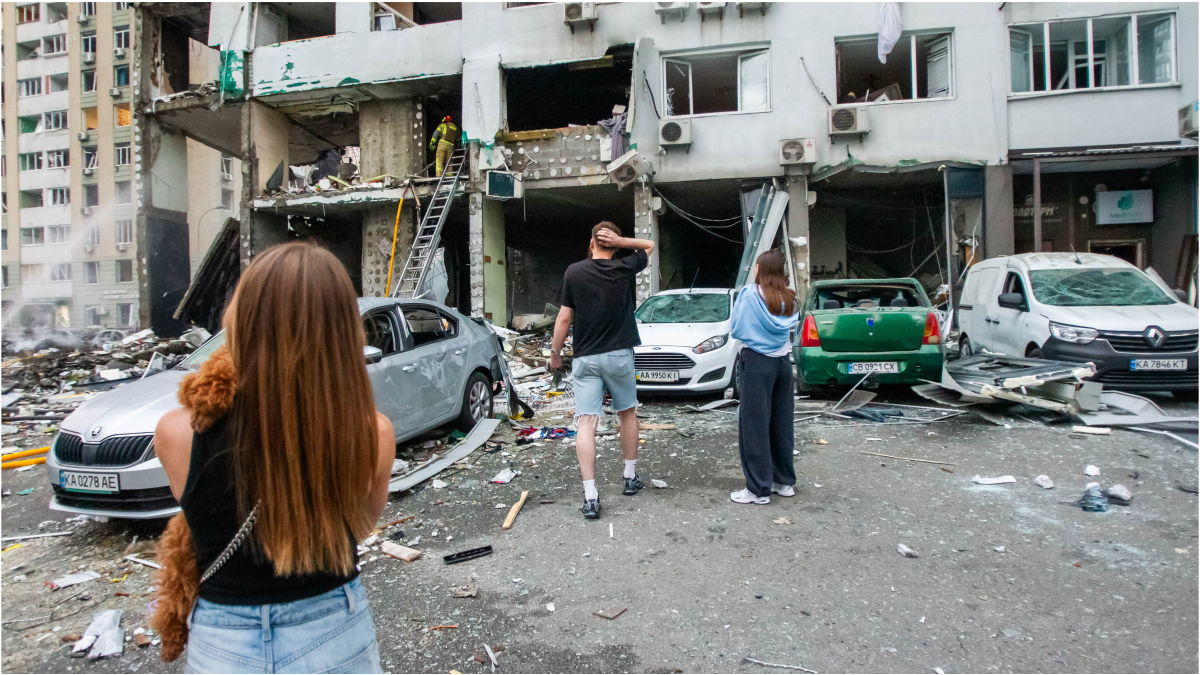
Addressing the Assembly just hours after a massive Russian ballistic-missile and drone attack struck Kyiv, Deputy Foreign Minister Mariana Betsa delivered a defiant message: “Ukraine does not plan to surrender.”
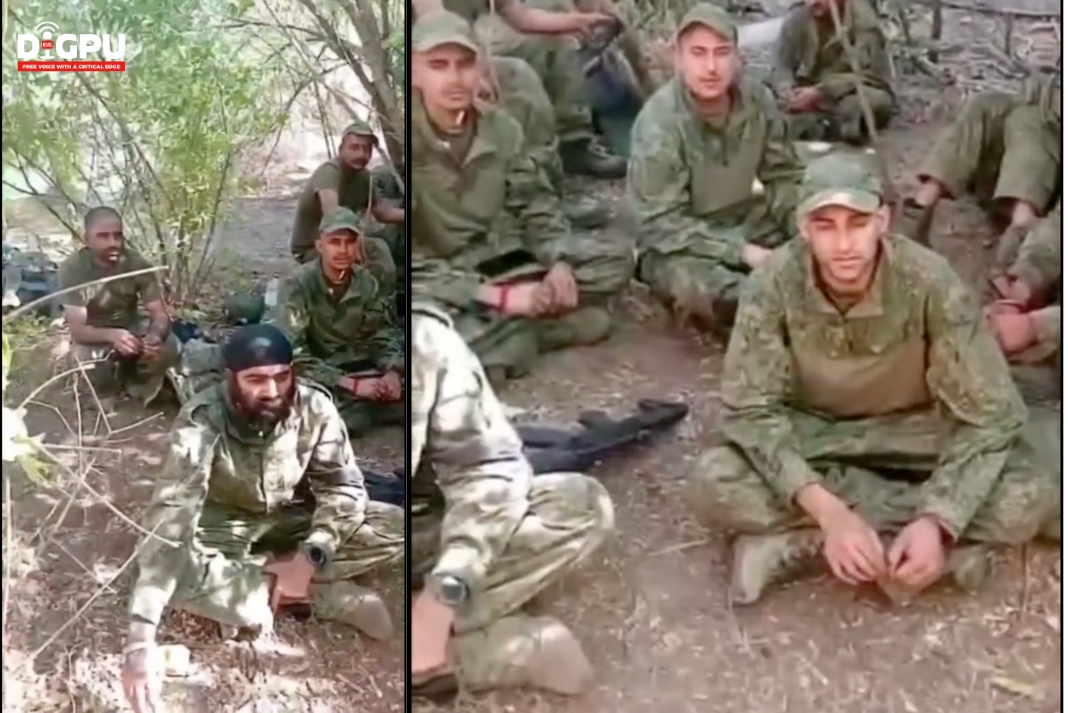
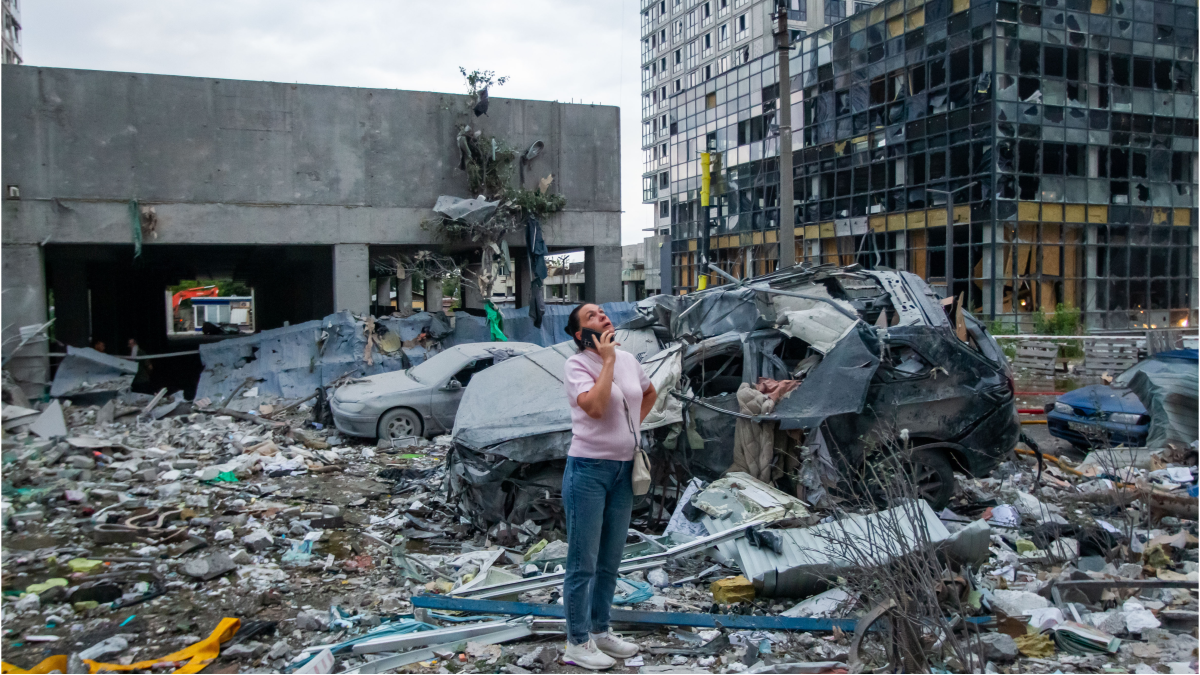
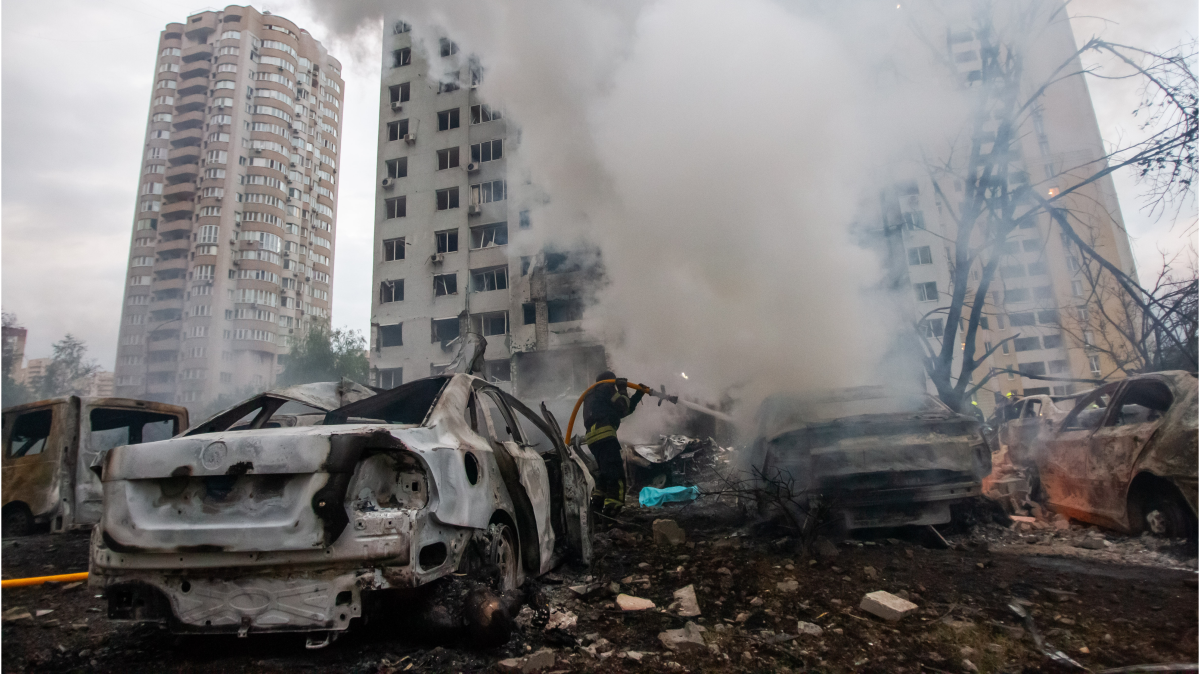
The attack killed eight people in the capital and four in the surrounding region, including an Indian citizen. Betsa noted the timing was particularly poignant, coming just one day after Indian Prime Minister Narendra Modi called for an end to the war.
“Every Russian attack is taking lives of citizens of other countries,” she stated, whether in the Black Sea or in Ukrainian cities.
Betsa accused Moscow of pursuing a strategy not merely to seize territory but “to erase Ukrainian identity.” She revealed that 1.6 million Ukrainian children currently live in occupied territories, with more than 20,000 reportedly deported or abducted by Russian forces. Only 2,495 have been returned.
In occupied areas, children face systematic “indoctrination” as part of what she described as a deliberate policy aimed at destroying Ukrainian families and identity.
Russia Dismisses Discussion as ‘Anti-Russia Campaign’
Russian Ambassador Vassily A. Nebenzia rejected the Assembly’s focus on what he termed the “so-called temporarily occupied territories,” describing the discussion as “foisted upon” the body and serving as “an instrument of an anti-Russia campaign.”
He insisted that the status of Crimea, Sevastopol, Donetsk, Luhansk, Zaporizhzhia and Kherson is “a closed issue” not open for debate, maintaining that residents “have made their informed choice; they’ve tied their future to Russia.”
The ambassador argued that nationalist forces in Kyiv had “persecuted the Russian-speaking population,” which “predetermined their desire to return to Russia.”
“Nobody can force millions of people to deny their identities,” Nebenzia declared. “The fact that they belong to the Russian world.”
Regional Fallout Extends Beyond Ukraine’s Borders
The conflict’s impact has seeped far beyond Ukraine, speakers warned. Airspace incursions are becoming increasingly frequent in Latvia, the Republic of Moldova, and Romania, while threats to safe navigation in the Black Sea and the Sea of Azov carry global consequences.
Romania’s delegate reported intensified strikes on Ukrainian ports and commercial shipping along the Danube and in the Black Sea, disrupting global food supply chains. Several regional countries face “unacceptable” drone incursions “for which the aggressor bears full responsibility.”
The Republic of Moldova’s representative highlighted the interconnected nature of security threats, stating: “Moldova’s security and Ukrainian security are inseparable. Stronger Ukrainian defence also means safer skies for Moldova and greater regional security.”
Benelux Countries Detail ‘Systematic Assault’ on Identity
Speaking for Belgium, Luxembourg and the Netherlands, Ambassador Lise Gregoire-van Haaren detailed the systematic nature of what she described as a “systematic assault on Ukrainian identity and fundamental rights” in occupied territories.
“Families pressured to take Russian passports to obtain healthcare or pensions; parents threatened with losing their children if they refuse the Russian curriculum,” she recounted.
Residents face intimidation, house searches, denial of medical care and social benefits, or detention for perceived pro-Ukrainian views, “for as little as a song or flag on their phone,” she stated.
The Benelux countries firmly rejected any so-called elections organized by Russian occupation authorities and will never recognize their results.
US, China Call for Diplomacy Amid Divergent Approaches
The United States emphasized diplomacy as the path forward, with its representative stressing that “only diplomacy can stem the death and destruction.” Washington expressed support for ongoing dialogue to end strikes against civilian vessels and infrastructure in the Black Sea, pledging to “play whatever constructive part” needed to facilitate negotiations.
China’s delegate echoed this sentiment, insisting that “dialogue and negotiation are the only way out,” while urging parties not to abandon efforts simply because negotiations prove difficult.
European Union Rejects ‘Forced Russification’
The European Union, speaking as an observer, declared it would “never” recognize as lawful any purported annexation of Ukrainian territories or the “forced Russification” of their people.
“The Ukrainian people, like all people, deserve a secure, independent future free from war and free from coercion,” the EU representative insisted.
Canada, speaking also for Australia and New Zealand, announced that together with Ukraine and Norway, it will convene a ministerial conference in Toronto from September 28-29 focused on returning Ukrainian children, detained civilians, and prisoners of war.
Georgia and Türkiye Raise Broader Concerns
Georgia’s representative drew parallels with his country’s experience, noting that “for more than three decades, Russia’s illegal occupation of Georgia’s Abkhazia and Tskhinvali regions has continued to affect the security, human rights and humanitarian situation on the ground.”
Türkiye’s representative emphasized the importance of safeguarding Crimean Tatars’ identity and heritage, noting that Ankara had brought Kyiv and Moscow to the negotiating table in 2022 and facilitated three rounds of talks last year addressing humanitarian concerns.
The Assembly also concluded a high-level meeting in the afternoon commemorating the International Day against Nuclear Tests.