The Responsibility of Germany in Shaping Europe’s Security Future
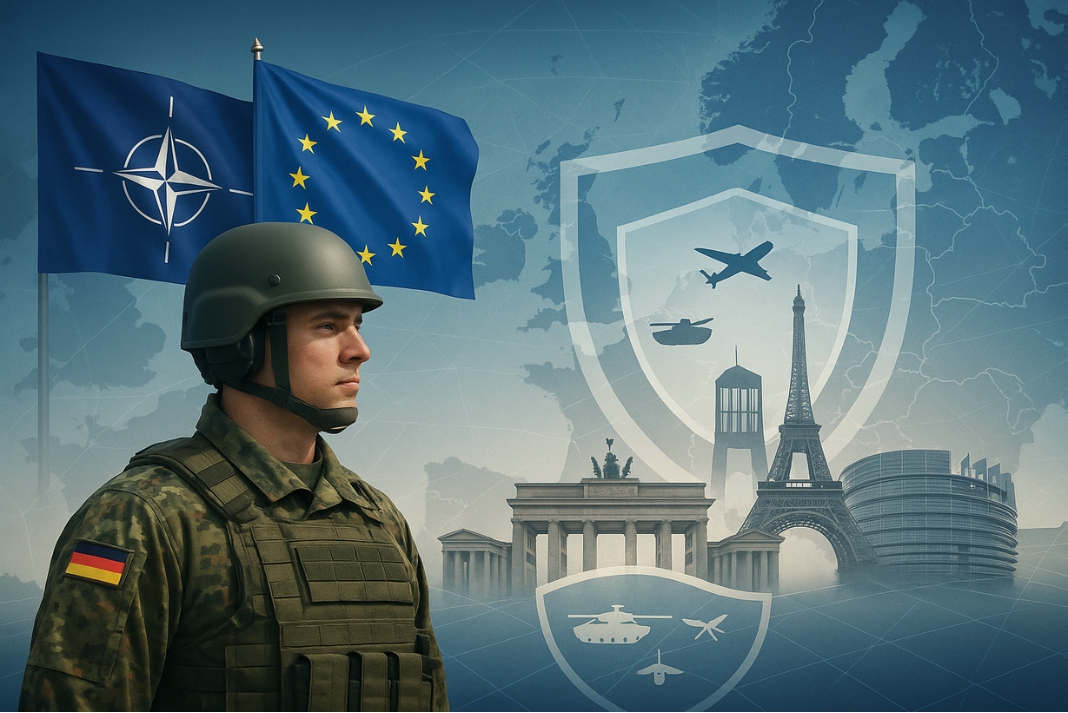
A recent article published in Epikaira warns of a supposed “nightmare” in the rearmament of Germany, invoking the dark memory of the Third Reich. Such a mindset follows in the footsteps of Thucydides, acknowledging that history is an eternal repetition. This perspective, though emotionally charged, misses the central reality of today’s strategic environment: Germany’s military renewal is not a threat to Europe but a necessity for Europe’s security, resilience, and sovereignty. In the 21st century, the real danger is not German strength but European weakness.
Germany Must Assume Responsibility for European Security
For decades, Germany and other European powers have relied on the United States as the ultimate guarantor of European stability. This arrangement, born out of the post-Cold War order, allowed Berlin and others to underinvest in defense while focusing on economic growth, social security, diplomacy and pacifism. But the world has changed. Systemic rivalry between the US-led West and China, Russia’s full-scale war of aggression against Ukraine, the erosion of statehood in Africa and the Middle East, transnational terror networks, the rise of authoritarian powers such as Iran and North Korea, and uncertainty about the future of American commitment to NATO all underscore one fact: Europe must be able to defend itself.
Germany, as the EU’s economic hegemon, with the largest European population and a political center of gravity, cannot remain a bystander. Its leadership and cooperation with EU partners is indispensable and has yet to materialize in matters of European security, where France has assumed the de-facto leadership. Taking responsibility does not mean militarism; it means maturity of German foreign and security policy after 50 years of passivity.
It also signals understanding that political sovereignty is inseparable from the ability to ensure one’s own security. Without a strong German contribution, a French-German-Italian-Polish coordination in Europe will remain strategically dependent and vulnerable.
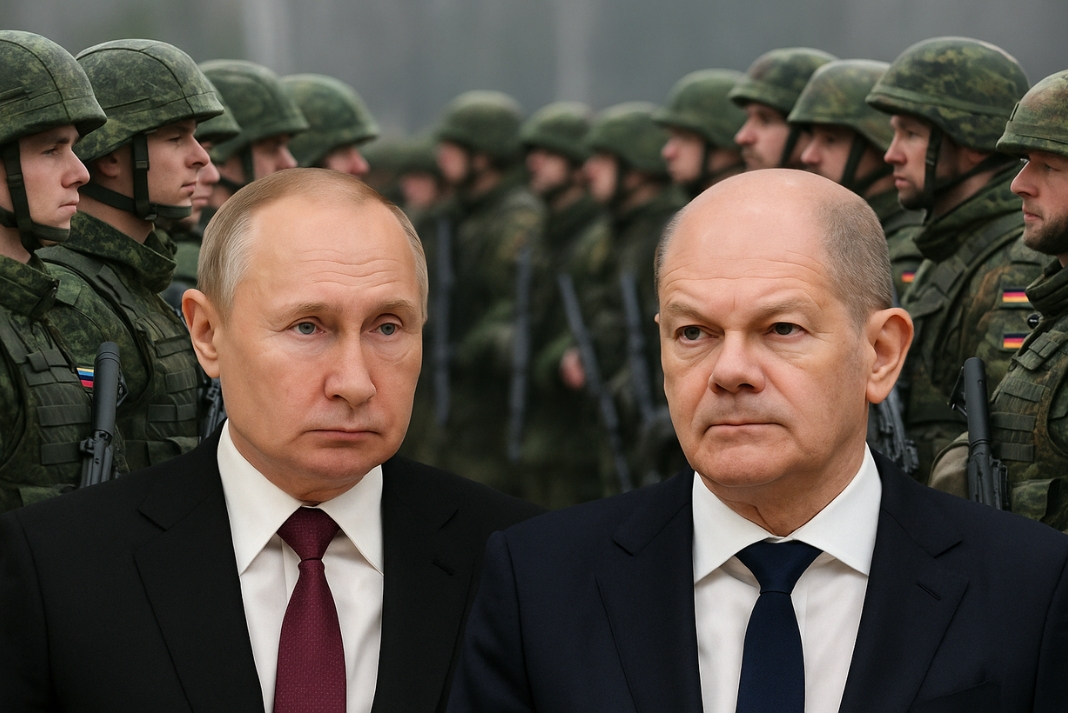
The Bundeswehr has long suffered from underfunding, outdated equipment, and bureaucratic inertia. Even acquiring new rifles has been a process lasting seven years due to paralyzing procurement systems. The Zeitenwende, “turning point” announced by Chancellor Olaf Scholz in 2022 accompanied by a 100 billion investment in the armed forces, must be understood a first reckoning that the post-Cold War order, that allowed further European integration and economic development, has eroded.
The current German government under Chancellor Friedrich Merz has announced and additional 500 billion for defense purposes, as well as a gradual increase of the annual defense spending to up to 5%. On paper, Germany is a military giant, with a large population pool, an interconnected defense industry and a soon to be the largest defense budget in Europe. Yet, a better look behind the curtain leads to much more sobering assessment. For example, in contrast to Greece, a middle power, Germany fields less main battle-tanks, less AIFV and APC, less artillery systems, less active jet aircraft and possess a much smaller navy.
Germany requires a genuine modernization of Germany’s armed forces: expanding personnel to 260,000, acquiring fifth-generation aircraft like the F-35, revitalizing armored units, and investing in drone, cyber and space capabilities. A rebuilt Bundeswehr and an integrated German-French (and other EU partner) defense industry sector should not be seen as a nationalist project, but as the backbone of a collective European force.
The EU has already experimented with EU Battlegroups and is moving toward a Rapid Deployment Capacity, mimicking NATO. Germany together with France, Italy and Poland can and must provide the foundation on which a true European army could eventually rest – interoperable with NATO, but capable of acting autonomously when Europe’s interests diverge from those of Washington. Strategic emancipation within NATO is not abandonment of the alliance; it is an act of responsibility, ensuring that the transatlantic relationship rests on partnership, burden-sharing and not dependency.
Building Credible Deterrence Against Russia
Europe faces its most immediate and dangerous threat from the east and south. Russia’s aggression against Ukraine is not a one-off conflict; it is part of a revisionist project to reassert imperial control over Europe’s periphery. A weak and unprepared Europe will only encourage further adventurism from Moscow, Beijing, Tehran and even Ankara. The credibility of deterrence rests on visible, deployable, and modern forces. Credible deterrence is necessary to secure the EU’s eastern and Southern flank and prevent Russian (or other) escalation. Germany must contribute heavily to this effort. Its geography places it at the logistical heart of NATO’s and the EU’s defense, and its economy gives it the resources to sustain military commitments; and its defense sector needs to provide European systems that omit external control or dependence. Rearmament is therefore not about reviving militarism; it is about ensuring that Russian tanks do not once again roll into Central Europe. The nightmare scenario is not a strong Germany, but a paralyzed Germany while Europe faces off an aggressive Russia and/or China.
European security is not threatened only by Russia. Instability in Africa and the Middle East directly impacts the continent through migration pressures, terrorism, and regional conflicts spilling over into European societies. Failing states and violent extremism in the Sahel, North Africa, and the Levant create long-term risks that cannot be ignored. Germany with its partners has already participated in missions in Mali and other regions, but often in limited or symbolic ways. A stronger Bundeswehr could take on a more decisive role in stabilizing crises through peacekeeping, training local forces, and providing humanitarian support. Importantly, military capability must be paired with development policy and diplomacy. Security, stability, and economic opportunity in Europe’s southern neighborhood are inseparable. The lesson of recent decades is clear: if Europe does not project stability, instability will project itself into Europe. Germany’s leadership, rearmament and modernization as well as the understanding of the complex nature of civil-military cooperation in building credible, deployable forces for crisis management is therefore an investment in Europe’s long-term security.
While Europe’s immediate security concerns lie in its east and south, the global balance of power is also shifting in the Indo-Pacific. China’s growing assertiveness – from military buildup in the South China Sea to economic coercion – has forced the United States and its allies to consider strategies of containment. Europe cannot afford to remain aloof. As a trading power, Germany’s prosperity is deeply tied to freedom of navigation and stability in East Asia. The deployment of the German frigate Bayern to the Indo-Pacific in 2021 was a first symbolic step. A rearmed Germany would enable Europe to contribute meaningfully to allied presence operations, freedom of navigation, and the defense of international law in the region. Supporting Western containment of China, if necessary, does not mean abandoning dialogue with Beijing. It means showing that Europe is willing to defend the rules-based order globally, not only when it is convenient. If Europe, with an invigorated Germany and France, wishes to be seen as a global actor, it must accept that European security is interconnected with the security of allies in East Asia.
Transforming Europe into a hub of resilience
The rise of the AfD, much like other populist movements on both the far-left and far-right across Europe, cannot be understood in isolation from the broader context of Russian hybrid warfare and Chinese influence operations. Both Moscow and Beijing seek not a strong and sovereign Germany, but a divided, polarized, and strategically paralyzed Europe. By amplifying extremist narratives, weaponizing disinformation, exploiting social grievances, and fueling distrust in democratic institutions, Russia in particular has cultivated fertile ground for movements that undermine European unity and transatlantic solidarity. The AfD’s positions on NATO, EU integration, migration, and sanctions against Russia align conveniently with the Kremlin’s strategic objectives: to weaken Europe’s cohesion, obstruct collective deterrence, and erode Germany’s ability to act as a responsible leader within Europe. In this sense, the AfD is not simply a domestic protest party but part of a larger geopolitical play, one that seeks to replace European resilience with European vulnerability.
Thus, civil-military cooperation and resilience building must stand at the core of Germany’s security renewal. Rearmament alone does not suffice against the spectrum of hybrid threats (cyberattacks, disinformation campaigns, economic coercion, sabotage of critical infrastructure, deterioration of democratic and ethical values) that increasingly target European societies. Security today is not only about arms and defense spending, but about the ability of a state and society to absorb shocks and continue functioning. Germany must therefore pair its military modernization with investments in whole-of-society resilience: protecting energy grids, transport systems, and digital networks; strengthening civil defense and disaster response; fostering media literacy and counter-disinformation capacities; and deepening cooperation between military, police, intelligence services, industry, and civil society. A credible deterrence posture requires more than tanks and aircraft – it requires the capacity of a resilient democracy to withstand pressure, recover from crises, and deny adversaries the ability to exploit societal vulnerabilities. In this sense, Germany’s responsibility is twofold: to rebuild a modern Bundeswehr and to lead Europe as a role model in designing a resilience model that integrates civil preparedness with military strength, ensuring that hybrid attacks cannot fracture Europe from within.
Conclusion: The Real Nightmare is European Weakness
The Epikaira article frames German rearmament as a revival of past nightmares. The real nightmare is the opposite: a Europe unable to defend itself, dependent on uncertain allies, and exposed to the ambitions of authoritarian powers. Germany’s renewed military posture should not be seen through the prism of the 20th century, but through the challenges of the 21st. In that sense, history does not repeat, but sometimes it rhymes. The Zeitenwende represents not militarism but responsibility: to deter Russia, to address hybrid threats, to stabilize Europe’s southern neighborhood, to support allies in Asia if necessary, and above all, to ensure that Europe’s sovereignty is real and not rhetorical. A strong Germany, integrated into European and transatlantic structures, is not a threat but a guarantee. The task is not to fear German power, but to ensure it is embedded in collective defense, collective security, democratic oversight, and European solidarity. The future of European security depends on it.