India Deploys Advanced Anti-Drone Shield on Rajasthan Border to Thwart Pakistan’s Infiltration Tactics
The western border of Rajasthan, long a battlefield for drug trafficking and drone infiltration from Pakistan, is now equipped with India’s most advanced anti-drone technologies. Centered around Bikaner, Sri Ganganagar, and Jaisalmer, India has deployed DRDO-developed D4 (Drone Detect, Deter, Destroy) anti-drone systems, drone jamming guns, and the latest ‘Antim Drone Gun.’ This is not just a security measure, but a part of India’s long-term strategy to neutralize every type of aerial threat on the border.
In recent years, this region of Rajasthan has been the main target of drones sent from Pakistan. From heroin consignments dropped under the cover of night to weapons, ammunition, and reconnaissance attempts on Indian military bases – all incidents prove that Bikaner, Ganganagar, and Jaisalmer are no longer just border districts but the first targets of Pakistan’s “drone war strategy.” According to the BSF, heroin worth over ₹500 crore is seized every year in these districts, but this is only a fraction of the larger game Pakistan runs through its drone network. Much more narcotics slip past, reaching Indian youth and society. That is why India has prioritized shielding these three sectors with high-tech anti-drone defenses.
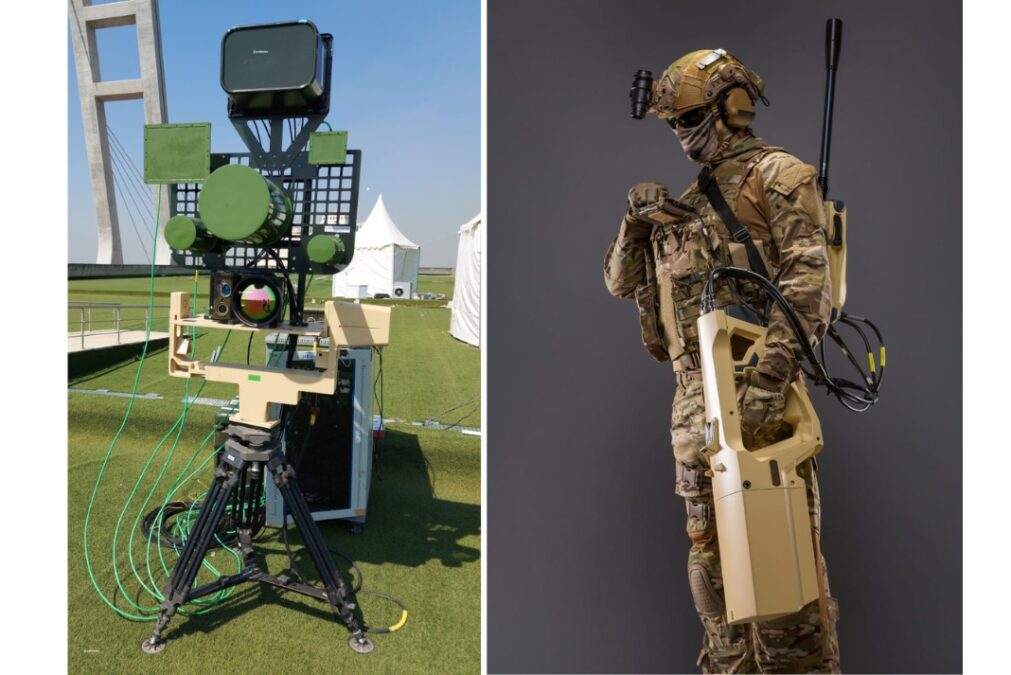
At the center of this strategy lies the D4 anti-drone system, developed by DRDO and Bharat Electronics Limited (BEL), the system is known for its 360-degree coverage, radar network, radio frequency detection, and laser-based directed-energy weapons. It can detect and neutralize micro and mini drones flying 4–8 kilometers away. The D4 system has both “soft kill” and “hard kill” options: in soft kill mode, it hijacks control using RF jamming and GPS spoofing, while in hard kill mode, it uses a laser beam to burn drones mid-air. In Operation Sindoor (May 2025), the D4 destroyed over 600 Turkish and Chinese-origin drones sent from Pakistan, after which it was permanently deployed along the Rajasthan border.
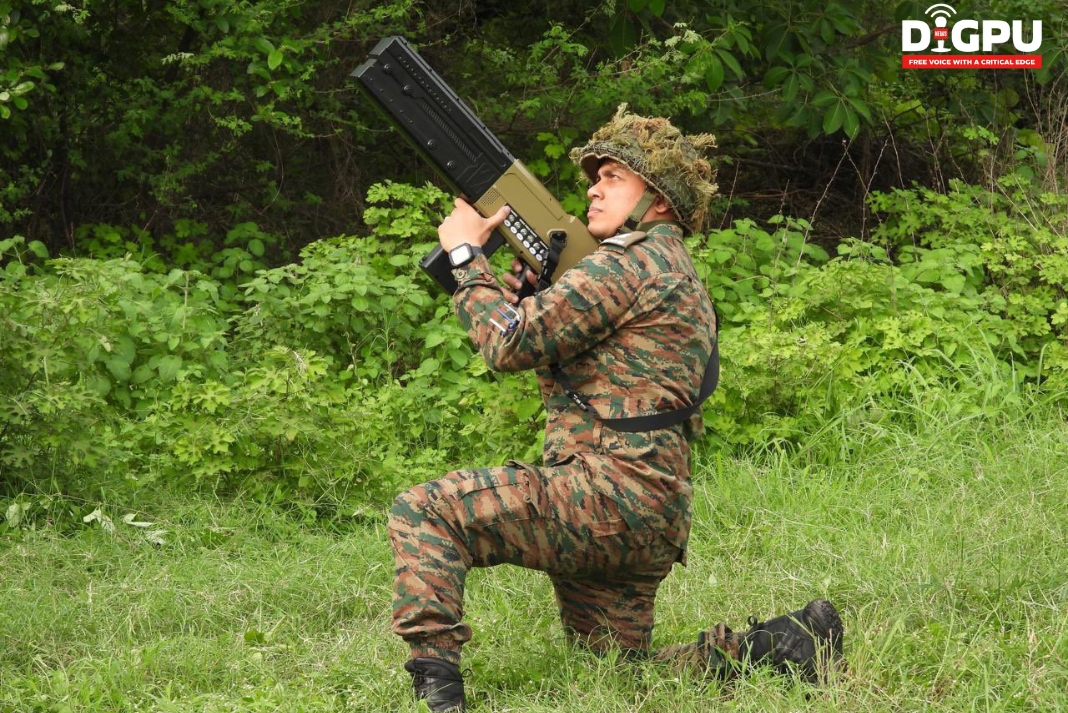
But India’s strategy goes beyond the D4. In the Sri Ganganagar sector, portable drone-jamming guns have been experimentally deployed. Modern, lightweight, and shoulder-mounted, these rifles use directional antennas with a point-and-shoot mechanism. They can jam drone frequencies up to 2.5 km away in just 10 seconds, causing drones to lose balance and crash. The BSF believes these guns will deal the biggest blow to heroin trafficking, since most small drones are used to drop narcotics.
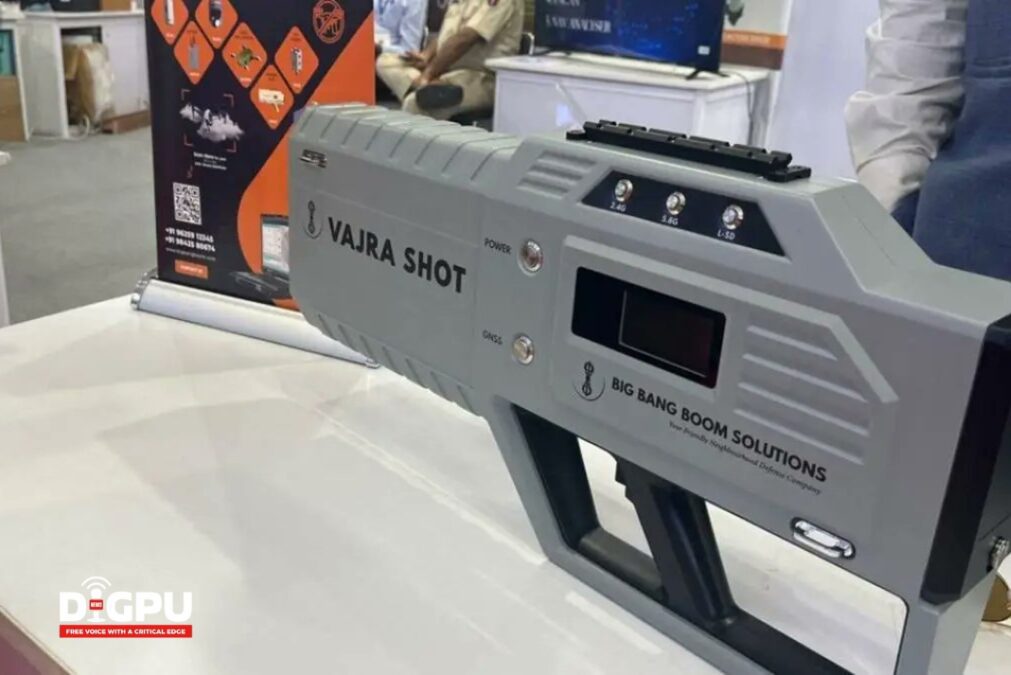
DRDO has also developed a cutting-edge technology – the ‘Antim Drone Gun.’ The name itself signifies its role as the final, decisive defense against drone attacks. It has been specifically designed to stop swarm attacks, where dozens or hundreds of drones are launched simultaneously. Traditional anti-drone systems struggle against swarms, but Antim Drone Gun uses AI-based command-and-control systems and millimeter-wave radar, enabling it to detect even drones without radio signals. It is currently on trial in Bikaner, Ganganagar, and Jaisalmer, and will be widely deployed after successful tests.
To operate these high-tech systems, the Indian Army is training BSF personnel. While BSF has long experience with patrolling, anti-narcotics operations, and counter-smuggling, handling advanced drone warfare requires military expertise. Hence, the Army and BSF are creating joint training modules. Soon, every BSF forward post will have trained personnel capable of operating D4 systems and drone jamming guns.
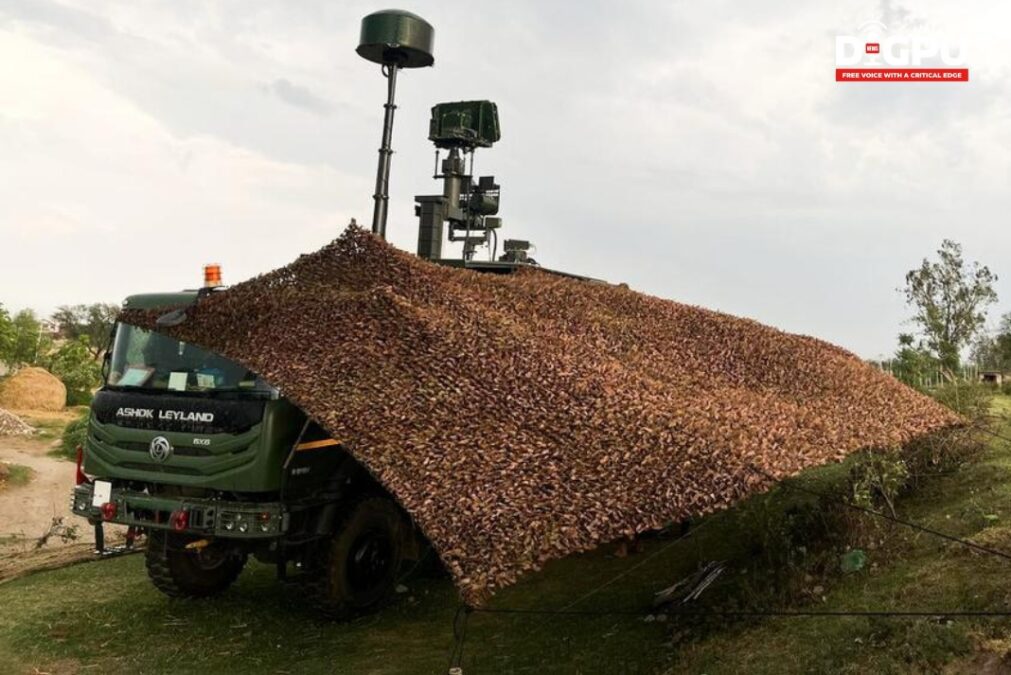
Locally, the impact is already visible. Villages in Bikaner, Ganganagar, and Jaisalmer, long living in fear of drones, now see hope. Many times, narcotics consignments fell directly into villages, pushing youth into addiction. Village elders and sarpanches repeatedly appealed to BSF and authorities for protection. Now, after witnessing the D4 shooting down drones mid-air and jamming guns forcing smugglers’ drones to crash, villagers feel their borders are safer than ever before.
Strategically, this deployment is more than just border security – it is India’s message to the world: the wars of the future will not be fought only with guns and tanks but with drones and anti-drone technologies. And in this field, India is becoming fully self-reliant under “Make in India.” The D4 system, drone jamming gun, and Antim Drone Gun – all are indigenous technologies. While Pakistan depends on China and Turkey for such tech, India has developed and deployed its own solutions.
The roadmap ahead is clear. The Ministry of Defence has hinted at further upgrades to the D4 system to extend its range and precision. Drone jamming guns will be deployed across Rajasthan, Punjab, and Jammu. Once Antim Drone Gun trials succeed, it will be mass-produced and installed in every sensitive border region. Gradually, India’s western border will become a true “No-Drone Zone,” where no Pakistani plot will succeed.
The conclusion is clear – Bikaner, Ganganagar, and Jaisalmer have now become India’s strongest shield in national security policy. This deployment is not just a military move but a strategic statement: India will now counter every new challenge on its own. Pakistan’s drone conspiracies will end at the border, and Rajasthan’s sandy soil will be remembered as India’s most formidable security laboratory of the future.