I Will Not Be Intimidated”: Jack Smith Pushes Back Against Threats in Explosive Congressional Hearing
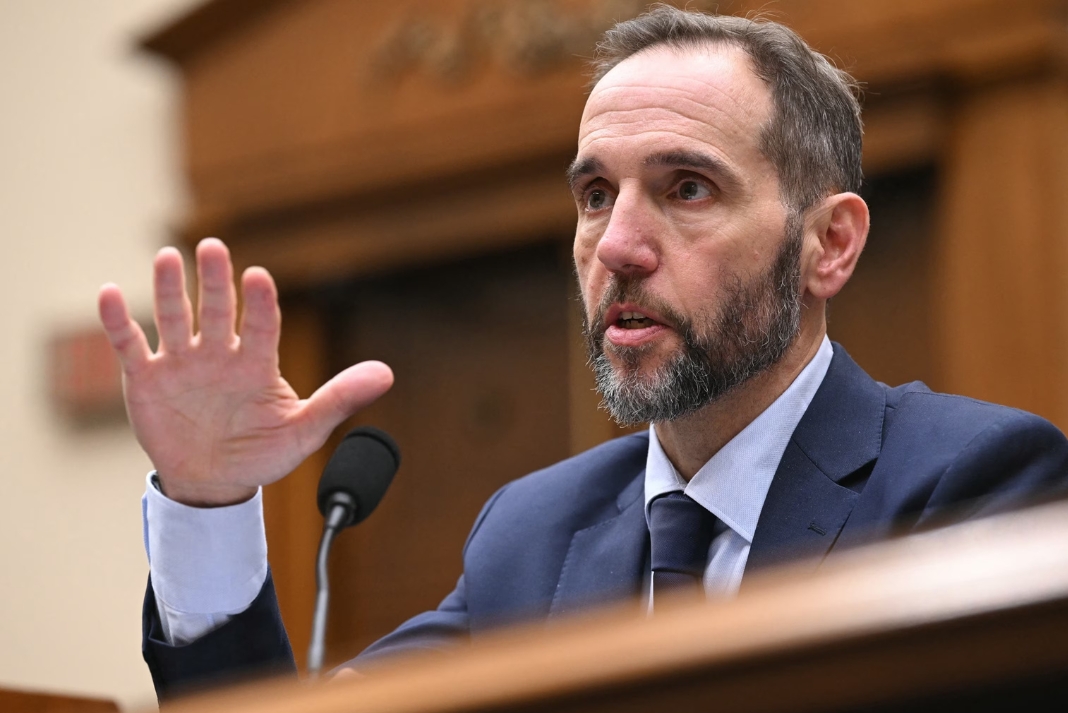
Washington, D.C. – Former Special Counsel Jack Smith used a lengthy and often combative congressional hearing to deliver a stark message: intimidation, political pressure, and public attacks will not erase the evidence he says shows former President Donald Trump committed serious crimes.
Appearing before the House Judiciary Committee, Smith said he and his team have faced repeated intimidation efforts, which he described as attempts to silence them and deter others from holding powerful figures accountable.
“The statements are meant to intimidate me,” Smith said. “They are also made as a warning to others what will happen if they stand up. I will not be intimidated.”
A Rare Public Defense by a Career Prosecutor
Smith opened by stressing his nearly 30 years of service as a career prosecutor under both Republican and Democratic administrations. He rejected claims that his work was politically motivated and said he acted as a nonpartisan prosecutor guided by a single principle.
“Follow the facts and the law without fear or favor,” he told lawmakers.
Smith said prosecutors cannot control outcomes but are obligated to “do the right thing the right way for the right reasons,” a standard he said guided his work as special counsel.
“Proof Beyond a Reasonable Doubt”
At the center of Smith’s testimony was his repeated assertion that the Trump investigations met the highest legal threshold.
“Our investigation developed proof beyond a reasonable doubt that he committed serious crimes,” Smith said.
He emphasized that Trump was charged only after evidence met that standard and after two separate grand juries, in two different federal districts, returned indictments. Smith added that he would have made the same prosecutorial decisions regardless of whether the accused president was a Democrat or a Republican.
“No one should be above the law in this country,” he said.
Trump Knew He Lost, Smith Says
One of the most consequential portions of Smith’s testimony focused on intent. Smith said investigators gathered extensive evidence showing Trump knew his claims of election fraud were false after the 2020 election.
Smith said Trump’s campaign staff, senior White House advisers, the Justice Department, and Republican state officials repeatedly told him there was no evidence of widespread fraud. In Georgia, Smith recalled, both the Republican secretary of state and attorney general directly debunked Trump’s claims.
“He was told repeatedly that the claims were not true,” Smith said. “He disregarded those debunkings.”
That knowledge, Smith explained, was central to proving criminal intent.
January 6 Was Foreseeable, Smith Testifies
Smith also addressed the January 6 attack on the U.S. Capitol, stating unequivocally that Trump’s conduct was the primary cause.
“He was the person most responsible for what happened at the Capitol,” Smith said, adding that the violence was “foreseeable” to Trump.
Smith testified that Trump knowingly spread false claims, summoned supporters to Washington, and addressed a crowd he knew was angry, using rhetoric that urged them to “fight.” Investigators, Smith said, found evidence that some rioters believed they were acting on Trump’s direct instructions.
Speech vs. Crime
Responding to First Amendment defenses raised by Republicans, Smith drew a sharp legal distinction.
Trump, he said, was free to claim he won the election—even falsely—but not free to knowingly use lies to obstruct lawful government functions such as the certification of electoral votes.
“When speech is used to commit a crime or facilitate a crime, it is not protected,” Smith said.
Georgia and the Fake Electors Scheme
Smith highlighted Georgia as a critical part of the case, describing recorded conversations in which Trump pressed state officials to overturn the election. When those officials refused, Smith said, Trump resorted to threats.
Smith also detailed the so-called fake electors scheme, testifying that some participants were misled into believing their alternate electoral certificates would only be used if courts ruled in Trump’s favor.
“That didn’t happen,” Smith said, “yet those certificates were still used.”
Classified Documents and National Security
The former special counsel also addressed the classified documents case, framing it as a national security issue rather than a paperwork dispute.
Smith testified that after leaving office, Trump illegally retained classified material, stored it in unsecured locations, and obstructed efforts to retrieve it.
“Highly sensitive national security information was held in a ballroom and a bathroom,” Smith said.
Smith noted that restrictions on discussing parts of his report remain due to court orders, but he said his conclusions were submitted to the attorney general as required by regulation.
Retaliation and Intimidation
Throughout the hearing, Smith condemned what he described as attempts to seek revenge against career prosecutors, FBI agents, and support staff who worked on the investigations.
“To vilify and seek retribution against these people simply for doing their jobs is wrong,” he said, calling them “the best of us.”
Asked whether he believed a Trump-led Justice Department might attempt to indict him personally, Smith replied bluntly.
“They will do everything in their power to do that because they’ve been ordered to by the president.”
A Warning About Democratic Institutions
Drawing on his experience prosecuting war crimes overseas, Smith warned lawmakers not to take the rule of law for granted.
“The rule of law is not self-executing,” he said. “It depends on our collective commitment to apply it—especially when doing so is difficult and comes with costs.”
Legal analysts noted that Smith’s testimony was highly unusual for a former special counsel, who typically avoids public defense of closed investigations. Smith said he appeared before Congress to correct what he called “false and misleading narratives” about his work.
As the hours-long hearing concluded amid repeated partisan clashes, Smith returned to the point he had made from the outset: intimidation would not rewrite the evidence or change the conclusions reached by investigators and grand juries.
“I will not be intimidated,” he said.