Ashok Gehlot’s Fiery Visit to Bikaner: Questions Centre’s Accountability, Attacks Agencies’ Credibility, and Pushes for Democratic Restoration
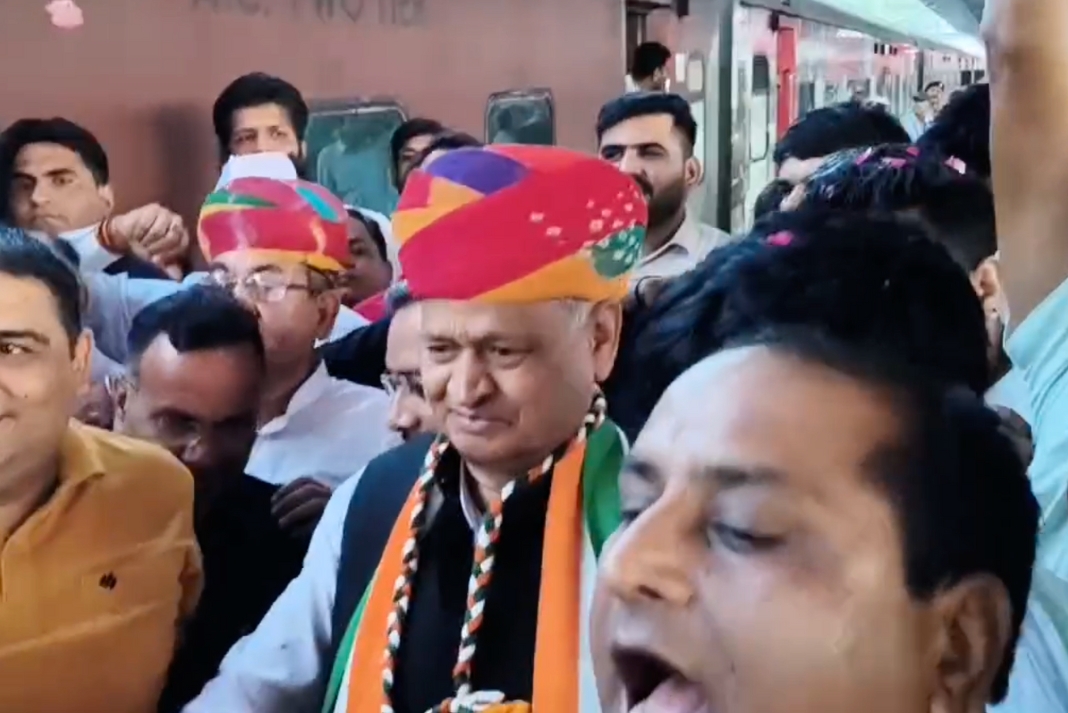
Bikaner, Rajasthan – During a politically charged two-day visit to Bikaner, Ashok Gehlot, a senior Congress leader and former Chief Minister of Rajasthan, launched a scathing attack on the central government. He raised serious questions about how constitutional institutions work, how investigative agencies are misused, and the state of democratic values in India. His statements, made during a press event, showed a new level of political hostility that suggests the Congress party’s strategy for the forthcoming elections.
People want answers about the mass killing
Gehlot started his speech by talking about the horrible and mysterious deaths of 26 people in a recent national catastrophe. He was furious that the central leadership didn’t say or do anything about such a big failure in internal security.
The people of this country have a right to know where the system went wrong. “Who is to blame for such a huge security breach, and why hasn’t anyone quit yet?” he asked directly.
He didn’t hold back from going for Union Home Minister Amit Shah directly. The Home Minister must be held responsible when 26 people die in confusing and suspicious circumstances. However, the Home Minister hasn’t even considered resigning. “Where is this government’s sense of duty?”
Ashok Gehlot also backed Rahul Gandhi and Priyanka Gandhi Vadra, saying that the main questions they asked about this national catastrophe have not been answered. “If the opposition is calling for openness and responsibility, the administration should react with clarity. He said, “The silence is disturbing.” We are altering our historical narratives and selectively recalling specific events during national gatherings.
The Congress leader didn’t hold back from criticising the Centre’s influence on the story of historical events. Gehlot said that the administration is changing historical facts to fit its political goals, pointing to a recent meeting of the Centre at the national level. “They are purposely changing history. The establishment of Bangladesh and the split of Pakistan into two pieces is an important event in India’s military and diplomatic history. He said, “But this fact is being hidden to trick the younger generation.”
Gehlot says that leaving out or changing historical facts is not just ignorance; it is a purposeful attempt to dominate the story and erase the work done by previous Congress-led governments.
Weaponization of Central Agencies: What Does the ED Do?
Gehlot’s main point of complaint was what he called the “blatant misuse” of central investigative agencies like the Enforcement Directorate (ED) against political opponents. “The ruling party has turned the ED into a political tool. There is a clear pattern: people in the opposition get hit with ED cases shortly before elections or important parliamentary sessions. But Parliament doesn’t ask any questions about how these cases are going or whether they are legal.
He also said, “Democracy can’t work when institutions that are supposed to make sure justice is done are used against political opponents.” If Parliament, the highest body in this nation, doesn’t obtain answers, how can we expect regular people to trust that things are fair and open?
Controversy surrounds Jagdeep Dhankhar’s resignation
Gehlot also discussed how former Vice President Jagdeep Dhankhar suddenly and without explanation resigned, calling it “an assault on constitutional decorum.” He claims that the administration has not clarified the issue, which sets a poor example for how politicians should behave in the future.
Even a regular Member of Parliament has to say why they are leaving. How can the vice president, who is a constitutional figure, resign without saying a word? The government needs to tell the people why. Gehlot remarked, “Otherwise, such behaviour is not only unconstitutional but also very suspicious.”
Criticism at the State Level: The Yamuna Water Project and the Elections for the Student Union
Gehlot turned his attention to the Rajasthan state government and criticised them for not keeping their promise to send Yamuna water to the state. “The Chief Minister made big promises concerning the Yamuna water project. But where is the job? Where is the progress? It is still just another empty promise.
Gehlot then discussed the elections for student unions in Rajasthan, which are becoming more and more important to the state’s young people. “Young people get involved in democracy at universities. The administration is afraid of students who speak out because they keep putting off student union elections. He stated, “If Congress gets back in power, our first priority will be to hold these elections and bring back student democracy.”
A Look at Congress’s Plan for the Election
Gehlot’s comments in Bikaner are part of a bigger plan to change the direction of the Congress party. His voice went from righteous anger to fierce defiance, showing that he was ready to fight in the run-up to the national and state elections. His main point was to bring back democratic values, make institutions more open, and get people to trust the government again.
He stressed that the Congress will no longer sit quietly while the Constitution is being weakened. “We’re not simply battling for power. Gehlot said, “We are fighting for the soul of this nation, its Constitution, its institutions, and its people.”
Political Implications: The National Discourse Is at a Crossroads
Ashok Gehlot’s words are likely to have an effect on politics all around the country. He has brought back a conversation that the BJP-led government has been trying to avoid by asking tough questions about national security failures, the role of the Home Minister, how agencies work, and inexplicable resignations at the highest levels.
Analysts suggest that the Congress leadership is attempting to reclaim its intellectual dominance by portraying itself as the defender of democracy, the Constitution, and civil liberties, leveraging the expertise of experienced voices such as Gehlot.
A Fight for the Idea of India
Ashok Gehlot’s trip to Bikaner was more than simply a normal political event; it was a call to action for democracy. His tough questions and strong opposition to what he regards as the current government’s dictatorial inclinations are part of a bigger ideological battle that will shape the next chapter of Indian politics.
The topics he brought up—mass accountability, institutional independence, historical purity, and youth participation—are likely to be the main topics of political discussion in the following weeks. As the Congress gets ready for its campaign, leaders like Gehlot are becoming important in making the party’s case against the status quo.
He said, “India’s democracy can’t afford to be quiet anymore.” It’s time to say something, do something, and get things back to normal.