Your Imagination Isn’t as Powerful as You Think; And Scientists Just Proved It
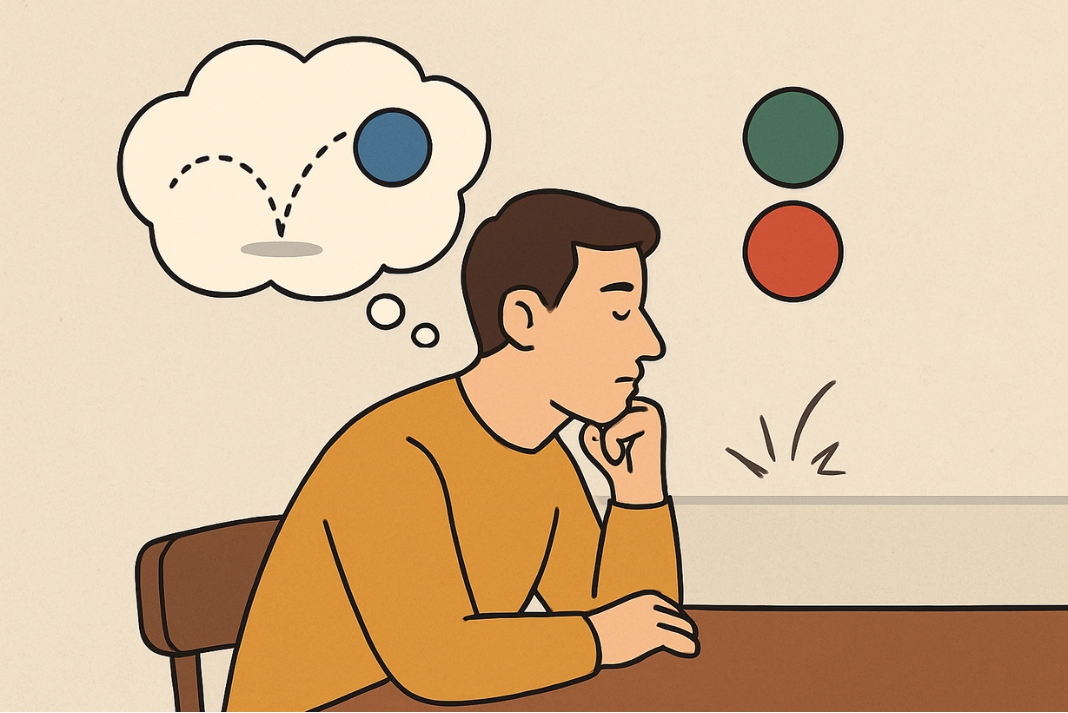
Think you’ve got a vivid imagination? Sure you can picture a car chase, a juggling act, or even a tower of blocks crashing to the floor. But according to new research out of Harvard, your brain is secretly cutting corners.
In a study that surprised even the scientists behind it, researchers found that when it comes to mentally tracking objects after they disappear from view, your imagination can only handle one thing at a time.
Just one.
Let that sink in.
When the Ball Drops – Literally
The study, published in Nature Communications, was led by Harvard psychologist Tomer Ullman and his collaborator Halely Balaban from the Open University of Israel. Together, they asked a deceptively simple question: how many things can a person imagine moving at once?
Participants watched short animations of balls bouncing around, like something out of a racquetball match. Then, the balls vanished mid-bounce, and people had to mentally track where they were headed.
If there was just one ball, people nailed it.
Add a second?
Total flop.
“It was harder than any of us expected,” Ullman said. “We laughed a lot.”
Your Mind’s Eye Has a Bottleneck
This wasn’t just a silly game. Scientists have long known that we can visually track several objects at once, think lifeguards watching swimmers, or parents scanning a playground. But imagining objects after they vanish? That’s a whole different brain function.
Ullman’s team discovered that the imagination doesn’t multitask like we thought. Instead of juggling multiple mental objects in parallel, like a supercomputer, our minds seem to follow just one object at a time, switching back and forth in a kind of mental relay race.
Even when researchers tempted participants with cash prizes to do better, they couldn’t break the one-object ceiling.
That’s right: your imagination won’t level up for money.
Wait, But I Feel Like I Can Imagine More…
Sure you do. So do the scientists.
“If I close my eyes right now, I can see a tower of blocks falling down,” said Ullman. “It doesn’t feel limited.”
But feelings aren’t facts, and the data paints a clearer picture: when it comes to tracking invisible motion, your imagination taps out after one item.
Even when the two objects moved in sync, making things easier, people still struggled. As soon as the visual cues disappeared, so did their accuracy.
So What Does This Mean?
It means your brain is clever, but not all-powerful. And it’s full of workarounds. For example, when you imagine motion, your brain may not simulate it perfectly like a Pixar movie. Instead, it runs quick-and-dirty tricks to guess what’s going on.
Ullman’s lab is fascinated by this “intuitive physics”, how we mentally simulate the physical world. From bouncing balls to colliding objects, your brain builds little animations in real-time. But now we know: it only stars one lead actor at a time.
The Big Picture
This research cracks open a new area of study: not just what we imagine, but how much we can handle in that mental movie.
“There’s been decades of research on how we perceive the world in front of us,” Ullman said. “But barely any on what our imagination can actually juggle.”
So if your inner movie director feels a little understaffed, now you know why.
You’re not broken. You’re just human.
And in the theater of your mind, there’s only one spotlight.