Who Gets to Decide Who’s a “True Indian”? Certainly Not the Judiciary
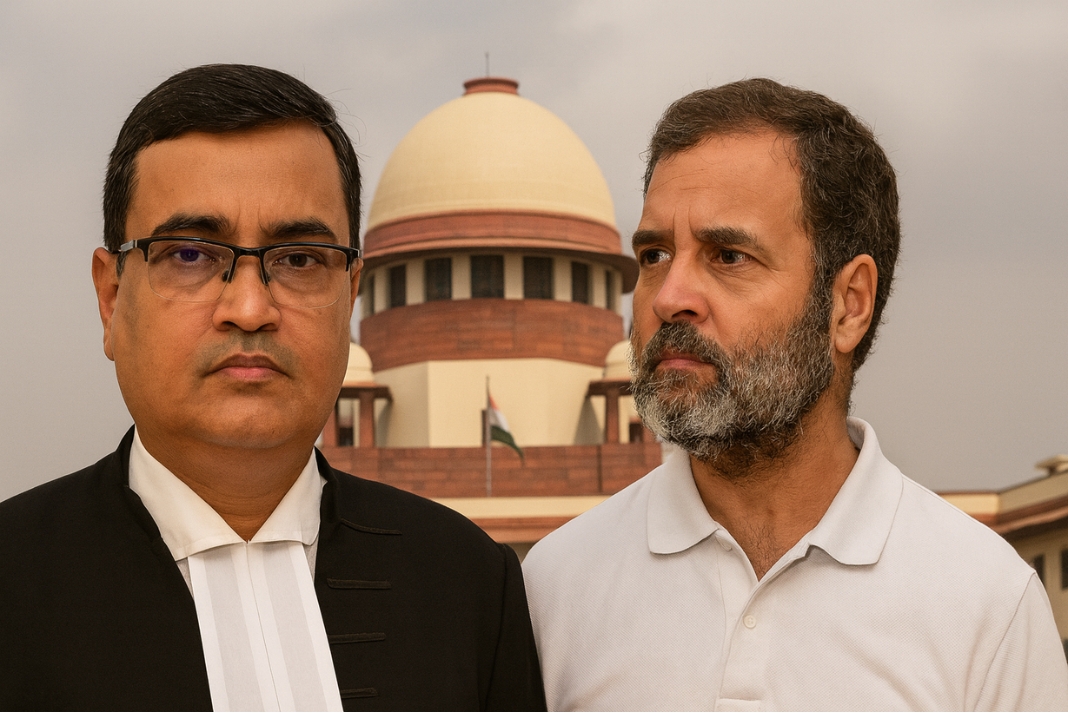
By what authority does a judge decide who qualifies as a “true Indian”? That question should unsettle anyone who believes in democracy. When Justice Dipankar Datta questioned Rahul Gandhi’s patriotism over his comments about the Galwan Valley clash, it crossed a line—one that separates judicial duty from ideological interference.
Let’s be clear: no court, no judge, no bench holds the power to certify patriotism. Not in a democracy. Rahul Gandhi, as Leader of the Opposition, has a constitutional role—to question the government. That’s his job. If the ruling party dislikes it, they’re free to answer, not retaliate. But they avoid the debate, and instead orchestrate narratives to paint dissent as betrayal.
What did Rahul Gandhi do?
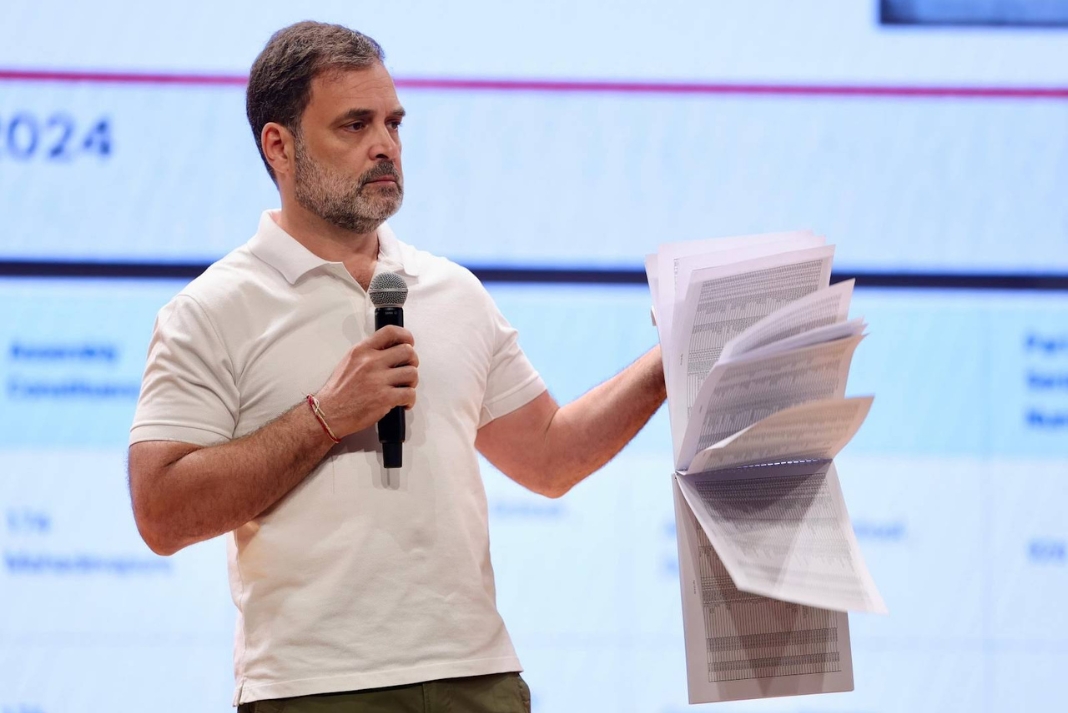
He questioned the government’s handling of the border situation with China, citing facts gathered during his Bharat Jodo Yatra in Ladakh. He listened to locals, visited the region, and raised the issue in Parliament. He openly criticized the government for celebrating with the Chinese Ambassador after Indian soldiers were killed. That’s not anti-national—it’s holding power accountable.
And yet, Justice Datta asked, “How does Rahul know China occupied 2,000 sq km?” His implication? That speaking publicly about Chinese encroachment is unpatriotic. But where was this same outrage when BJP MP Tapir Gao said in Parliament that China had occupied 50 km in Arunachal Pradesh and built villages on Indian soil? Why no questions about his Indianness?
The hypocrisy is glaring.
Even more troubling is the growing proximity between sections of the judiciary and the ruling party. Let’s look at the record:
- Justice Arun Mishra Praising Prime Minister Modi
At the International Judicial Conference on 22 February 2020, Justice Arun Mishra, then a sitting Supreme Court judge, said:
“We thank the versatile genius, who thinks globally and acts locally, Shri Narendra Modi, for his inspiring speech which would act as a catalyst in initiating the deliberations and setting the agenda for the conference… India is a responsible and most friendly member of the international community under the stewardship of internationally acclaimed visionary Prime Minister Shri Narendra Modi.”
This is not normal judicial language. The Supreme Court Bar Association condemned the remarks as sycophantic and warned they damage judicial independence. Why should any sitting judge be lavishing praise on a political leader, let alone one whose government appears before the court in sensitive matters?
- Justice Dipankar Datta’s Hostility Toward ADR
In April 2024, the Supreme Court ruled against a PIL filed by the Association for Democratic Reforms (ADR), which sought stronger verification of electronic voting machines. In his judgment, Justice Datta wrote:
“I have serious doubt as regards the bona fides of the petitioning association.”
Let that sink in. A judge casting suspicion on ADR—a group that has tirelessly worked for electoral transparency for over two decades. Suggesting that advocating for paper ballots is somehow “undermining India” sounds far less like a legal argument and far more like a political attack. The judiciary’s job is to weigh evidence and law, not to accuse transparency advocates of sabotage.
- Justice Shekhar Yadav’s Anti-Constitutional Remarks
At a VHP event on 8 December 2024, Justice Shekhar Kumar Yadav declared:
“This is Hindustan, and this country would function as per the wishes of the ‘bahusankhyak’ [majority].”
He added that “the law should work according to the majority” and even used a communal slur while referring to Muslims. These are dangerous words. Not just unconstitutional—openly hostile to the very idea of equal rights. No action has been taken against him, even after widespread backlash and impeachment motions from opposition MPs.
So here we are: judges praising the Prime Minister like party loyalists, attacking civil society like party spokespersons, and openly undermining the Constitution—all while questioning the patriotism of the Opposition for doing its job.
Meanwhile, BJP spokespersons and fake Indian media echo Justice Datta’s framing and call Rahul Gandhi a “certified traitor.” This is the dangerous alignment between judiciary, media, and ruling power that weakens democracy.
Why do sensitive political cases repeatedly land with ideologically favorable judges? Why do judges with disturbing records remain untouched while opposition voices are attacked for speaking up?
If the Leader of the Opposition cannot question the government, then democracy is only a shell. Justice is supposed to check power—not protect it.
The real weakness isn’t in Rahul Gandhi’s questions. It’s in the system’s refusal to answer them.