74 Lashes for a Beautiful Voice: What Is Iran Afraid of, a Woman Singing Without a Hijab?
Iranian singer Parastoo Ahmadi and four members of her concert team were subjected to 74 lashes each for a musical performance. While Iranian authorities punished the artists, their music continues to unite people across borders, religions and languages.
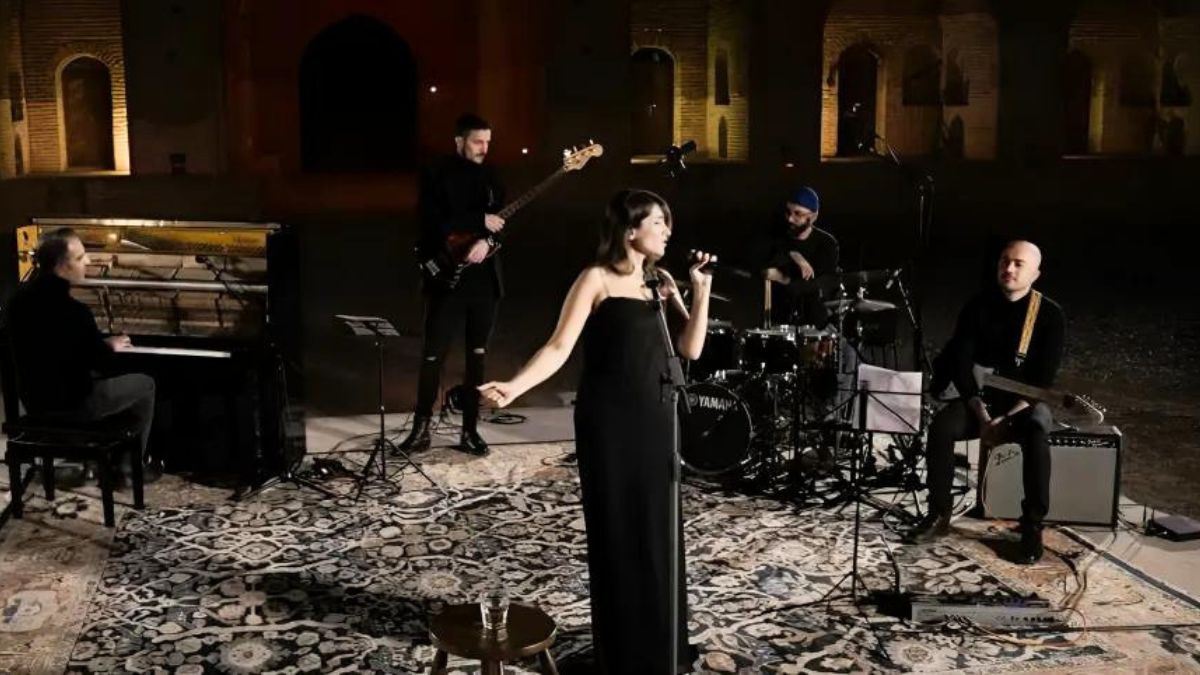
I do not understand Persian. Yet, listening to Parastoo Ahmadi’s concert, I found myself captivated by her voice, the instruments, the simplicity of the performance and the emotions carried through her music. Not once did I feel the need to understand the lyrics to appreciate its beauty.
Then came a disturbing thought. How could anyone watch this performance and conclude that the woman standing there deserved to be whipped 74 times?
What exactly was her crime? Her beautiful voice? Her uncovered hair? Her black dress? Or her decision to exercise a freedom that should have belonged to her from the day she was born?
On November 23, 2026, Iranian authorities carried out the flogging of singer Parastoo Ahmadi and four members of her concert production team. Five artists received 74 lashes each. That is 370 lashes for a musical performance.
According to Reuters, their lawyer, Mostafa Nili, confirmed the punishment. The artists were also subjected to two-year restrictions on travel and artistic activities. Their conviction concerned the production and publication of online content that the authorities considered obscene and contrary to public decency.
Watch the concert yourself and decide what was obscene about it.
A Concert Without an Audience That Found an Audience Across the World
On December 11, 2024, Parastoo Ahmadi released a musical concert on YouTube from the historic Deir Gachin Caravanserai in Iran’s Qom province.
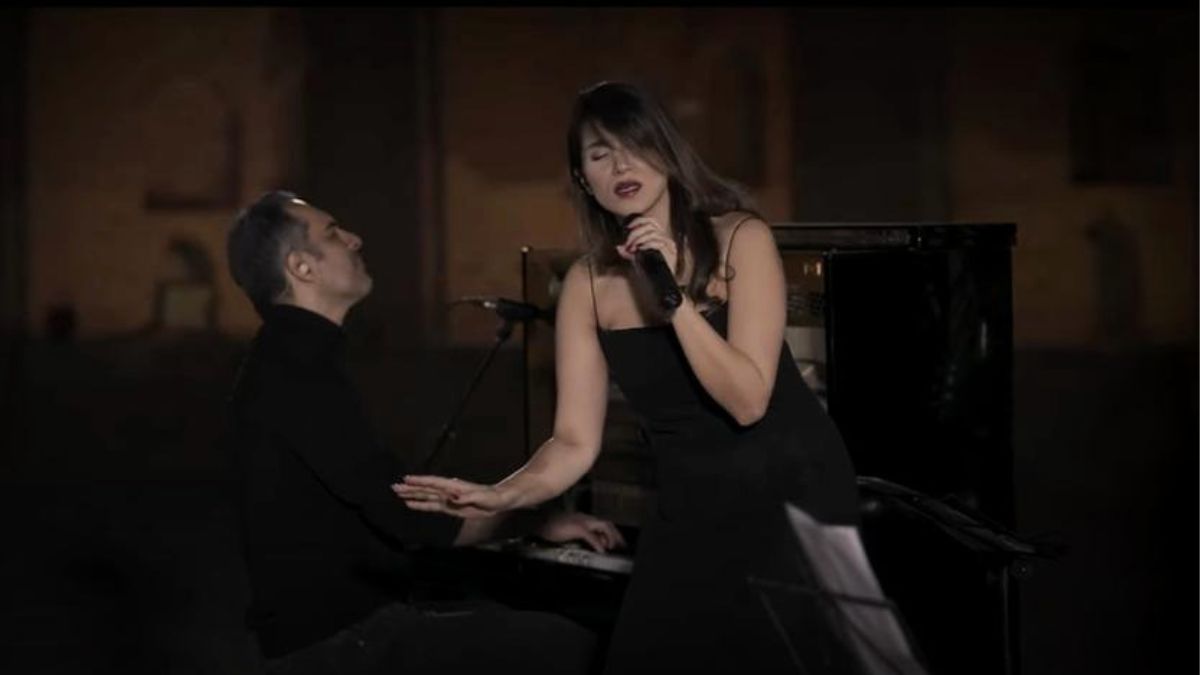
Dressed in an elegant black gown, with her hair uncovered and accompanied by male musicians, Ahmadi performed against the backdrop of Iran’s historic architecture. There were no spectators, no cheering crowds and no applause at the end of each song.
She called it an imaginary concert.
Yet millions of people would eventually watch it. Many described themselves as members of that imaginary audience, applauding from their bedrooms, living rooms and distant countries.
There was no vulgarity, no violence and no apparent hatred in the performance. There was simply a woman singing, accompanied by talented musicians in a setting that celebrated Persian culture and heritage.
Nevertheless, the performance became the subject of criminal proceedings.
Ahmadi was arrested shortly after the concert was released. In June 2026, a court sentenced her and other members of the production team. An appeals court subsequently upheld the flogging sentence, which was carried out on November 23 against five of those involved.
Nearly two years of judicial proceedings over a musical concert. One must question the priorities of a state that devotes its institutions and resources to punishing peaceful artistic expression.
Who Gave a Government the Right to Decide What a Woman Wears?
A hijab, a saree, a skirt, a gown or a pair of jeans. What a woman chooses to wear should fundamentally be her decision.
If a woman wishes to wear a hijab because of her religious beliefs, her cultural identity or simply because she feels comfortable wearing it, that choice deserves respect.
Equally, if another woman decides not to wear one, her choice deserves the same respect.
Freedom cannot exist selectively.
Forcing a woman to remove her hijab against her wishes is a violation of her personal liberty. Forcing another woman to wear one against her wishes is no different in principle.
The problem is not the hijab. The problem is compulsion.
Religious faith is deeply personal. It should not require police officers, courtrooms, prisons and whips to sustain it. When an individual’s religious observance is secured through the threat of physical punishment, it raises a fundamental question about the distinction between faith and fear.
A government exists to protect the dignity, security and rights of its citizens. Its authority should not extend to controlling a woman’s hair, her wardrobe or her singing voice through physical violence.
Sympathy for Iran Does Not Mean Silence Over Its Injustices
When the United States and Israel launched military attacks against Iran, many people across the world expressed concern for the Iranian population. I was among those who felt sympathy for the country and its people.
The suffering of ordinary Iranians, the destruction caused by military conflict and the consequences of foreign aggression cannot be ignored.
But sympathy for a nation should never become unconditional approval of its government.
The same principles of humanity that compel us to question violence inflicted upon Iranians by foreign powers must also compel us to question violence inflicted upon Iranians by their own authorities.
An Iranian woman’s dignity does not become less important because her government is confronting powerful foreign adversaries.
Iran is not merely its political leadership or religious establishment. It is a civilisation with thousands of years of history, extraordinary poetry, magnificent architecture, rich cultural traditions and millions of talented people.
Parastoo Ahmadi represents that cultural richness.
Defending her freedom is not an act against Iran. It is an expression of respect for the Iranian people and their humanity.
The World Responds in Its Own Language
Perhaps the most emotional aspect of this entire incident is found beneath Ahmadi’s YouTube video.
The comments reveal something that no government decree can easily suppress: the ability of music to connect human beings regardless of nationality, religion or language.
A young female musician from the United Kingdom wrote:
My heart broke twice today – first from the injustice that met you, second from the beauty carried by your voice.
She expressed her desire to someday purchase a real ticket to one of Ahmadi’s concerts.
A 79-year-old listener wrote in Persian, translated into English:
My daughter, I am 79 years old. Last night, I attended your imaginary concert in my imagination, with tears in my eyes, and scattered flowers at your feet.
An Indian listener wrote that despite not understanding the language, the tune, rhythm and music had deeply touched him.
An Afghan woman described watching the performance repeatedly, with tears in her eyes, captivated by Ahmadi’s beautiful voice.
Another Iranian listener wrote that the concert had been played at home while sitting with their spouse and two-year-old daughter, expressing hope that one day they would attend her concert together.
One of the most moving Persian comments read, in translation:
We are all there. We are all standing proudly, applauding you. We applaud you, the neglected art of this land, the dawn of freedom and all the good days to come.
That comment alone had received approximately 14,000 likes when reviewed for this article.
Messages of solidarity came from people identifying themselves as being from India, Pakistan, Afghanistan, Russia, Ukraine, France, Germany, Brazil, Chile, Canada and numerous other countries.
People divided by geography, politics and language found something in common through the voice of an Iranian woman.
The Men Who Stood by Her
Parastoo Ahmadi was not alone. The men who accompanied her deserve equal recognition for their courage. Four members of her concert team received 74 lashes each, the same punishment as Ahmadi.
Many Iranian women, through their YouTube comments, thanked these men for standing beside her. Their participation was a powerful reminder that women’s freedom is not a fight that women should have to fight alone.
For creating beautiful music together, they received lashes instead of applause.
Can Physical Punishment Be a Tool of Morality?
Amnesty International had appealed to Iranian authorities to halt the flogging, describing such punishment as a form of torture and ill-treatment.
Article 7 of the International Covenant on Civil and Political Rights, to which Iran is a party, prohibits torture and cruel, inhuman or degrading punishment.
Yet the punishment was carried out.
What moral lesson is a society supposed to learn from physically punishing a woman for a musical performance?
What message does it send to young Iranian girls who dream of becoming singers, musicians, dancers or performers?
That their talent is conditional? That their bodies belong to the state? That their aspirations must first receive the approval of religious authorities?
The consequences extend beyond five artists. Such punishment sends a warning to countless others who might wish to exercise similar freedoms.
No society should have to choose between preserving its cultural identity and respecting the dignity of its citizens.
They Punished Five Artists, but Their Music Continues to Travel
There is a profound irony in what has happened.
A woman who performed without a physically present audience now has listeners across the world.
People who had never listened to Persian music are discovering it. People who had never heard the name Parastoo Ahmadi are searching for her songs, adding them to their playlists and sharing her performance with friends.
Her concert remains available online.
The authorities could impose a punishment upon her body. They could restrict her ability to travel and pursue her profession. But the music she created continues to reach people far beyond Iran’s borders.
I began watching her concert because of a news report about her punishment. I continued watching because of the beauty of her music.
And I will remember her not as a woman who was flogged, but as an artist whose voice deserved a standing ovation.
One day, hopefully, Parastoo Ahmadi will stand before a real audience in her own country. She will wear whatever she wishes, sing whatever she chooses and receive flowers instead of lashes.
That should not be an extraordinary dream in the 21st century.
It should be an ordinary human right.