FBI Hunts Goldy Brar, Lawrence Bishnoi Gang: Is India’s Underworld Growing Beyond Control?
With a $1 million FBI reward on Goldy Brar and a US indictment alleging that Lawrence Bishnoi directed international criminal operations from an Indian prison, a series of high-profile murders, shootings and extortion cases raises serious questions about India's fight against organised crime.
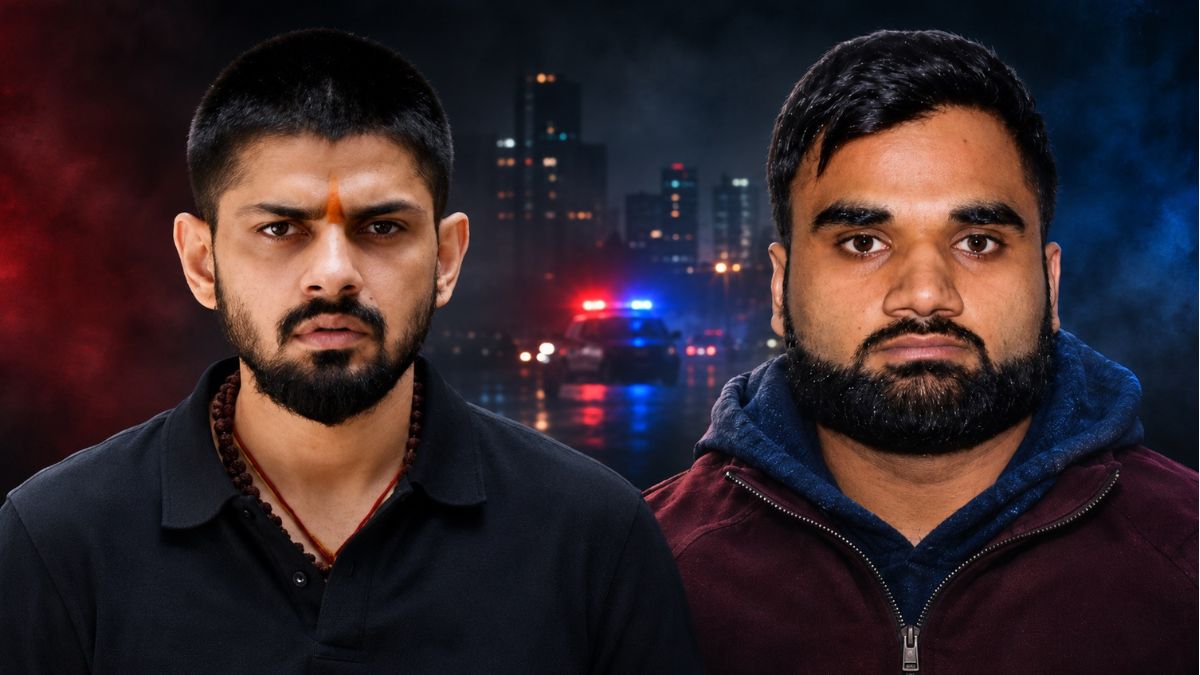
An Indian gangster has found himself among the world’s most wanted fugitives. The Federal Bureau of Investigation (FBI) is offering up to $1 million for information leading to the arrest of Satinderjeet Singh, better known as Goldy Brar, whom American authorities identify as a senior leader of the Lawrence Bishnoi organised crime network.
The development has implications far beyond one fugitive.
According to American investigators, a criminal organisation that emerged from Punjab now maintains operations across India, the United States, Canada, Europe and Australia. Its alleged activities include contract killings, extortion, kidnapping, narcotics trafficking and attacks on prominent personalities.
The FBI first added Goldy Brar to its Ten Most Wanted Fugitives list on September 28, 2026. On November 20, it published a detailed account of his alleged activities. A day earlier, Canadian authorities had placed Brar at the top of their newly released list of 25 most wanted fugitives.
For India, these developments raise an uncomfortable question.
How did a criminal network allegedly operating under the leadership of a man imprisoned in India become a major international law-enforcement concern?
The answer may reveal something larger about the changing nature of India’s underworld over the past decade.
Who is Goldy Brar, and why does the FBI want him?
Goldy Brar, 32, is described by American authorities as the alleged head of the Lawrence Bishnoi organisation’s North American operations.
The FBI considers him armed and extremely dangerous.
A federal indictment filed in Los Angeles on July 1, 2026, charges Brar and other alleged members of the organisation with racketeering conspiracy, conspiracy involving extortion and conspiracy to distribute controlled substances.
The allegations form part of a major international investigation known as Operation Hard Ball.
In July, the US Department of Justice announced charges against 37 defendants associated with three India-linked organised crime groups. Law-enforcement agencies initially arrested or already held 24 of those defendants across the United States, Canada and Europe.
Investigators also reported seizing approximately 1,000 kilograms of cocaine, one kilogram of heroin, firearms and cash.
The investigation revealed the alleged scale of criminal activity involving networks that originated in India but expanded their operations across international borders.
According to the FBI, Brar helped manage a network of hundreds of associates in North America, while Lawrence Bishnoi remained the organisation’s central figure.
The allegations have not been proven in court, and the defendants are presumed innocent unless convicted.
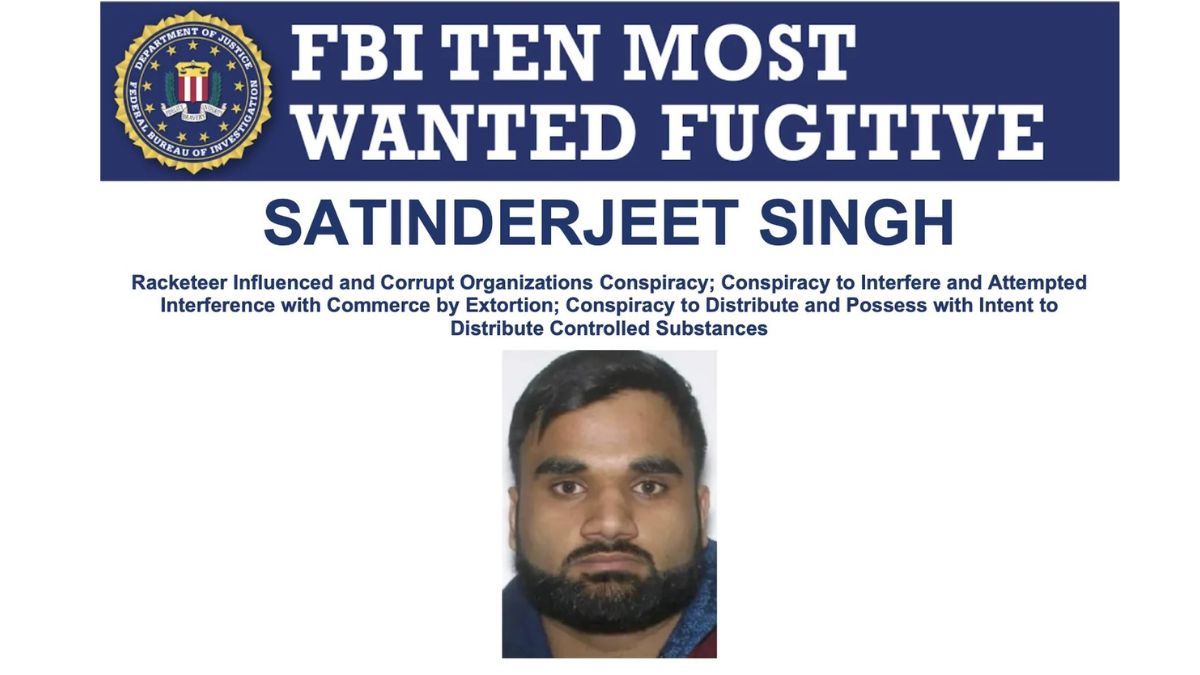
Lawrence Bishnoi: The jailed gangster accused of running an international empire
Lawrence Bishnoi’s rise reportedly began in student politics in Punjab during the early 2010s.
According to American prosecutors, he initially developed a network of followers through university politics before transforming that network into a criminal organisation.
Over time, his associates allegedly established operations across different Indian states and eventually overseas.
But one detail in the American investigation is particularly alarming.
The FBI alleges that Lawrence Bishnoi continued directing criminal activities while imprisoned in India.
US prosecutors claim that contraband mobile phones and internet-based communication devices allowed him to maintain contact with associates and issue instructions from inside prison.
The indictment further alleges that Bishnoi appointed trusted lieutenants to manage operations in different territories.
Goldy Brar allegedly supervised North America, while Rohit Godara allegedly served as a leader of the organisation’s European operations.
This structure allowed the network, according to prosecutors, to coordinate activities across countries while maintaining a central leadership.
If these allegations are established, they would expose serious weaknesses in prison security and efforts to prevent imprisoned gang leaders from communicating with criminal associates.
It also raises questions about the effectiveness of intelligence sharing between Indian police agencies and prison administrations.
From Sidhu Moosewala to Hardeep Singh Nijjar: Crimes that crossed borders
The killing of Punjabi singer Sidhu Moosewala on May 29, 2022, brought the Bishnoi network into national headlines.
Moosewala was shot dead in Punjab’s Mansa district. Goldy Brar subsequently claimed responsibility for the murder, while Indian investigators pursued suspected members of the criminal network.
The assassination of Hardeep Singh Nijjar in Canada a year later became another major case.
Nijjar, a Sikh separatist leader, was shot dead outside a gurdwara in Surrey, British Columbia, on June 18, 2023.
In its July 2026 indictment, the US Department of Justice alleged that Bishnoi and Brar ordered the killing of a political and religious figure identified as H.S.N., whose reported circumstances correspond to Nijjar’s assassination.
These claims form part of the American criminal proceedings. They should also be distinguished from the separate diplomatic dispute over Canada’s allegations of possible Indian government involvement in Nijjar’s killing, which New Delhi rejected.
More recently, Canadian authorities accused Brar of involvement in another murder.
On November 19, Winnipeg Police announced that Brar had been placed at the top of Canada’s new 25 Most Wanted Fugitives list.
He is wanted in connection with the September 2023 killing of Sukhdool Singh Gill in Winnipeg. Canadian investigators obtained arrest warrants against Brar and another suspect in February 2026 on charges of first-degree murder and conspiracy to commit murder.
Canada is offering a separate reward of up to C$250,000 for information leading to his arrest in Canada or the United States.
The cases highlight how criminal investigations involving individuals and networks originating in India have become matters of international concern.
Is India’s underworld returning in a different form?
For those who remember Mumbai during the 1980s and 1990s, the influence of organised crime is hardly unfamiliar.
Gangsters such as Dawood Ibrahim, Chhota Rajan, Arun Gawli and Abu Salem became notorious for their alleged involvement in extortion, smuggling, contract killings and criminal influence over businesses and the film industry.
Police action, arrests and changes in the criminal economy gradually weakened the dominance of Mumbai’s traditional mafia organisations.
However, the decline of those gangs did not mean the disappearance of organised crime.
Over the past decade, several networks associated with Punjab, Haryana, Rajasthan and other parts of northern India have gained national attention through killings, extortion threats and gang rivalries.
The Lawrence Bishnoi network is among the most prominent.
Unlike the traditional Mumbai gangs, which depended heavily on local associates and territorial influence, some newer criminal networks allegedly operate through decentralised groups, overseas handlers and digital communication.
Their members may never have met the individuals directing them.
Investigators have also examined how young men are recruited from different states to carry out shootings and other violent assignments.
This operating model presents a different challenge for law-enforcement agencies. Arresting the gunmen may not be enough if the organisers, financiers and suspected leaders remain outside their reach.
Nevertheless, high-profile crimes alone cannot establish that India’s overall organised-crime rate has increased. That conclusion would require reliable nationwide data over time.
What recent investigations clearly demonstrate is the continuing presence, growing international visibility and changing methods of certain Indian criminal networks.
Shootings, extortion and the return of fear
Recent incidents in Mumbai have added to concerns about organised-crime activity.
In April 2024, gunmen fired outside Salman Khan’s residence in Bandra. Investigators linked the attack to alleged members of the Bishnoi network.
In October that year, former Maharashtra minister Baba Siddique was shot dead in Mumbai, prompting another major investigation into alleged gang involvement.
In February 2026, shots were fired outside filmmaker Rohit Shetty’s residence. Police subsequently alleged that individuals linked to the Bishnoi gang were involved.
The pattern continued in October 2026 when gunmen opened fire at actor Tiger Shroff’s vehicle in Mumbai. The actor escaped unharmed, but two other people were injured. Suspected gang associates claimed responsibility, and police made several arrests.
Although the investigations concern different incidents and the extent of the same network’s involvement remains subject to legal proceedings, the repeated use of public violence and intimidation is troubling.
Such incidents are reminiscent of an earlier period when organised crime groups attempted to establish influence through fear.
But the problem extends beyond Bollywood.
Business owners, traders and members of the Indian diaspora have also faced alleged extortion attempts from international criminal networks.
American prosecutors have described instances in which alleged Bishnoi associates demanded millions of dollars from victims in California through threats transmitted over encrypted messaging services.
Violence, in these cases, allegedly serves not only to eliminate rivals but also to reinforce the credibility of extortion threats.
How social media changed the underworld
Another important development is the use of social media to promote criminal reputations.
In the past, gangsters relied on intermediaries, threatening telephone calls and word of mouth to spread fear.
Today, criminal organisations and individuals claiming to represent them sometimes use social media posts, videos and online messages to publicise attacks and issue warnings.
The FBI alleges that the Bishnoi enterprise deliberately promoted violence online to create the impression that its members were beyond the reach of law enforcement.
This approach can amplify the impact of a single shooting.
An attack in one city can quickly become a warning to potential targets across several countries.
Encrypted messaging applications also create difficulties for investigators attempting to identify criminal communications and the people directing them.
However, these same digital activities can produce evidence. Investigators may be able to trace communication records, financial transactions and relationships between suspects.
The challenge lies in connecting the individuals carrying out crimes to the alleged leaders directing them.
Why the FBI investigation matters to India
The American investigation is significant because it documents allegations against an international criminal network with its origins and alleged central leadership in India.
The US Department of Justice has charged individuals associated with three separate India-linked syndicates, including organisations allegedly led by Lawrence Bishnoi and Jaggu Bhagwanpuria.
Investigators have described links involving murder-for-hire, international narcotics trafficking, extortion, human smuggling and weapons offences.
In September 2025, Canada formally designated the Bishnoi organisation as a terrorist entity.
The development demonstrates the seriousness with which Canadian authorities regard the alleged threat.
For India, the international investigation poses important questions about domestic law enforcement.
How are imprisoned gang leaders allegedly able to maintain communication with their associates?
What systems exist to identify overseas handlers directing crimes inside India?
Are police agencies across different states sharing sufficient intelligence to disrupt recruitment, financing and criminal coordination?
And how effectively are international investigations being used to identify and prosecute the people responsible for directing organised criminal activities?
These questions cannot be answered by arrests alone.
A successful response requires disrupting the structures that allow criminal networks to recruit, finance, organise and publicise violent activities.
India’s challenge is bigger than Goldy Brar
Goldy Brar’s inclusion on the FBI’s Ten Most Wanted Fugitives list is an important development, but his arrest alone would not necessarily dismantle the wider criminal network described by American prosecutors.
The organisation allegedly operates through multiple leaders, regional groups and international associates.
Its activities, according to investigators, involve both violent crime and illegal commercial operations.
This makes the challenge more complicated than the pursuit of a single fugitive.
India has spent decades confronting the legacy of organised crime, particularly in Mumbai. The emergence of internationally connected networks suggests that the methods used to combat the old underworld may not be sufficient on their own.
The country now faces criminal organisations that allegedly operate across continents, use modern communication technologies and recruit individuals beyond their traditional territorial bases.
The recent shootings in Mumbai are reminders that organised violence remains a domestic concern. The FBI’s investigation shows how the same broader problem can extend far beyond India’s borders.
There is, however, a distinction between the increased visibility of organised crime and proof that its overall incidence is rising. The latter requires a careful examination of official crime data and long-term trends.
What cannot be ignored is the scale of the allegations now before American courts.
A gang that allegedly emerged from student politics in Punjab is accused of coordinating murders, extortion and drug trafficking across international borders while its founder remains imprisoned in India.
The larger question is no longer simply whether Goldy Brar will be arrested. It is whether India can prevent criminal networks from continuing to operate, recruit and expand even after their alleged leaders are placed behind bars.
The answer will help determine whether the country’s next decade is marked by the weakening of organised crime or the emergence of an even more international and difficult-to-control underworld.