The Great Indian Clean-Up: Banks Sold, Merged, Rescued, and Written Off
Behind India’s gleaming bank balance sheets lies a decade of bad loans, quiet write-offs, and deep losses for lenders. Here is what the record shows.
Indian banks wrote off non-performing assets worth ₹16.35 lakh crore over ten financial years, according to data the government presented in Parliament. That is ₹16.35 trillion, roughly $170 to 190 billion depending on the exchange rate, larger than the annual GDP of many countries. Write-offs peaked at ₹2.36 lakh crore in FY19. Large industry and services accounted for about ₹9.26 lakh crore of the total.
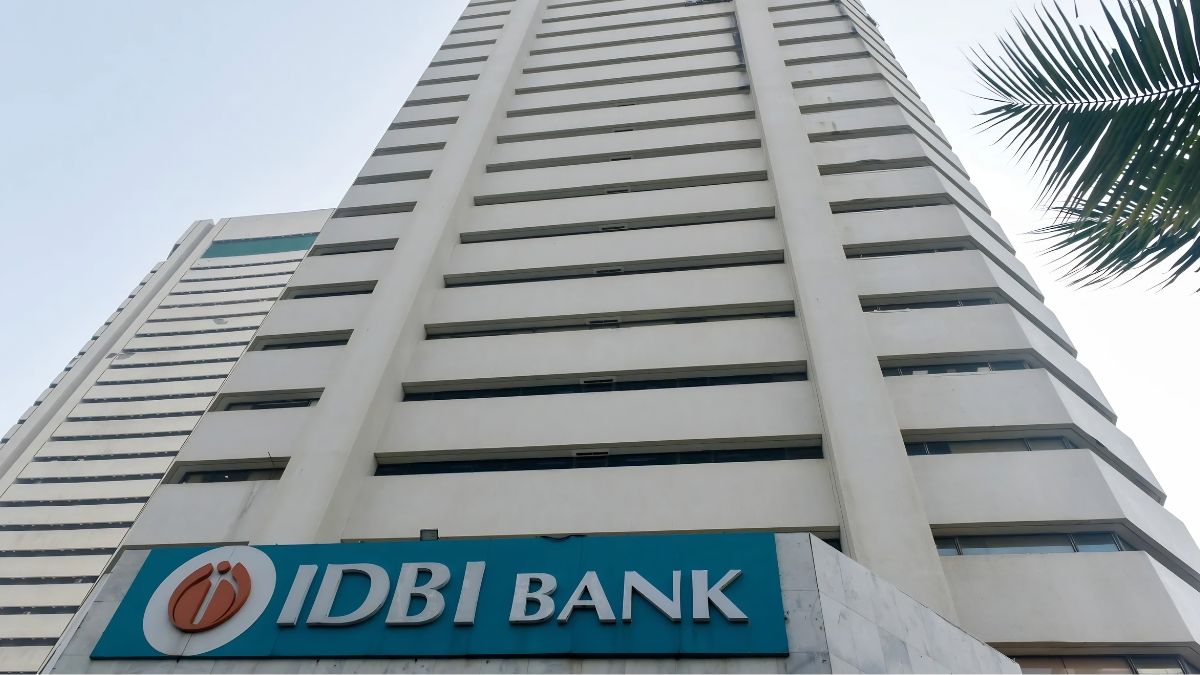
Two developments this month have brought the issue back into focus. On 14 October 2026, the Cabinet approved the sale of a 60.72% stake in IDBI Bank to a subsidiary of Canada’s Fairfax Financial Holdings for approximately ₹52,878 crore (around $5.5 to 5.6 billion). It is the largest such foreign investment in an Indian bank. The following day, the Supreme Court dismissed appeals by Yes Bank, the Reserve Bank of India and the central government, upholding a Bombay High Court ruling that quashed the 2020 write-off of ₹8,415 crore in Yes Bank’s Additional Tier-1 bonds.
Cleaning the books
Write-offs did not rise gradually. They accelerated after the asset-quality review of 2015 to 17 forced recognition of long-hidden stress. Under RBI guidelines, banks typically write off fully provisioned loans after four years. The liability of the borrower is not waived; recovery efforts continue through courts, debt recovery tribunals, the SARFAESI Act and the Insolvency and Bankruptcy Code.
Public-sector banks wrote off ₹3,57,185 crore between FY22 and FY26 (provisional figures) and recovered ₹1,64,710 crore from those accounts, roughly 46%. Annual write-offs have since declined as fresh stress eased and recovery mechanisms improved. The government maintains that write-offs do not benefit defaulters.


Critics note that write-offs also help shrink reported bad-loan ratios. Gross NPAs of scheduled commercial banks fell to a multi-decade low of about 1.8% by March 2026. Removing a loan from the books means it no longer counts as non-performing. Part of the improvement reflects genuine recoveries and upgrades; part reflects accounting clean-up. The RBI does not publish a company-wise public list of written-off accounts, citing restrictions under Section 45E of the RBI Act.
The real losses: IBC haircuts
Deeper losses occur under the Insolvency and Bankruptcy Code. Creditors have recovered roughly 30 to 32% of admitted claims on average in resolved cases. Outcomes vary widely:
- In some large cases such as Videocon, recoveries were only a few percent of claims.
- Alok Industries saw lenders accept haircuts exceeding 80%.
- Essar Steel and Bhushan Steel delivered far stronger results, with recoveries in the high double digits relative to claims.
- Dewan Housing Finance (DHFL) involved admitted claims of ₹87,248 crore against a realisable amount of about ₹37,161 crore, a haircut of roughly 57%.
- Jaiprakash Associates saw admitted claims near or above ₹59,000 to 60,000 crore, with recent resolution outcomes implying recoveries in the low to mid 20% range for creditors.
Nearly half of resolved cases have produced recoveries below 20% of admitted claims; a significant share involved haircuts above 80 to 90%. Defenders correctly observe that admitted claims often include years of accrued interest and that the underlying assets are frequently worth far less by the time of resolution. Against liquidation value, creditors have recovered around 167 to 171% on average, better than the alternative of liquidation. Still, a haircut against the debt recorded on bank books remains a loss, and many of the largest lenders were state-owned institutions ultimately supported by public funds.
A familiar pattern
The sequence is consistent across the major episodes:
Banks extended large loans to big corporate borrowers during the boom years. Recognition of stress was delayed until the mid-2010s clean-up. Lenders in trouble were rescued. IDBI, for instance, had net NPAs above 13% in 2017 before LIC took a controlling stake and the bank received repeated capital support; it is now being sold to a strategic foreign buyer. Between 2017 and 2020, mergers reduced the number of public-sector banks from 27 to 12. Losses were absorbed through write-offs and IBC resolutions.
Yes Bank illustrates the private-sector variant. A moratorium was imposed in March 2020. A consortium led by the State Bank of India, with other private banks, stepped in. AT1 bondholders, including retail investors who alleged mis-selling, absorbed the immediate loss when the bonds were written down to zero. The Supreme Court has now held that the administrator lacked authority to extinguish the bonds without a clear enabling provision in the reconstruction scheme.
Today the balance sheets look stronger. Gross NPAs are at multi-decade lows, capital buffers are comfortable, and profitability has recovered. The clean-up was necessary. Its cost, however, was large, concentrated, and only partly visible to the public: more than ₹16 lakh crore in write-offs, average IBC recoveries near 30% of claims, repeated capital infusions into public banks, and, in cases such as Yes Bank, losses shifted onto bondholders. The record is one of recognition, consolidation and loss absorption as much as pure recovery.