Starlink vs Jio vs OneWeb: Who Will Win India’s Satellite Internet Race?
Elon Musk's Starlink may eventually get the green light to operate in India, but will it get the freedom it expects? With security clearance still pending, domestic telecom giants Jio and Airtel are already positioned in the satellite internet race. India may welcome Starlink, not necessarily on Musk's terms".
What if the MHA eventually refuses to grant Starlink security clearance, cancels its licence or allows it to operate only in a very limited geographical area? The possibility of Starlink receiving highly restrictive operating conditions cannot be ruled out.
After all, why would Mukesh Ambani’s Reliance, which has its own ambitions in cloud computing, digital infrastructure and internet services, willingly share a potentially lucrative market with Elon Musk? Jio would naturally want to protect and strengthen its position in its own domestic market.
Even if India eventually grants Starlink permission to operate, the approval could come with a package of conditions covering geographical restrictions, hardware procurement, data routing, local infrastructure and security compliance.
It is reported that Jio is working towards building its own Low Earth Orbit (LEO) satellite constellation, comprising approximately 1,600–1,650 satellites. A first test flight is targeted for September 2027. Initial deployment and potential commercial services are targeted for 2028. Jio already works with Luxembourg-based SES through its satellite connectivity initiatives, including JioSpaceFiber.
On the other hand, on October 14, 2026, in a statement, Sunil Bharti Mittal said Bharti was ahead of Starlink in the approval queue, arguing that it had applied five years earlier and had its ground infrastructure ready for years. Sunil Bharti Mittal’s Bharti Enterprises has been a major investor in OneWeb, which subsequently combined with Eutelsat’s satellite business. Interestingly, OneWeb’s India director said in October that the company was ready from an infrastructure standpoint but was awaiting security clearances.
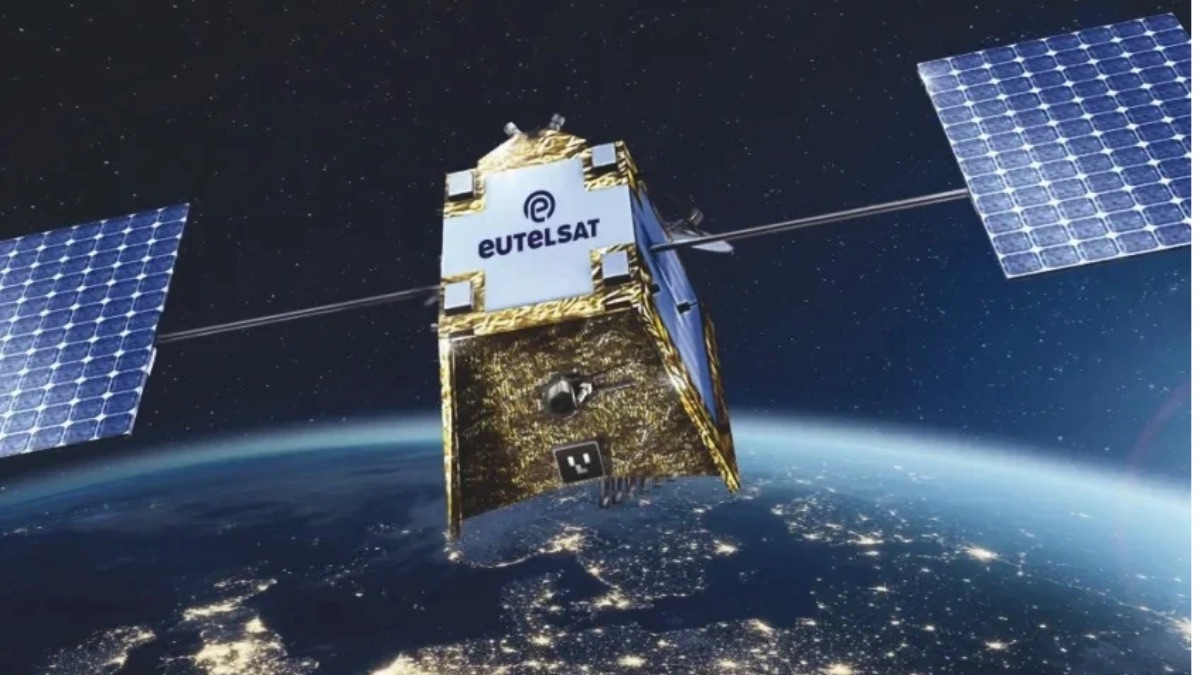
Eutelsat OneWeb has completed the licensing formalities required to offer satellite communication services in India and is now in the final stage of the regulatory process. The company is also ready from an infrastructure standpoint to deploy its services in India, Neha Idnani, Regional Vice President, APAC, Eutelsat and Director, OneWeb India, told Moneycontrol.
The latest development, reported on November 6, 2026, revealed that Starlink was the last among the three satellite internet operators to submit its security compliance documents. Bharti-backed OneWeb submitted its documents first, followed by Reliance-backed Jio and then Starlink.
This does not mean Jio and OneWeb have received final security clearance. However, it does raise an important question: Is Starlink facing a more complicated entry into India than its domestic competitors?
Foreign Telecom Companies That Failed to Crack the Indian Market
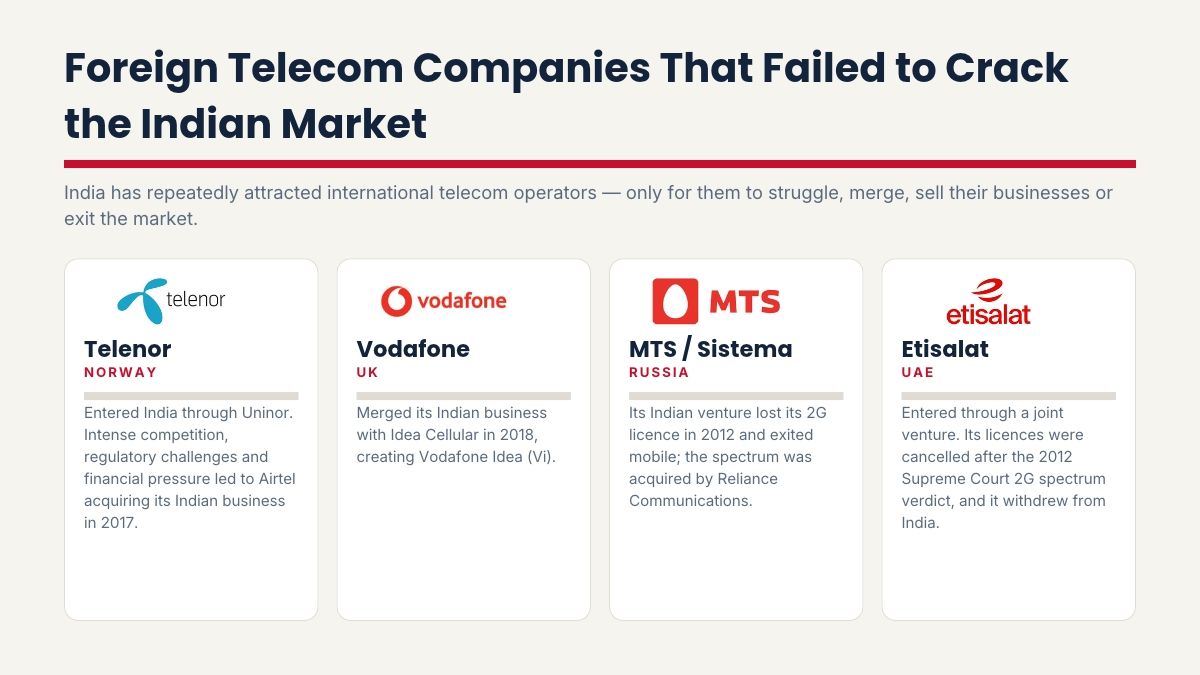
India has a history of attracting international telecom companies, only for them to struggle, merge, sell their businesses or exit the Indian market.
For example, Norway-based Telenor entered India through Uninor. It faced intense competition, regulatory challenges and financial pressure, and its Indian business was eventually acquired by Airtel in 2017. Similarly, Vodafone merged its Indian business with Idea Cellular in 2018, creating Vodafone Idea (Vi).
Similar cases can be found with Russia’s MTS. Sistema’s Indian telecom venture faced the cancellation of its 2G licence in 2012 and eventually exited the mobile business, with its spectrum acquired by Reliance Communications.
UAE-based Etisalat entered India through a joint venture. Its licences were among those cancelled following the 2012 Supreme Court 2G spectrum verdict. It subsequently withdrew from India.
Is the MHA Buying Time?
Looking at the situation from another angle, India’s next general election is scheduled for 2029, which is not too far away. Meanwhile, Trump’s political position has weakened following the Democrats’ blue wave in the midterm elections. Could this also affect Elon Musk’s political influence and, indirectly, the Indian government’s approach towards Starlink?
This is where the bigger question emerges. Starlink has secured its licences, but security clearance remains pending. Meanwhile, Jio and OneWeb are already moving through the regulatory process.
My suspicion is that the government, particularly the MHA under Amit Shah, may simply be buying time and stretching the licensing process. Perhaps it is waiting for the right moment to make a decision that best serves India’s political, economic and strategic interests. If that happens, will Starlink need to wait another two to three years to obtain the licences required?
Or perhaps India could eventually permit Starlink to operate while imposing conditions covering local infrastructure, hardware manufacturing, data routing, security monitoring and geographical restrictions. In other words, Starlink may get access to India without getting the commercial freedom it originally expected.
History itself tells us that the Indian telecom market has always been dominated by domestic players. So, in such a scenario, will Starlink succeed? Only time will tell.