Can a Social Media Platform or Spy Software Guarantee Lifetime Power?
Can social media platforms like X and Truth Social, or spy tools like Pegasus, make a political leader undefeatable? An analysis of money, technology, political influence and the limits of digital power.
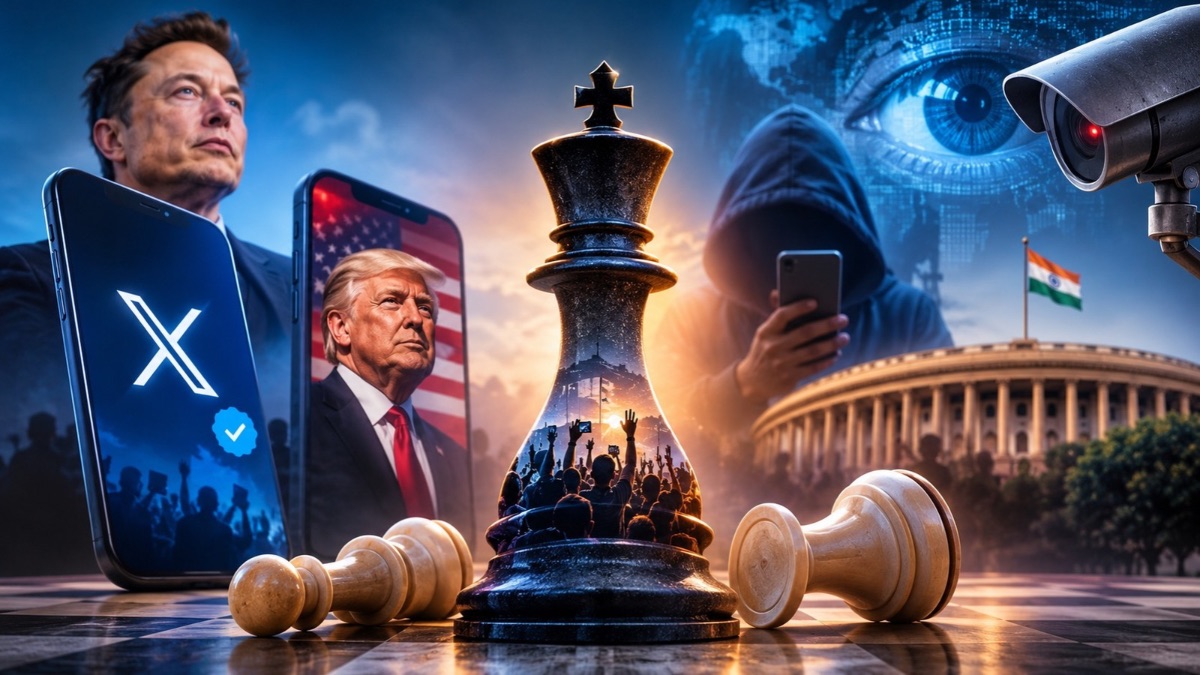
X’s boss Elon Musk, spent more than half a billion dollars (approximately $720–765 million) supporting Donald Trump since his first presidential campaign in 2024. In October 2022, Musk privately acquired social media platform Twitter for $44 billion and subsequently renamed it as X.
Since the takeover, the company’s value has fallen sharply, particularly during 2023–24. X’s best performance was in 2024-25 when it’s estimated an annual revenue approximately between $2.5 – 2.9 billion. Meanwhile, its workforce has reportedly been reduced by nearly 80%, from around 7,500 employees to approximately 1,500 or lesser, through layoffs and resignations.
Aaprt from the losses, Elon Musk is also burdened with approximately $12–13 billion in acquisition-related debt, borrowed from seven banks across the United States, Japan and France. Morgan Stanley and Bank of America were among the leading lenders.
In an effort to make the platform profitable, Musk introduced several programmes such as Blue Tick, allowing users to purchase a it through a subscription. That means anyone can create a fake account and obtain a verified blue tick simply by paying a subscription fee. Is anyone verifying the user’s real identity?
Doesn’t that raise serious concerns? What happens when fake accounts and misleading tweets in a country like India create chaos, trigger social disputes or even contribute to situations that result in loss of life?
Since Musk took over Twitter (now X), the platform has become one of the prominent spaces for political discourse in India. Over time, concerns have emerged about the alleged influence of the BJP IT Cell and the suspension of accounts belonging to people who openly criticise the ruling BJP.
But look at what allegedly happened on 20 July 2026 at Jantar Mantar, New Delhi. Millions of Gen Z protesters reportedly gathered in New Delhi, demanding the resignation of Education Minister Dharmendra Pradhan. The protests reflected growing public anger, and the developments reportedly sent shockwaves through Narendra Modi’s political establishment and BJP IT Cell.
This time, it was Instagram, another social media platform, that helped create momentum among Indian Gen Z. The situation reportedly escalated to such an extent that Prime Minister Narendra Modi himself was compelled to reach out to young people through Instagram in an effort to address their anger. BJP IT Cell head Amit Malviya was reportedly removed from his position after failing to contain the growing wave of criticism and protest reels on Instagram.
On the other side, Donald Trump launched his own social media platform, Truth Social, in 2022. Since its inception, the platform’s parent company has reportedly accumulated losses estimated at approximately $1.1–1.8 billion.
Regardless of how much money these platforms lose or how much energy is invested in manufacturing propaganda and shaping public opinion, one larger reality remains: social media influence alone cannot guarantee political success. Even platforms closely associated with political movements cannot prevent electoral setbacks, as demonstrated by Republican losses in US midterm elections.
Pegasus: A Powerful Israeli Spyware That Couldn’t Save Benjamin Netanyahu
Let’s move beyond social media platforms and examine Pegasus, a powerful spyware developed by Israel-based NSO Group.
Pegasus is capable of infiltrating mobile devices, potentially gaining access to cameras, microphones, voice recordings, messages and other sensitive information. Its surveillance capabilities have raised serious concerns worldwide.
According to reports, India purchased Pegasus as part of a $2 billion defence package deal with Israel in 2017, during the tenure of Prime Minister Narendra Modi and Benjamin Netanyahu. The alleged surveillance operation reportedly targeted hundreds of political leaders, journalists, judges and social activists.
There is no doubt that Pegasus has played an important role in Indian politics. Narendra Modi has been able to weaken opposition political leaders and exert influence over important figures, including individuals in the administration and judiciary.
But consider the irony: the country with the technological capability to develop a sophisticated spy tool like Pegasus has its own political challenges. Benjamin Netanyahu lost his parliamentary majority and alleged an international conspiracy involving the election results. However, Israel’s Central Elections Committee (CEC) rejected Netanyahu’s claims of election rigging.
In a similar way, social media platforms such as X, Instagram, YouTube and Facebook undoubtedly play an important role in helping political leaders gain or lose power. But the question is: for how long can any social media platform or software help someone retain power?
Today, it is Instagram; tomorrow, it could be YouTube, X or Facebook. Does it really matter which platform is being used? The reality is that when people start feeling cheated and inflation begins eating into their household food budgets, no software or technology can change the situation.
Millions and billions of users, billions of dollars involved, yet the fundamental question remains: Can any of these social media platforms or software guarantee lifelong power for anyone? I mean anyone, from ordinary users to the owners of these platforms.
Look at history. Major shifts in power have taken place without the existence of social media or mass surveillance technologies. The British Empire’s 200-year rule in India came to an end without the presence of social media platforms.
The hard truth is that social media platforms and technologies such as Pegasus or artificial intelligence (AI) may create a temporary or short-term impact on people’s mindsets. However, in the long run, when people begin to recognise the truth, these platforms and the narratives they promote can lose their influence.
Hopefully, one day, corporate owners and political leaders will understand this reality. Instead of spending billions and trillions on fake campaigns and propaganda, they should start focusing on real issues and working on the ground.