Silver Rail Elementary Shooting: Four Dead in Bend, Oregon, and a Decade of School Gun Violence
Three children and a teacher were killed in Bend, Oregon. The attack revives the debate over guns in the home, warning signs and school safety.
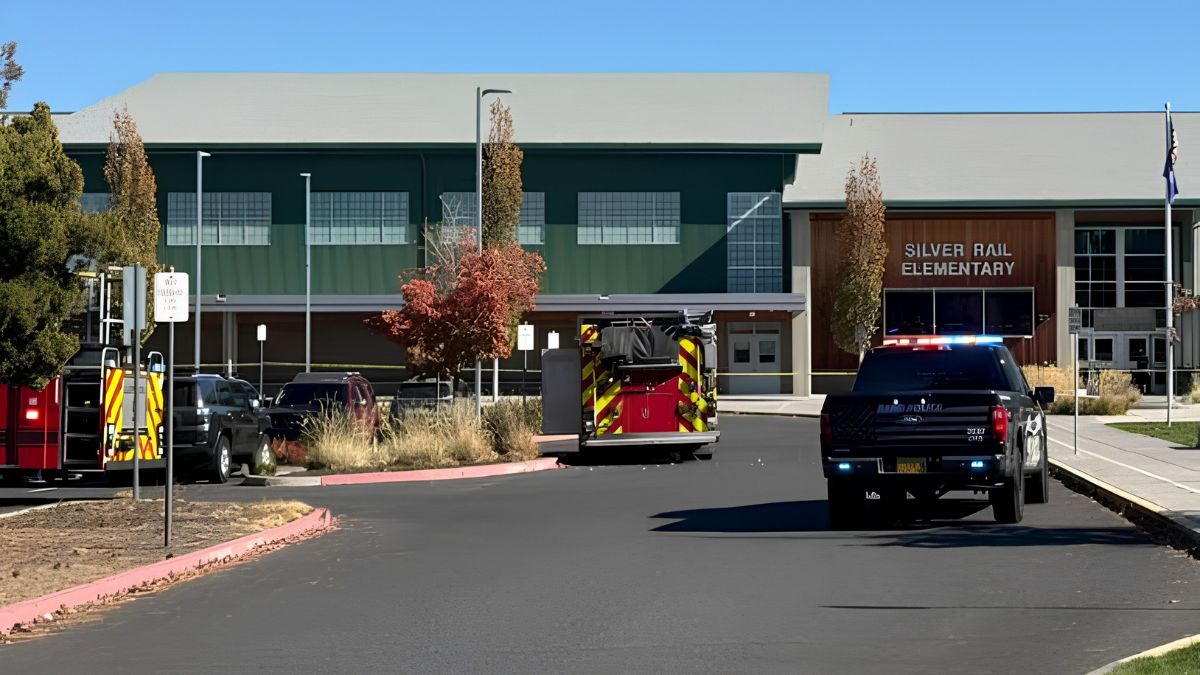
The Silver Rail Elementary shooting in Bend, Oregon, on October 15, 2026, left three children and a teacher dead and has reopened America’s hardest questions about guns, mental health and school safety.
It began as a call about a man with a long gun firing at a car. At 12:59 p.m. on Thursday, a driver outside Silver Rail Elementary School in Bend, Oregon, phoned police to say he had been shot at. Within minutes, dozens of 911 calls reported a shooter inside the K-5 school.
By the end of the afternoon, three children, aged 5, 8 and 11, and a teacher were dead. A 7-year-old child and a 54-year-old teacher were taken to St. Charles Medical Center in critical condition. The shooter, a 16-year-old Bend resident, was also dead.
What we know about the Silver Rail Elementary shooting
Bend Police Chief Mike Krantz said the teenager forced his way into the school by shooting at its locked doors. Officers arrived at about 1:02 p.m. and learned the suspect had already been shot by a community member who had seen him enter the building and followed him in. A law enforcement source told reporters that the bystander was legally carrying a concealed weapon, and that the shooter used a shotgun. Police have so far described the weapon only as a long gun.

Students and staff were evacuated room by room and bused to a nearby church to reunite with their families. All Bend-La Pine schools were closed on Friday. Krantz called it a long investigation, and FBI Director Kash Patel said the bureau was assisting.
Much is still unknown. Authorities have not released the names of the shooter or the victims. They have not said whether the teenager had any connection to the school, where he got the weapon, or what drove him. As of Friday, there has been no stated motive.
Silver Rail Elementary shooting timeline
| Time (Oct. 15, Pacific) | What happened |
|---|---|
| 12:59 p.m. | A driver calls police to say someone with a long gun shot at him outside the school |
| About 1:01 p.m. | The school goes into lockdown as dozens of 911 calls report a shooter inside |
| About 1:02 p.m. | The first Bend officers arrive and learn a community member has already shot the suspect |
| Afternoon | Officers clear the building and evacuate students and staff room by room; they are bused to a nearby church to meet families |
| Evening | Police confirm three children and a teacher dead, two people critically injured, and the 16-year-old shooter dead |
| Friday, Oct. 16 | Classes are canceled at all Bend-La Pine schools |
Not the first
Elementary schools are rarely the scene of mass shootings, which is part of what makes the Silver Rail Elementary shooting so jarring. When they are, the toll is severe.
Sandy Hook, Connecticut, 2012. A gunman killed 20 first graders and six staff members. It remains the deadliest elementary school shooting in American history.
Parkland, Florida, 2018. Seventeen people were killed and 17 injured at Marjory Stoneman Douglas High School.
Oxford, Michigan, 2021. A 15-year-old killed four students at Oxford High School. In April 2024, his parents were sentenced to 10 to 15 years in prison for involuntary manslaughter, the first parents held criminally responsible for a mass school shooting carried out by their child.
Uvalde, Texas, May 24, 2022. An 18-year-old former student walked into Robb Elementary School with an AR-15-style rifle and killed 19 fourth-graders and two teachers. He had legally bought two rifles within days of turning 18. Officers waited 78 minutes before confronting him, and the police response drew national condemnation.
Nashville, Tennessee, March 27, 2023. A 28-year-old former student killed three nine-year-old children and three adults at The Covenant School, a private Christian elementary school. Police officers shot and killed the attacker.
Winder, Georgia, September 4, 2024. A 14-year-old killed two students and two teachers at Apalachee High School and injured nine others. His father, who had given him a rifle despite known mental health concerns, was later convicted. In July 2026, the shooter pleaded guilty to all 55 charges and was sentenced to life without parole.
Minneapolis, August 2025. Two children, aged 8 and 10, were killed in a school shooting, according to Education Week.
The pattern has also reached college campuses. Brown University suffered a mass shooting in December 2025, Rhode Island’s first school shooting since at least 2008, by CNN’s count.
Silver Rail Elementary shooting in context: a decade of school shootings
How many school shootings there are depends on who is counting. Education Week counts only K-12 incidents with at least one injury or death during school hours or events, and has recorded 266 since January 2018. CNN, which includes colleges and any incident in which at least one person was shot, counts at least 52 so far in 2026, leaving at least 28 dead and 48 injured. By that count, Bend was the 36th shooting on K-12 grounds this year. Everytown for Gun Safety, which also counts incidents without casualties, recorded 163 incidents of gunfire on school grounds in 2025.
The broad trend is not a straight line. CNN’s analysis found a record 84 incidents in 2023, the most since at least 2008, and 2022 was one of the deadliest years, with 48 fatalities. Deaths fell sharply in 2025, with trackers recording the fewest school-shooting deaths in five years. Education Week had counted 18 incidents in 2025, and by early October 2026 it had already logged 24.
School shootings are also a small slice of the larger picture. Firearms have been the leading cause of death for American children and teens aged 1 to 19 since 2020, surpassing car crashes, according to CDC data. A KFF analysis found that in no other comparable country do firearms rank among the top four causes of death for children. Everytown estimates that nearly 4,300 children and teens are shot and killed each year. Most of those deaths are homicides and suicides that never make national headlines.
The gun question
The most consistent finding in the research is not about gun stores. It is about the home.
The U.S. Secret Service’s National Threat Assessment Center studied targeted school violence from 2008 to 2017 and found that, of 25 incidents involving firearms, shooters took the gun from the home of a parent or close relative in 19, or 76%. A separate Secret Service study of students who plotted school attacks found that 67% had potential access to firearms. Earlier research that looked at 145 school shootings by children and teenagers since 1999 put the share of guns taken from their own or a relative’s home at about 80%.
Fact-checkers have added a caution: not all of those guns were left unsecured. PolitiFact found that in the Secret Service data, 12 of the 19 cases involved guns stored in ways considered unsecure, while in four cases shooters got around storage that was more secure.
A 2024 study of school shooters’ backgrounds, reported by EurekAlert, found that all of them had no difficulty getting the guns they used. Most had grown up in families where guns were a leisure activity and a way of bonding, and access followed from that culture.
Advocacy groups say this points to child-access prevention laws and safe-storage requirements. Everytown, which campaigns for stricter gun laws, says 6.7 million American children live in a home with at least one loaded and unlocked firearm. The prosecutions in Oxford and Apalachee show courts are also beginning to hold adults responsible when children reach their guns.
The Uvalde case points to a different question: age. The shooter could legally buy his rifles days after his 18th birthday, and some advocacy groups want the minimum age to buy semi-automatic rifles raised.
Whether the weapon used in the Silver Rail Elementary shooting came from the teenager’s own home is not yet known, and it should not be assumed.
Why kids? Mental health, and more
The popular answer is mental illness. The research gives a more complicated one.
The Secret Service found that every attacker in its study had shown behaviors that worried others, and in 77% of cases at least one person, most often a peer, knew about the plan beforehand. Students who plotted attacks often had histories of school discipline, bullying, mental health problems or substance use. Some had studied earlier attacks, notably Columbine. Yet the agency’s earlier research concluded that there is no accurate or useful profile of a school shooter.
Scientists warn against reading too much into the label. Holden Thorp, editor-in-chief of Science, wrote after Uvalde that severe mental illness is about as common in countries that do not have regular mass shootings. The difference, he argued, is easy access to guns.
The picture that emerges is of several factors that meet at once: a young person in crisis, sometimes bullied or isolated, who gives off warning signs, and a gun within reach. Researchers say that makes prevention possible, because warning signs exist and often reach someone, but only if those who notice them know where to turn. Threat assessment programs, anonymous tip lines and school-based mental health services all aim at that gap.
It is also worth noting that exposure to violence itself matters. Roughly three million American children witness gun violence each year, according to Everytown, and CDC-cited research links such exposure to significant mental health effects.
The arguments ahead
As after earlier shootings, the debate is likely to split along familiar lines.
Gun-control advocates will point to the evidence on home access and storage laws, background checks, age limits and the number of guns in circulation.
Gun-rights advocates and many gun owners will stress that the vast majority of owners never harm anyone, that criminals ignore laws, and that the community member who stopped the Bend gunman was himself lawfully armed. They tend to favor stronger school security, mental health intervention and enforcement of existing laws.
Others see a middle ground in measures that draw support from both camps, such as secure storage education, tip lines and threat assessment teams. Critics on both sides note how little rigorous research exists, partly because federal funding for it has been limited for years.
Silver Rail Elementary shooting: what remains unanswered
The families of the dead are still waiting for names to be made public and for the two critically injured to recover. Investigators are working to establish who the 16-year-old was, how he got his weapon, whether he told anyone, and why he chose an elementary school. Those answers will decide which of the national arguments this tragedy ends up feeding.