From Ernst Stavro Blofeld to Shakaal: Adapting a James Bond Villain for Indian Cinema
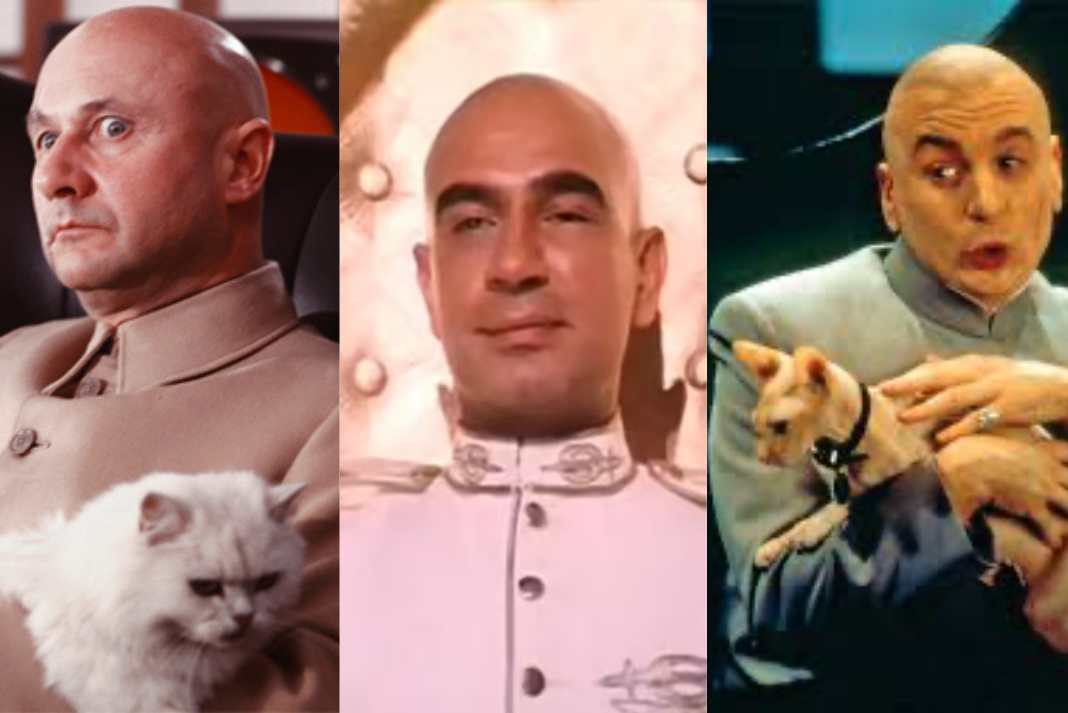
Cinema has always been a global conversation. Ideas travel across borders, cultures reinterpret them, and audiences often recognize familiar patterns long before filmmakers acknowledge them. One of the most compelling examples of this phenomenon in Indian cinema is Shakaal, the iconic antagonist of the 1980 Hindi film Shaan, and his unmistakable resemblance to Ernst Stavro Blofeld, the legendary villain from the James Bond universe.
This is not a story of simple imitation. It reveals how Indian cinema took a globally recognized character template and reshaped it for its own audience.
The Original Blueprint: Ernst Stavro Blofeld
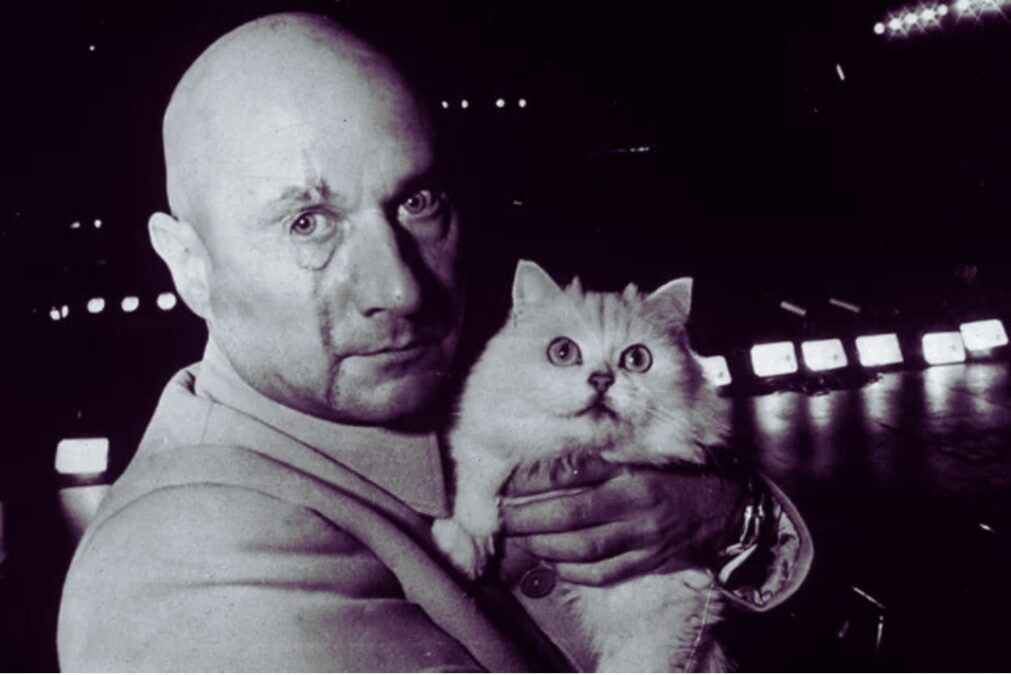
The character of Ernst Stavro Blofeld was introduced in Ian Fleming’s James Bond novels and immortalized on screen in the 1960s, most memorably in You Only Live Twice (1967).
Blofeld established a villain archetype that would dominate global cinema for decades:
A bald, emotionless mastermind
Operates from secret, technologically advanced lairs
Commands absolute loyalty from henchmen
Believes himself intellectually superior to the world
Blofeld wasn’t just a villain – he was a symbol of Cold War paranoia, embodying the fear of unseen powers manipulating global events from the shadows.
During the 1960s and 70s, James Bond films represented a fantasy many film industries aspired to emulate: international mobility, technological sophistication, and a sharply defined moral universe. For filmmakers outside the West, Bond was not just entertainment; it was a cinematic language. Borrowing from that language allowed local industries to signal modernity, ambition, and global relevance in a single stroke.
India’s Answer: Shakaal in Shaan (1980)
When Shaan released in 1980, it was openly positioned as “India’s James Bond–style film.” At the center of the narrative stood Shakaal, portrayed with chilling restraint by Kulbhushan Kharbanda.
The parallels were immediately evident:
Shakaal’s bald head and calm demeanor
His island-based secret lair
His absolute control over a criminal syndicate
His preference for psychological dominance over physical violence
These were not accidental similarities. Shaan consciously borrowed the Blofeld framework, but adapted it for Indian storytelling – where villains spoke more, philosophized more, and represented moral decay rather than geopolitical fear.
From Silence to Soliloquy: Indianizing the Villain
Blofeld ruled through silence. He barely spoke, letting power hang in the air like a threat. Shakaal did the opposite. He spoke calmly, deliberately, and often – turning conversation itself into a weapon. His menace lay not in sudden violence, but in the certainty with which he explained why the world deserved to decay.
This difference was not accidental. Indian cinema has long preferred villains who argue, not just intimidate—antagonists who justify their darkness and challenge the hero intellectually as much as physically. Shakaal fit squarely into that tradition. He wasn’t just plotting crimes; he was delivering a philosophy of corruption.
In his measured monologues and unhurried confidence, Shakaal echoed India’s mythological adversaries as much as Western spy villains – figures who represent rot from within rather than invasion from outside. Blofeld’s distant abstraction was reshaped into something more personal, more ideological.
What emerged was not a clone, but a transformation. The restraint of Western minimalism gave way to theatrical certainty. The international template remained, but its soul changed. Shakaal felt foreign enough to be modern-yet familiar enough to feel entirely Indian.
Copying or Cultural Translation?
To label Shakaal as a “copy” would be both accurate and incomplete.
Indian cinema in the 1970s and 1980s operated in a very different ecosystem:
Limited access to international films for mass audiences
No formal copyright enforcement across borders
A tradition of inspiration-based storytelling
Within this context, adaptation was not seen as transgression but as translation. Blofeld’s near-silent authority was converted into Shakaal’s articulate menace. The global archetype remained intact, but its expression changed to suit Indian narrative sensibilities.
What Shaan achieved was localization, not replication.
From Shakaal to Dr. Evil: When the Archetype Turned Self-Aware

The global influence of the Blofeld archetype did not end with serious adaptations. In the late 1990s, Hollywood itself began parodying the very villains it had once mythologized. The result was Dr. Evil, the central antagonist of Austin Powers: International Man of Mystery.
Dr. Evil exaggerated every defining trait of the classic spy villain – the bald head, the underground lair, the grand world-domination schemes, and the misplaced sense of intellectual superiority. What had once symbolized Cold War fear was transformed into deliberate comedy.
For Indian audiences, this parody created an unexpected loop. Dr. Evil appeared uncannily similar to Shakaal, leading many viewers to assume a direct connection. In reality, both characters traced their lineage back to Blofeld. Shakaal represented a serious cultural translation of the archetype; Dr. Evil represented its self-aware deconstruction.
Together, they reveal the full lifecycle of a cinematic idea: from menace, to adaptation, to parody.
A Villain That Endured
Decades later, Shakaal remains one of Hindi cinema’s most memorable antagonists – not despite his borrowed DNA, but because of how convincingly that DNA was re-engineered. His character represents a formative phase in Indian cinema, when adaptation served as a bridge to global storytelling rather than a shortcut around creativity.
Revisiting Shakaal today is not about exposing plagiarism. It is about understanding how Indian popular cinema learned to speak an international cinematic language – by borrowing its grammar, reshaping its vocabulary, and ultimately making it its own.