Meta Restricted 5.4 Million Posts and Accounts in India: Youth Congress Protests Raise Questions Over Government Censorship
From Facebook's #ResignModi controversy and the blocking of a BBC documentary to nearly two lakh government takedown directions, India's growing control over online content raises questions about political censorship and freedom of expression.
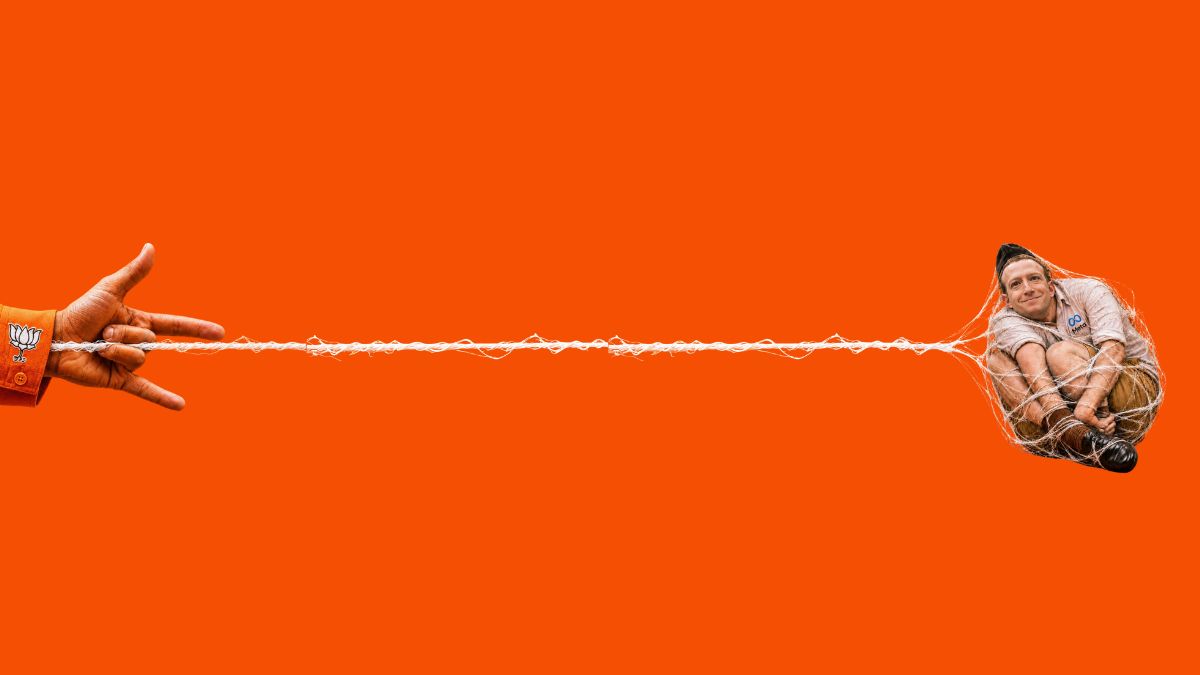
On November 20, Indian Youth Congress workers protested at Meta’s offices in Hyderabad, Mumbai and Gurugram, accusing the company behind Facebook and Instagram of suppressing opposition voices and favouring the ruling Bharatiya Janata Party (BJP).
The protests followed restrictions on Instagram accounts belonging to Indian Youth Congress president Uday Bhanu Chib and national in-charge Manish Sharma.
In Hyderabad, demonstrators entered the office premises and damaged property. Police detained several workers, while BJP leaders condemned the vandalism.
But something unexpected reportedly happened.
The restricted accounts were restored shortly after the protests. Meta has not publicly explained why they were restricted or whether the demonstrations influenced their restoration.
The episode raises a much bigger question: Who decides what Indians can post, share or watch online — social media companies, their automated systems or the government?
When IYC Takes to the Streets, the Accounts Are Suddenly Restored’
Following the protests, the Indian Youth Congress posted a message on Instagram:
“When Youth Congress raises questions, BJP gets uncomfortable. When its voices grow louder, Meta faces questions over selective takedowns.
And when IYC takes to the streets, the accounts are suddenly restored.
IYC IS NOT GOING TO BE SILENCED.”
Uday Bhanu Chib also warned Meta:
“If you wanna work in India, act as a Platform. Not the Political PR machinery for BJP.”
He added, “Consider this as your last warning.”
The organisation used the slogan “BJP ka BETA – META”, giving the company seven days to address restrictions affecting opposition accounts and political content.
However, no public evidence establishes that the BJP directed Meta to restrict these particular accounts.
2020: When Facebook Faced Allegations of Favouring BJP
Questions about Facebook’s political neutrality emerged prominently in August 2020.
An investigation by The Wall Street Journal alleged that Ankhi Das, Facebook’s then public policy executive in India, had resisted enforcing hate-speech rules against certain BJP-associated politicians.
The report alleged that taking action against ruling-party figures could affect Facebook’s business interests in India.
Facebook rejected allegations of political favouritism and maintained that its policies applied regardless of political affiliation.
The controversy brought attention to how political and commercial relationships might influence content moderation decisions at a company serving millions of Indian users.
2021: Farmers’ Protests and the #ResignModi Controversy
In February 2021, the Indian government directed Twitter, now X, to restrict accounts associated with farmers’ protests against three agricultural laws.
Among those affected were farmers’ organisations and The Caravan, an independent magazine.
The government cited concerns about misinformation and public order. Some accounts were subsequently restored.
Two months later, another controversy emerged during India’s devastating second COVID-19 wave.
Hospitals were struggling with oxygen shortages, while citizens used social media to seek medical assistance and question the government’s pandemic response.
On April 28, 2021, Facebook temporarily blocked the hashtag #ResignModi, which people were using to demand Prime Minister Narendra Modi’s resignation.
Users searching the hashtag encountered messages indicating that the content was temporarily hidden.
Facebook later restored the hashtag, saying the restriction resulted from a mistake rather than a government request. The Indian government also denied requesting its removal.
Separately, authorities sought restrictions on certain COVID-related posts, including criticism of the government’s response.
The incidents raised concerns about how platforms distinguish legitimate political criticism from misinformation and potentially harmful content.
2023: The BBC Documentary India Was Not Allowed to Watch Online
In January 2023, the BBC released India: The Modi Question, a documentary examining Narendra Modi’s leadership during the 2002 Gujarat riots and subsequent political developments.
The Indian government criticised the documentary and invoked emergency powers under the Information Technology Rules to restrict its online distribution.
YouTube was directed to block uploads of the documentary, while Twitter received orders to restrict more than 50 posts containing links to it.
The government’s directions were publicly reported, making this a documented example of official intervention affecting politically sensitive material.
The government defended its decision, while opposition politicians, students and press-freedom organisations questioned the restrictions.
The controversy raised a fundamental issue: Should a documentary examining the actions of a sitting prime minister be restricted through executive orders?
Unlike allegations of hidden algorithmic suppression, the BBC episode involved identifiable government blocking directions.
2024–2025: Even X Disagreed With Government Restrictions
In February 2024, during renewed farmers’ protests, X acknowledged receiving Indian government orders to withhold specific accounts and posts.
Although it complied within India, the company publicly disagreed, arguing that freedom of expression should extend to the affected material.
In May 2025, amid India–Pakistan tensions, X disclosed receiving orders to block more than 8,000 accounts, including accounts associated with international news organisations and prominent users.
The government cited security and misinformation concerns.
These incidents demonstrated the legal pressure global technology companies can face when government directions conflict with their stated commitments to freedom of expression.
2026: Nearly Two Lakh Government Blocking Directions
The scale of online restrictions became clearer in August 2026.
An investigation by The Indian Express reported that government agencies issued approximately 1.95 lakh directions seeking to block online content across Instagram, Facebook and YouTube between March and July 2026.
That represented roughly 1,275 directions every day — approximately one every 68 seconds.
Instagram received nearly one lakh directions, Facebook around 80,000 and YouTube approximately 15,000.
The investigation also reported that Meta had integrated its systems with the government’s Sahyog portal, enabling automated removal of government-flagged content without separate human review by Meta.
However, these directions cover different types of allegedly unlawful content. Their number alone does not establish how many involved political criticism.
What Is the Sahyog Portal, and Why Is It Controversial?
The Sahyog portal is a government system designed to facilitate communication between authorised agencies and online platforms concerning allegedly unlawful content.
India already has powers under Section 69A of the Information Technology Act to block online information on specified legal grounds.
Sahyog operates through a separate process involving Section 79(3)(b) and intermediary compliance obligations.
In February 2026, amendments to India’s IT Rules reduced certain content-removal compliance deadlines from 36 hours to just three hours.
The government’s position is that faster restrictions help combat cybercrime, fraud, misinformation and threats to national security.
Digital-rights organisations, however, warn that extremely short deadlines can encourage companies to remove content without sufficient independent examination.
The reported integration of Meta’s systems with Sahyog makes this concern particularly significant.
When a government agency flags a post and a platform’s automated system removes it, users may struggle to establish who made the decision, which law was invoked and how to appeal.
The concern is not whether unlawful content should be removed, but whether lawful criticism and independent journalism receive adequate protection.
Meta Restricted 5.4 Million Items in Just Six Months
According to Meta transparency disclosures reported by Reuters on November 21, 2026, the company restricted more than 5.4 million posts or accounts in India under local-law requirements between January and June 2026.
That compares with approximately 70,000 restrictions reported for the whole of 2025.
These figures include various categories of legally restricted content and do not establish that millions of anti-government posts were removed.
Nevertheless, the sharp increase raises questions about which authorities requested the restrictions, what content was affected and how many decisions were challenged or reversed.
Why the Protests Matter for Mark Zuckerberg
India is one of Meta’s largest markets, with hundreds of millions of Facebook and Instagram users.
For Meta founder and CEO Mark Zuckerberg, repeated allegations of political favouritism present potential reputational risks.
The company’s advertising-driven business depends on public confidence, user engagement and the trust of advertisers.
Continued controversy could attract scrutiny from investors, regulators and civil society organisations.
There is no evidence that the November protests caused measurable financial losses or that Zuckerberg personally directed the disputed restrictions.
However, Meta’s leadership faces questions about whether its moderation policies are applied consistently, regardless of political affiliation.
Even Independent Journalism Is Facing Restrictions
On November 19, the Delhi High Court sought responses from Meta and the Union government following a petition filed by legal news publisher LiveLaw.
The publication challenged restrictions on Instagram reels reporting Supreme Court proceedings and questioned automated content-blocking requirements under India’s IT Rules.
The matter remains before the court.
The case demonstrates why the controversy extends beyond political parties. Independent publishers also depend on social media to distribute legitimate reporting.
Who Really Controls What Indians Can Say Online?
The evidence establishes that Indian authorities have repeatedly used legal powers to direct platforms to restrict content, including politically sensitive material.
However, it does not establish that the government secretly controls Meta’s algorithms or directs every restriction involving criticism of Narendra Modi, Amit Shah or the BJP.
India’s Constitution protects freedom of expression while permitting reasonable restrictions under specified circumstances.
The challenge is ensuring that those restrictions remain lawful, transparent and free from political discrimination.
For Youth Congress, the controversy began with restricted Instagram accounts. For Meta, it concerns regulatory compliance and public trust.
But for ordinary Indians, the issue is much bigger.
If a citizen publishes a lawful post questioning the prime minister, an opposition leader or any government policy, who ensures that it will not disappear simply because someone in power dislikes it?
That question deserves an answer from the government and the technology companies shaping India’s public debate.