From Apples to Cherries: How Adani Agri Fresh Is Expanding Its Grip on Himachal’s Fruit Trade
Two decades after entering Himachal's apple market, Adani Agri Fresh is expanding its fruit procurement business, leasing government-owned cold-storage facilities and entering new markets. But farmer organisations have raised concerns over pricing, competition and the future of public horticulture infrastructure.
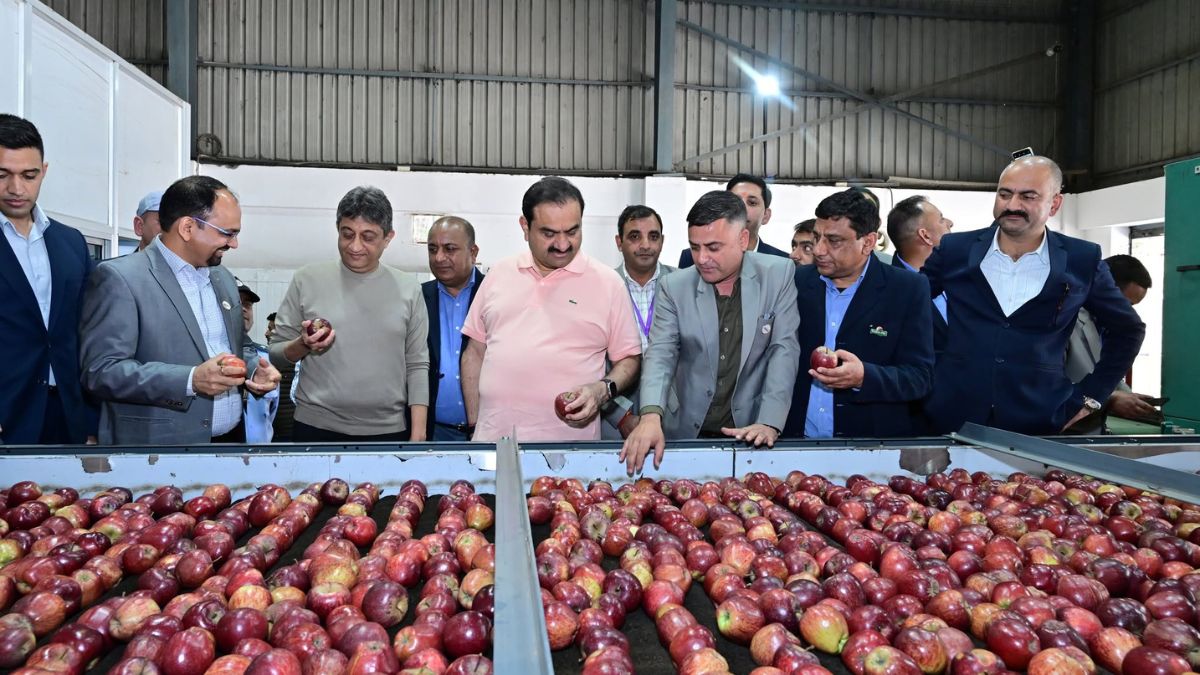
Shimla, Himachal Pradesh: In 2006, when the Adani Group entered Himachal Pradesh’s apple industry, its business was built around a relatively simple idea: purchase apples directly from farmers, store them using modern technology and sell them across India beyond the traditional harvest season.
Twenty years later, Adani Agri Fresh Limited has become one of the state’s largest private apple buyers. Its procurement network extends to more than 17,000 growers across approximately 700 villages.
The company now operates its own cold-storage infrastructure, has leased additional facilities from the Himachal Pradesh government and is expanding into other fruits, including cherries and plums.
For farmers, the expansion presents both opportunities and concerns.
While organised procurement and modern storage can offer better market access, grower organisations have questioned the company’s pricing influence and the government’s decision to lease publicly owned storage infrastructure to private operators.
The question is whether Adani’s growing presence is strengthening Himachal’s fruit economy or increasing farmers’ dependence on large corporate buyers.
How Adani entered Himachal’s apple business
Adani Agri Fresh Limited, a subsidiary of Adani Enterprises, began its operations in Himachal Pradesh in 2006.
According to reports published at the time, the group initially planned to invest approximately ₹160 crore in three controlled-atmosphere (CA) storage facilities, each designed to hold around 6,000 metric tonnes of produce.
These facilities were developed in the Shimla apple belt, including areas around Sainj, Rampur and Rohru.
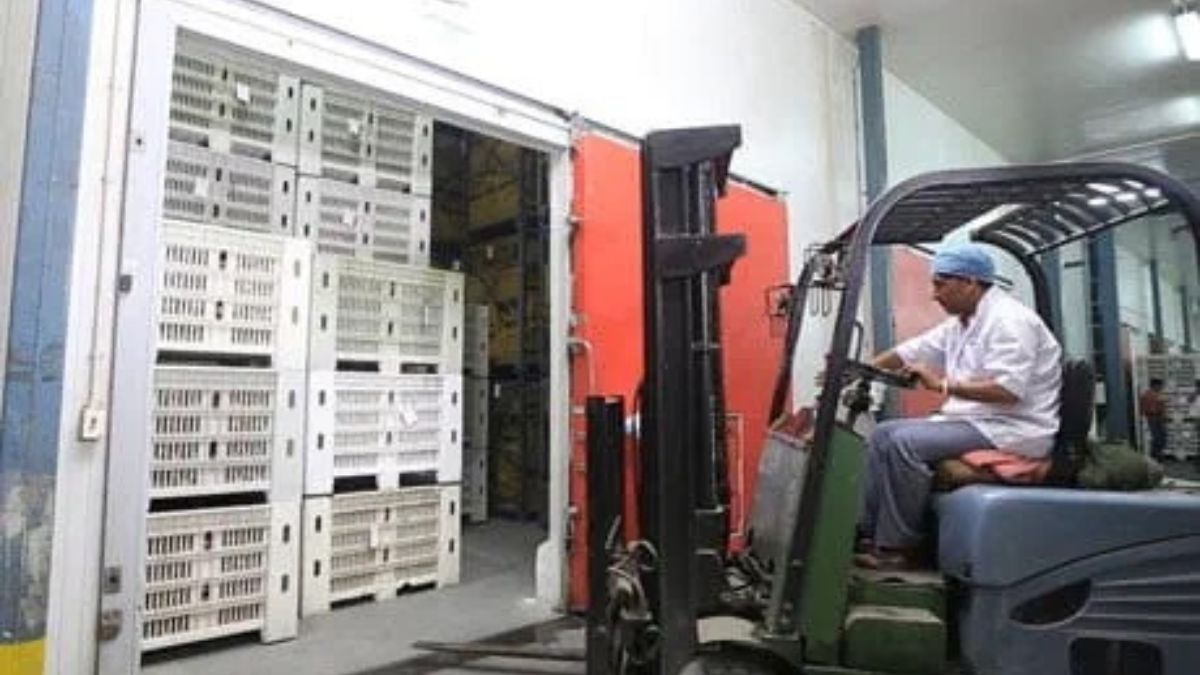
Unlike ordinary cold stores, controlled-atmosphere facilities regulate temperature and gases such as oxygen and carbon dioxide, slowing the ripening process and allowing apples to remain marketable for months.
This gave the company an important commercial advantage: it could purchase apples during the harvesting season and distribute them when fresh supply from orchards had declined.
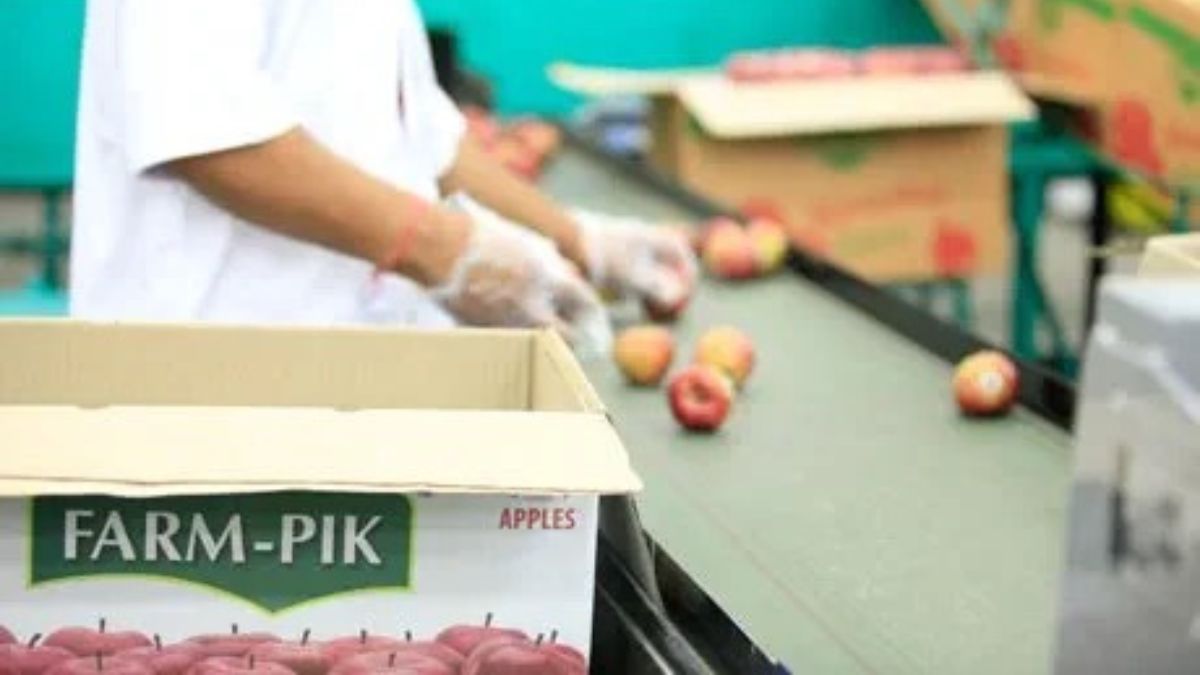
Under its Farm-Pik brand, Adani developed a business covering procurement, grading, storage, packaging and marketing.
By 2025, company information placed the capacity of its three original storage facilities at approximately 22,400 metric tonnes.
Adani says its procurement network covers more than 17,000 growers, over 90% of whom are small and marginal farmers.
The company presents this model as a way to reduce farmers’ dependence on traditional intermediaries and improve their access to markets.
From cold storage to a Digital Mandi
Adani’s operations have expanded beyond buying and storing apples.
In August 2025, the company launched a Digital Mandi at Bithal in Shimla district.
Under the system, farmers bring apples in crates, while the facility handles sorting, grading and packaging. Buyers can participate in digital bidding, and the company announced that payments would be processed within seven days.
Adani said the system would make trading more transparent and help farmers obtain competitive prices.
For growers who previously depended on commission agents and traditional markets, such facilities offer another selling option.
However, the usefulness of the model ultimately depends on the prices farmers receive, the number of competing buyers and whether the grading and bidding systems work fairly.
The controversy over apple prices in 2026
In August 2026, Adani Agri Fresh announced an opening procurement rate of ₹108 per kilogram for premium large, medium and small apples with 80–100% colour.
The comparable opening price in 2025 was ₹85 per kilogram.
But the highest advertised price applied only to selected grades.
Apples with 60–80% colour in the same size category were priced at ₹80 per kilogram, while Pittu-grade fruit received ₹43–60 depending on colour. Undersized apples were priced from ₹20 per kilogram.
Despite the increase, several farmer representatives expressed disappointment.
Himachal’s 2026 apple harvest had fallen sharply, and growers argued that reduced supply should have resulted in higher returns.
In a September report published by The Tribune, Harish Chauhan, convener of the Sanyukt Kisan Manch, claimed that procurement rates announced by large private buyers influenced prices in the wider market.
Other growers questioned why some grades were reportedly fetching better prices in open markets than those offered by controlled-atmosphere storage operators.
These are concerns raised by farmers, not established findings that Adani manipulated prices or acted illegally.
Nevertheless, they highlight an important issue in Himachal’s apple economy.
When a large buyer announces its procurement prices, how much influence does that announcement have on other buyers and the prices available to farmers?
Why did the Himachal government lease its cold stores to Adani?
The debate became more significant in July 2025.
The Himachal Pradesh Horticultural Produce Marketing and Processing Corporation (HPMC), a state-owned undertaking, leased three controlled-atmosphere storage facilities to Adani Agri Fresh.
The facilities were located at Reckong Peo, Jarol (Tikkar) and Tutupani.
The agreement was reported to be for three years and included grading and packaging infrastructure.
The government’s explanation was that the facilities had been significantly underutilised.
According to HPMC officials, only about 20–25% of their capacity had been used in previous years.
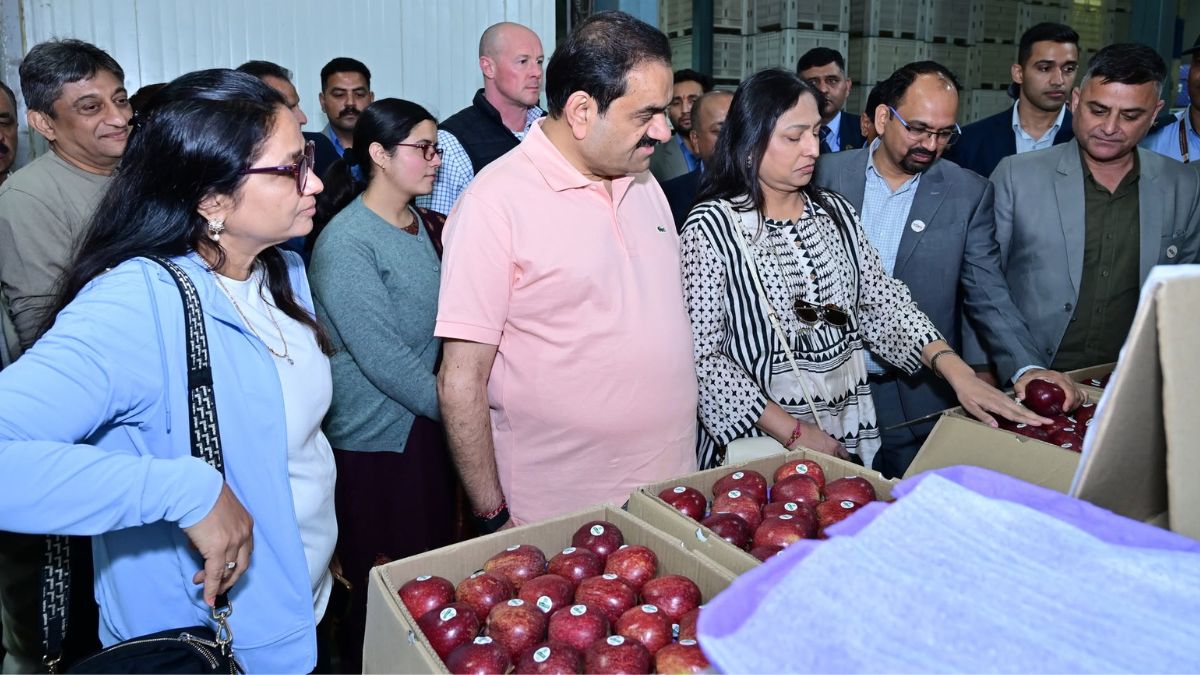
Leasing them to private operators was presented as a way to improve utilisation.
HPMC also said that 20% of the storage capacity at the rented facilities would remain reserved for local growers at the corporation’s existing rates.
But the decision had already attracted objections from farmer organisations.
Farmers questioned the use of public infrastructure
In April 2025, months before the Adani leases were reported, apple growers publicly criticised HPMC’s broader plan to rent its storage and grading facilities to private companies.
Some of these facilities had been built or upgraded with support from the World Bank-assisted Himachal Pradesh Horticulture Development Project.
Farmer representatives questioned why infrastructure developed with public funds was being leased to private businesses rather than being operated more effectively for the benefit of growers.
Lokinder Bisht of the Progressive Growers Association warned that the move could strengthen large private players and create risks of market concentration.
Sohan Thakur of the Seb Utpadak Sangh questioned whether HPMC had done enough to make its facilities financially sustainable before deciding to rent them out.
These objections reflected concerns about the future role of publicly owned infrastructure in the state’s fruit industry.
HPMC, however, maintained that low utilisation had made the existing arrangement financially difficult.
The corporation reported using a tender process for renting facilities. Public reporting reviewed for this article does not establish wrongdoing in the award of the leases.
Nevertheless, several details remain important for public scrutiny, including the agreed rent, the bids received, the selection criteria and the actual use of storage space reserved for local growers.
Adani’s next move: Cherries, plums and other fruits
The company’s expansion is no longer limited to apples.
In November 2025, Adani officials disclosed plans to enter Himachal’s stone-fruit business, including cherries, plums and green almonds.
The company reiterated its entry into cherry procurement in May 2026.
Unlike apples, cherries have a short shelf life and require rapid cooling and transportation.
Adani outlined plans to use hydro-cooling, refrigerated transport and air cargo to deliver fruit to markets such as Mumbai and Bengaluru, supported by relationships with online retail platforms.
The development could offer growers access to markets that are difficult to reach through conventional trading arrangements.
Some stone-fruit growers have welcomed the proposal, arguing that better post-harvest infrastructure could reduce wastage and improve prices.
But the expansion also means Adani’s presence in Himachal’s horticulture sector may extend beyond the apple economy that originally brought it to the state.
Who will benefit from Himachal’s changing fruit economy?
Over the past two decades, Adani Agri Fresh has invested in modern infrastructure, developed a large procurement network and introduced new systems for marketing fruit.
Its expansion illustrates how corporate investment can change agricultural supply chains.
At the same time, farmers have raised legitimate questions about price discovery, bargaining power and the use of government-owned storage facilities.
There is no publicly established finding that Adani controls Himachal’s fruit market or has manipulated apple prices. Nor does the available reporting establish that the HPMC lease process was improper.
What is clear is that the company’s involvement has expanded from apple procurement and cold storage to digital trading, public-facility leases and new fruit categories.
For Himachal’s farmers, the outcome will depend on whether that expansion creates more choices, better prices and wider market access.
After twenty years of Adani’s presence in Himachal, perhaps the most important question is not how much the company has grown, but whether the farmers growing the fruit have benefited alongside it.